
Related videos:
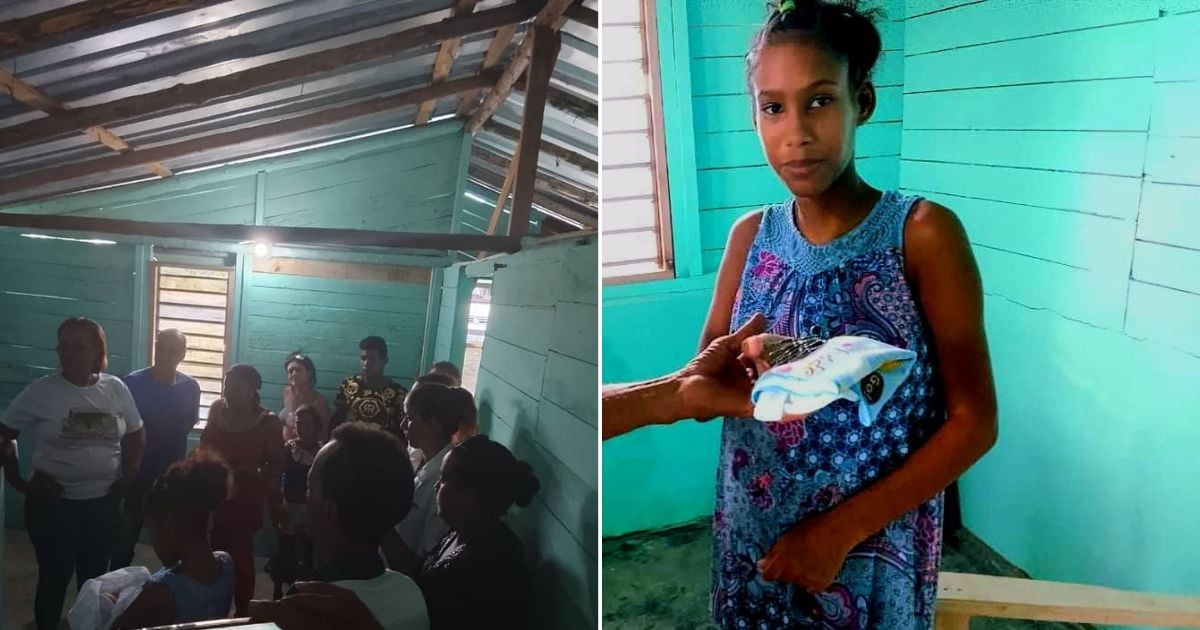
Official propaganda in Cuba once again showcased a tragedy as a “social achievement”: teen pregnancy. This time, a girl of just 13 years received a housing unit in Baracoa, during an event led by local authorities.
According to a post by the regime spokesperson Carlos Pérez on Facebook, the Municipal Administration Council provided a house to the young mother as part of a "joint effort" among the sectors of education, health, and the community.
The official portrayed the event as an act of "solidarity and social commitment."
The Municipal Health Directorate in Baracoa also shared the news on social media, highlighting the participation of the head of the People's Council and the municipal mayor in the ceremony.
The publications emphasized presenting the delivery as a demonstration of support for "vulnerable families, especially adolescent mothers."
However, the case highlights the harshness of a silenced reality: childhood pregnancy in Cuba.
And more than that, even though the regime boasts about this housing handover, every day mothers with multiple children plead for some form of government assistance, finding no solution.
Therefore, rather than being an achievement, the fact that a 13-year-old girl becomes a mother highlights the lack of effective policies to prevent abuse, violence, and unintended pregnancies, which jeopardize the lives of thousands of adolescents on the island.
Early pregnancy is a persistent problem in the country, where official statistics recognize it as one of the main causes of school dropout and a factor that exacerbates poverty.
Even so, the regime prefers to present it as a propaganda success rather than addressing the structural causes that generate it.
Although the regime insists on presenting this gesture as an example of "revolutionary solidarity," many internet users in the comments on the post refuted the official propaganda.
Gustavo Fonseca questioned "the price" that the teenager will have to pay in the future for this supposed assistance, while China GC recalled that many working mothers and contributors to society have never had access to housing.
In the same vein, Modesto Tamayo pointed out that the delivery "means nothing" in a country with thousands of homeless women, and that this type of publication aims to cover up the reality.
Naranis Morales criticized that years ago, promises were made to provide homes to mothers with three or more children, and these promises were never fulfilled. She expressed sorrow that a school-aged girl has ended up in this situation.
For her part, Jennifer Carle recounted that she had her daughter at 14 years old, lost her home due to a flood, and has been in a state institution for two years without a solution, although she expressed happiness for the 13-year-old who received a house.
Finally, María del Carmen Delafuente warned that the healthcare system should focus on preventing early pregnancies, and cautioned that, if no action is taken, cases like this could multiply among teenagers who see it as a way to gain benefits.
Cuba faces serious social problems—such as massive migration, an aging population, and the deterioration of public services—alongside an alarming statistic: the nation maintains a high rate of adolescent pregnancies.
The presentation of the Report on the State of the World Population, prepared by the United Nations Population Fund (UNFPA), revealed that although Cuba has recorded a general fertility rate below the population replacement level since 1978, the adolescent fertility rate remains high and is comparable to that of the rest of Latin America.
According to Juan Carlos Alfonso Fraga, deputy head of the National Office of Statistics and Information (ONEI), the reasons behind the general low birth rate include economic, labor, health, educational, and personal fulfillment factors.
However, these causes have not prevented early pregnancies from persisting, driven by a lack of comprehensive sex education, gaps in family planning, and some social permissiveness towards early unions.
The data collected in a 2022 fertility survey of over a thousand Cuban families points to a decreased reproductive ideal: 36% of women between the ages of 15 and 45 only had one child, and 29% had fewer children than they desired.
Frequently Asked Questions about the Situation of Adolescent Pregnancy in Cuba
Why does the Cuban regime present teenage pregnancy as a "social achievement"?
The Cuban regime presents teenage pregnancy as a social achievement by providing housing to young mothers, attempting to portray it as an act of solidarity and social commitment. However, this practice is viewed as a propaganda strategy that overlooks the structural issues that contribute to the occurrence of pregnancies among adolescents, such as the lack of comprehensive sex education and effective protection policies.
What are the consequences of teenage pregnancy in Cuba?
Adolescent pregnancy in Cuba brings serious consequences such as school dropout, poverty, and increased social vulnerability for the young girls involved. Furthermore, it contributes to perpetuating a cycle of poverty and social exclusion that affects thousands of teenagers on the island, while the regime does not take effective measures to prevent it.
How does teenage pregnancy affect the Cuban population as a whole?
Teenage pregnancy affects the demographic structure of Cuba, where there is an accelerated natural decline and an aging population. The high fertility rate among adolescents contrasts with the low overall birth rate, exacerbating the pressures on health and social services in a country with a rapidly aging population.
Filed under: