The shortage of condoms in Cuban pharmacies is not only another symptom of the country's healthcare collapse, but also a direct threat to the lives of many adolescents.
Amid the shortage of contraceptives and pregnancy tests, an increasing number of young people are facing unplanned pregnancies that often result in clandestine abortions carried out with homemade concoctions and dangerous practices.
A recent report published by the official media Periódico 26 presents testimonies that, far from being isolated, reflect a widespread tragedy in provinces such as Las Tunas.
This is the case of Anlly —a fictitious name to protect her identity— who decided to "solve the problem" through a quick route and without medical assistance.
Guided by an aunt, she ingested a homemade mixture of plants, beer, and aspirin, and was instructed to jump several times from a table, actions that resulted in her being hospitalized, bloodless, and with her life at risk.
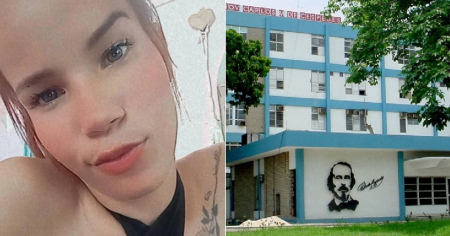
Dr. Maritza Páez Suárez, deputy director of Gynecology and Obstetrics at Ernesto Guevara Hospital, confirmed that this type of illegal abortion is not an exceptional case.
"The majority of patients who have arrived at the hospital after ingesting concoctions suffer from very serious poisonings. Some end up in intensive care; others have their reproductive organs mutilated," warned the specialist.
In the worst-case scenario, a 12-year-old teenager lost her uterus and ovaries, leading to induced menopause.
The doctor also reported the circulation of the medication Misoprostol in the informal Cuban market, available even on sites like Revolico.
Although it is a medication used in medical abortions, using it without medical supervision can lead to serious complications.
"There are teenagers that we have admitted to monitor their progress. I urge families not to take unnecessary risks," she warned.
In Cuba, there is an institutional network for safely interrupting pregnancies: menstrual regulation consultations and curettage services at hospitals such as "Guevara."
But access to these services is limited when the pregnancy exceeds 10 weeks, and many young women, out of fear or misinformation, choose home remedies.
According to Páez, relatives or friends who encourage a minor to drink potions may commit serious crimes, such as feticide.
The shortage of condoms, birth control pills, and pregnancy tests—absent from pharmacies but available on social media at exorbitant prices—contributes to this desperate situation.
"It is no secret that they are found online at exorbitant prices, far removed from a professional's budget," says the report.
In that context, prevention is not a viable option for many families, a situation that the regime has also been unable to resolve in the state network of pharmacies.
The doctor also expressed regret that once hospitalized, many young women and their families omit vital information about what they took or did, which hinders treatment.
"When they see her on a ventilator, that's when they talk. They delay our work," she said.
In light of this reality, the professional emphasized the need for coordinated action among schools, families, and the healthcare system.
And although his speech attempts to emphasize the value of the institutional system, the landscape he describes—teen pregnancies, homemade abortions, dangerous medication, and mutilations—harshly reveals the deterioration of the Cuban healthcare system and the vulnerability of women in the country.
In a Cuba where it is increasingly difficult to protect oneself, many young women gamble with their lives amidst fear, improvisation, and silence.
Because even the right not to be a mother is not guaranteed when the state neglects even the basics: a condom.
In 2024, the management of the Diez de Octubre University Gyneco-Obstetric Hospital, known as Hijas de Galicia, in Havana, raised concerns about the arrival of four women in a state of shock at the medical center's emergency room in just 10 days, as a result of abortions carried out illegally.
Some individuals illegally use misoprostol, a prostaglandin intended for medical abortion, and whose use is indicated exclusively within a hospital setting, the report emphasized.
Frequently Asked Questions about the Health Crisis and Contraceptive Shortage in Cuba
Why is there a shortage of condoms and contraceptives in Cuba?
The scarcity of condoms and contraceptives in Cuba is caused by the country's healthcare collapse, exacerbated by a lack of raw materials, funding, and issues in contracting with suppliers. This has led to a situation where pharmacies cannot provide these essential products, and the population is turning to the black market, where prices are high.
What are the consequences of the lack of contraceptives on the health of young Cuban women?
The lack of contraceptive methods has led to an increase in unwanted pregnancies and clandestine abortions under dangerous conditions. Young women are at risk of suffering serious health complications, such as severe intoxications and mutilations of their reproductive organs, due to unsafe practices for terminating pregnancies.
What services does the Cuban healthcare system offer for the safe termination of pregnancies?
En Cuba, existen consultas de regulación menstrual y servicios de legrado en algunos hospitales para la interrupción segura de embarazos. However, access to these services is limited y muchas jóvenes, por miedo o desinformación, optan por métodos caseros peligrosos cuando la gestación supera las 10 semanas.
How does the shortage of contraceptives affect the rise of STIs in Cuba?
The lack of condoms has contributed to the rise of sexually transmitted infections (STIs) and HIV in Cuba. The absence of these protective measures in pharmacies has left the population vulnerable, especially those with frequent partner changes or who engage in transactional sex, increasing the risk of contagion.
Filed under: