
Related videos:
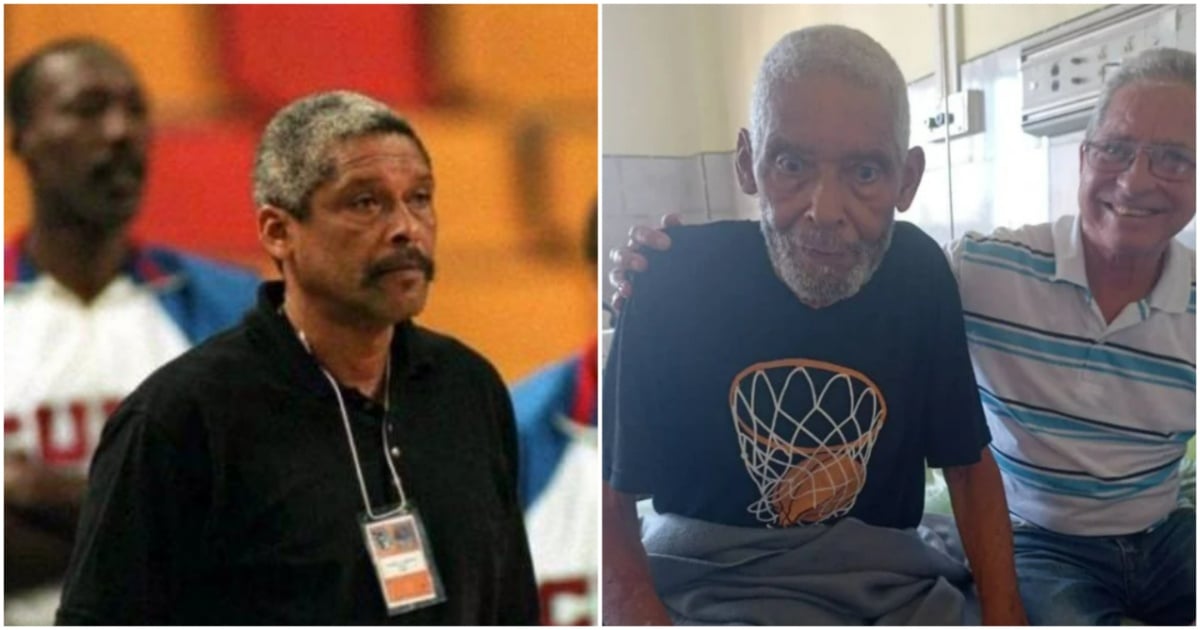
Miguel Calderón Gómez, a legend of basketball, passed away on Thursday at the age of 74.
The official newspaper Granma published a brief note confirming the death of Calderón, who had been living in precarious conditions at the Comandante Manuel Fajardo Hospital in Havana, as reported by journalist Aníbal Oliva Yañez last February.
Calderón was born on October 30, 1950, in Havana, and was part of the legendary team that won the bronze medal at the Munich-1972 Olympic Games and placed fourth at the Puerto Rico-1974 World Championship, as noted by Granma.
He also coached the men's national team from 1992 to 1999, was responsible for youth teams, and trained several generations of athletes who excelled both nationally and internationally, they added.
The information also listed Calderón's titles as a coach in the Centrobásquet, as well as his multiple championships with the Capitalinos in the Superior Basketball League.
Legend in Oblivion
In February, thesituation of the former basketball player came to light, another tale of the neglect faced by many Cuban athletes after bringing glory to the country.
Journalist Aníbal Oliva Yañez reported the situation on his Facebook profile, emphasizing that the legendary player and coach was in critical condition and lacking the assistance he deserves.
Calderón had lost his vision and was suffering from serious health problems. He lay prostrated on a worn-out bed, depending on the solidarity of those who still remember his story, Oliva emphasized.
The fate of Calderón is shared by many other idols of Cuban sports, who end their days in misery, without state support and in the deepest oblivion.
At that time, the story of Miguelito Calderón raised great concern among sports enthusiasts and their glories, including the news outlet Swing Completo, which echoed the complaint and emphasized that this is not an isolated case, but rather part of a systematic pattern of neglect towards the athletes who gave their all for Cuba.
According to the website, Calderón's situation highlights the lack of a protection system for former athletes on the island, who, after years of representing the country in international events, end up forgotten without medical assistance or financial support.
Also, Yasel Porto Gómez reacted on his social media: “When I saw the text from my colleague Aníbal Oliva, I couldn't believe it. This photo shared by Fernando Clavero is none other than Miguelito Calderon, one of the iconic coaches of Cuban basketball.”
"Sick and blind, with a completely different appearance from what we always saw, the popular former player and coach is currently hospitalized," he emphasized.
"Unfortunately, this has long ceased to be the exception to the rule. This reality is now impossible to ignore, and even worse, to defend. There is no justification," he said with evident frustration.
In 2024, a similar story emerged: Margarita Skeet, one of the prominent figures in Cuban women's basketball, was in total neglect and relied on the support of her neighbors in the Cotorro municipality, Havana.
Frequently Asked Questions about the Departure of Cuban Athletes
What happened to Miguel Calderón Gómez, a legend of Cuban basketball?
Miguel Calderón Gómez passed away at the age of 74, surviving in precarious conditions in Havana. Despite his sporting achievements, including a bronze medal at the Munich 1972 Olympics, he spent his last years forgotten and without the necessary support from the Cuban government. His case is an example of the systematic neglect that many athletes on the island endure after their retirement.
Is it common for athletes in Cuba to be abandoned after their retirement?
Yes, the abandonment of athletes in Cuba after their retirement is a recurring issue. Many athletes who brought glory to the country end up living in misery, without state support or proper medical assistance. Cases like those of Miguel Calderón, Roberto Limonta, and Félix Lemus illustrate this concerning reality, where the lack of a protection system for former athletes is evident.
What is the Cuban government's response to the neglect of its sports glories?
The response from the Cuban government has been insufficient, with cases of athletes like Samuel Claxton and Miguel Calderón who have died in vulnerable conditions without the necessary support. Despite some expressions of condolences from government officials, the lack of effective policies to ensure a dignified old age for sporting glories remains a serious issue.
What other figures in Cuban sports have reported similar situations of neglect?
In addition to Miguel Calderón, other athletes such as Roberto Limonta and Félix Lemus have denounced the abandonment by Cuban authorities. Limonta, a former wrestler, revealed that the promised support after his retirement was never fulfilled, while Lemus lives in poverty, with serious health issues and without the recognition he deserves for his achievements in boxing.
Filed under: