
Related videos:
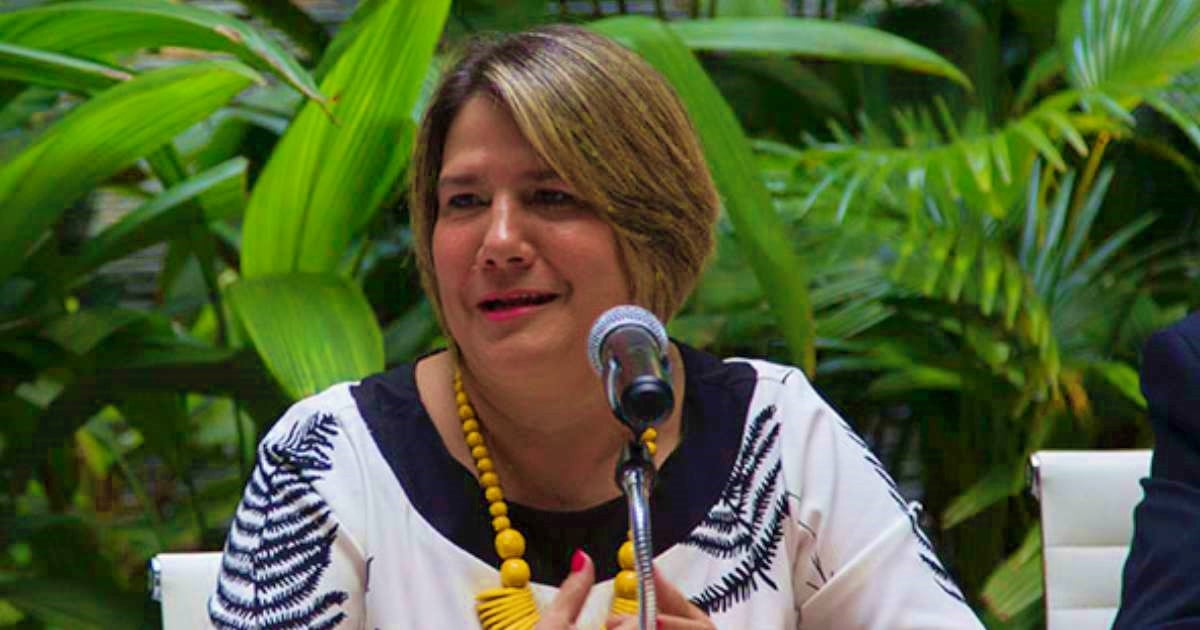
The wife of the Cuban leader Miguel Díaz-Canel, Lis Cuesta Peraza, now self-proclaims as a "passionate teacher" at the Superior Institute of Art (ISA).
From her X account, she celebrated the start of a Cultural Management course with sweet phrases and smiling photographs, as if her presence in a university classroom were a gesture of dedication and sacrifice, rather than the result of the privileges she enjoys as a member of the ruling elite.
"Our course has started. The ISA embraces Cultural Management. A great group, a wonderful atmosphere. There's nothing like teaching and learning with our students! I am a passionate teacher," she wrote in a festive tone.
While she poses as a charismatic educator, millions in Cuba survive amid power outages lasting over 20 hours, hospitals without supplies, children without milk, and families cooking with firewood.
Their disconnection from the national reality is so blatant that their publications serve as an insult.
Reactions on social media came swiftly. "It must be outrageous to have to take classes from this idiot," replied a user bluntly.
Another person quipped, "How lucky those students are, learning cultural management directly from someone who manages privileges in a country in ruins."
For many, the fact that Díaz-Canel's wife teaches "management" is an act of cynicism, as the only thing she has managed is her own luxurious life in a country drowning in misery.
Other internet users pointed out the inconsistency between his speech and his lifestyle: "You can teach them to progress so they can have a thousand-dollar phone like yours."
"In love with spending the people's money... while the children go hungry," someone else wrote.
Another comment pointed directly to the lack of freedoms in Cuba: "One cannot give what one does not have. The Cuban people can be taught anything, but if they are not given freedom, they will always live in darkness."
Cuesta's show as a university professor is not new.
In August it was announced that the musician Israel Rojas, leader of the officialist group Buena Fe, would be invited to its classroom as part of a discussion on cultural industries.
The gesture came just after Rojas attempted a "discursive realignment" by talking about national reconciliation, but without ever mentioning the repression of July 11 or acknowledging the existence of political prisoners.
The strategy is clear: to recycle worn-out figures from the establishment by giving them a platform in academic spaces. And who better than Lis Cuesta, a symbol of privilege and disconnection, to lead this operation?
Lis's journey is well-known.
From being a cultural officer in Holguín, she moved on to organizing events, leading local institutions, and later joining the state-run Paradiso Agency, where she served as the head of Academic Services. From there, she developed her doctoral thesis, in which she proposed models for the export of academic services.
With Díaz-Canel's rise to power in 2018, her presence increased significantly: accompanying him on tours, hosting events, and frequently appearing at official functions, although she was never formally recognized as the First Lady.
Far from representing austerity, Cuesta has become a symbol of the ostentation of the Cuban elite.
In international tours, she has been seen with the latest generation of smartphones, luxury watches, and accessories that starkly contrast with the poverty of the country. "While she travels in air-conditioned planes, the people cook with firewood and sleep without electricity," a citizen remarked on social media.
Despite not holding a high-level position, Cuesta claims in X the authority to speak on behalf of universities and institutions, and announces connections with foreign entities as if she were an official representative.
His digital narcissism, accompanied by phrases like "dictator of my heart" addressed to her husband, has fueled the perception that she behaves more like the consort first lady of a Caribbean monarchy than as a serious academic.
The contradiction is insurmountable: while independent artists are censored, imprisoned, or forced into exile, Lis Cuesta aims to establish the ISA as a "space for debate." In practice, that space is reduced to a propaganda circle where only figures aligned with those in power participate.
Cuesta's case starkly summarizes the essence of the regime: a small group of privileged individuals who preach resistance and sacrifice while enjoying luxuries unimaginable to the majority.
She, without an official position, is the public face of that elite that travels on climate-controlled flights and flaunts watches worth thousands of dollars, while on the island inflation wrecks salaries and hospitals are falling apart.
With her debut as a teacher at ISA, Lis Cuesta only prolongs the mockery: disguising what is really the management of privileges and indoctrination as cultural management.
Frequently Asked Questions about Lis Cuesta and Her Role in the Cuban Regime
Who is Lis Cuesta and what is her role in Cuba?
Lis Cuesta is the wife of Cuban ruler Miguel Díaz-Canel and has become a notable public figure in Cuba, although she does not hold an official position. She is often seen accompanying Díaz-Canel on international tours and participating in official and cultural events, which positions her as an influential figure within the Cuban regime, despite not being formally recognized as the first lady.
Why is Lis Cuesta a controversial figure in Cuba?
Lis Cuesta is perceived as a controversial figure due to her disconnect from the reality of the Cuban people, often showcasing luxuries and privileges on social media while the country faces severe economic and social crises. Her posts, which attempt to convey empathy or devotion, are often viewed as provocations by the majority of citizens who are struggling to survive under precarious conditions.
How does Lis Cuesta's presence impact the Higher Institute of Art (ISA)?
Lis Cuesta's entry as a professor at the Higher Institute of Art has been perceived as a gesture of indoctrination and propaganda rather than a genuine contribution to education. Her role in academia is viewed by many as an attempt to recycle figures from the establishment within academic spaces, thereby avoiding any real critical debate in an environment controlled by the regime.
What criticisms does Lis Cuesta face for her use of social media?
Lis Cuesta is frequently criticized for her use of social media to project an image of luxury and privilege, detached from the everyday struggles faced by the majority of Cubans. Her messages are perceived as insensitive and disconnected from reality, resulting in a strong negative reaction from citizens who denounce her lack of empathy and the use of public resources for her personal benefit.
Filed under: