
Related videos:
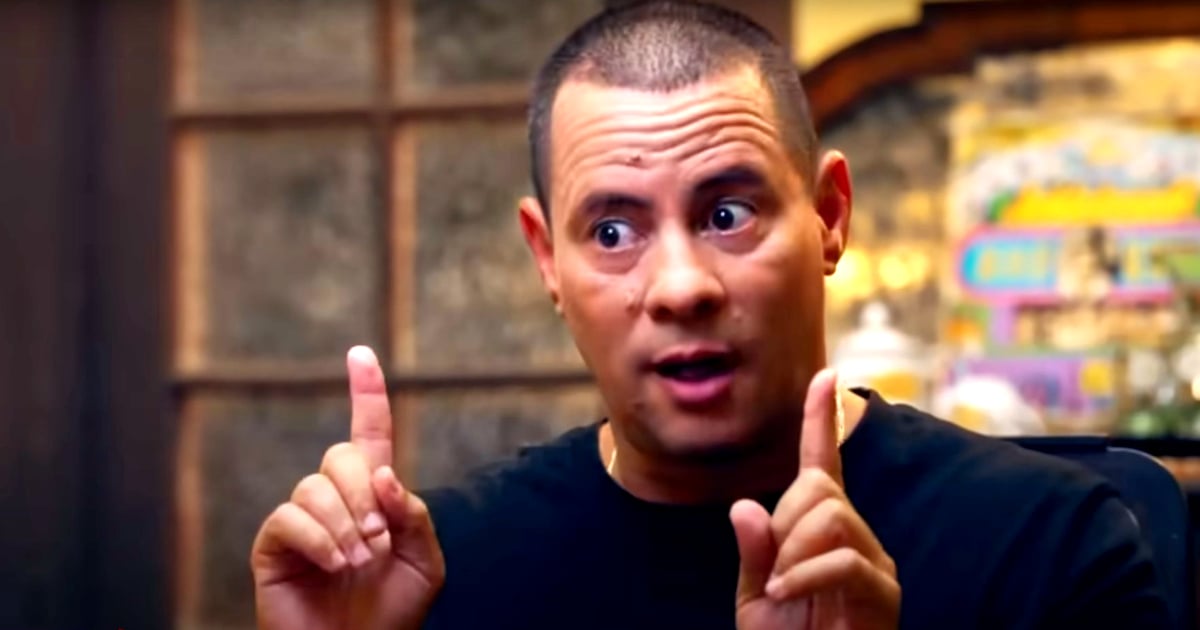
The recent statements by Cuban musician Israel Rojas, leader of the group Buena Fe, during an interview on the podcast 'La Sobremesa' from La Joven Cuba, have sparked conversations on social media and reignited the debate about the role of artists in the face of dictatorial repression and the lack of rights and freedoms typical of a totalitarian regime.
Although Rojas advocated for reconciliation among Cubans and suggested the need for a pardon for some of the prisoners from July 11, 2021 (11J) -something he had already suggested at the time following in the footsteps of singer-songwriter Silvio Rodríguez-, his sudden moderate tone has been met with skepticism, rejection, and criticism. It's not surprising: his history does not support him.
For years, Rojas has been a prominent figure in the official Cuban culture. He has actively participated in regime events, has delegitimized those who protest or dissent, and has used his platform to reproduce the government’s discourse.
When thousands of Cubans took to the streets that July 11, he did not see them as desperate citizens, but rather as "confused" or "instrumentalized," aligning himself with the narrative of those in power who labeled them as criminals.
Still in May 2023, nearly two years after the repressive wave of July 11, which sent thousands of protesters to prisons, the author of 'Catalejo' continued to deny the existence of political prisoners of the dictatorship. "As far as I know, no. And I'm not going to talk about something I don't know," he said during an interview, sidestepping the issue.
Today, with a career going through low points and cancellations from civil society, lacking recent successes or significant presence in the Cuban music scene, Rojas chose to present himself as more reflective. He spoke of reconciliation, dialogue, and consensus. However, he did so from a dangerously ambiguous stance: he did not directly mention repression, did not acknowledge the existence of political prisoners, and continued to justify the system.
For many, it is not a gesture of political maturity, but rather a survival strategy or a new service to the regime's Counterintelligence.
An opportunistic turn
On social media and in civil society spaces, Rojas's change in discourse has been interpreted as an attempt to clean up his image.
Some even consider him a "trial balloon" of the regime, a useful figure to test the possibility of a narrative change from within, without making any real concessions. In that role, Rojas would serve as an apparently critical voice, but always within the limits of what is tolerated.
As activist Yamilka Lafita summarized (Lara Crofs on social media): "His calls for dialogue and unity only serve to legitimize a system that denies fundamental freedoms to its people."
This sentiment is prevalent among those who have experienced or confronted the regime's repression. The interview has been dissected by numerous activists, musicians, and ordinary citizens who see in his speech a political maneuver, not a genuine evolution.
Moderation or complicity
The moderate tone that Rojas adopted in the interview might seem constructive in another context. But in Cuba, where truly dissenting artists are censored, persecuted, imprisoned, or forced into exile, this moderation is seen as a form of complicity.
The leader of Buena Fe acknowledged that censorship exists but downplayed it: “Censorship today has many faces,” he said. “Probably if they created confrontational political art against the Cuban government, they would gain more visibility.” With this statement, the singer attempted to equate the regime's restrictions with market dynamics, sidestepping the political root of the issue.
When referring to the prisoners from July 11, Rojas avoided talking about repression or injustice. Instead, he proposed a reconciliation that does not involve acknowledging the harm or taking responsibility on the part of the regime.
"I said it following July 11; I posted it... it was time for a national call for reconciliation, to reach an agreement, to establish new consensuses," he stated. However, there was no clear criticism in his words of the unjust sentences or the judicial system controlled by the Communist Party.
Where was Israel Rojas when his voice was needed?
Many wonder why this call for reconciliation did not come in 2021, when more than a thousand Cubans were imprisoned for marching peacefully. Where was their commitment then?
Where is your “optimism” and your “dialogue” when fellow musicians and artists were censored, persecuted, or forced to leave the country?
The answer is clear: at that moment, Rojas was on the side of power, justifying the arrests, downplaying social outrage, and denying the political nature of the protests.
Now, as the regime becomes increasingly isolated and discredited, and as its artistic career has lost traction due to the disaffection of a significant portion of its audience, Rojas presents himself as a moderate "brave" individual who calls for "understanding the complexities of the country."
But moderation without courage is merely another form of silencing. And in Cuba, where repression is not abstract but everyday, where artists and journalists are imprisoned, where protesting can mean 10 years in prison, there is no room for the ambiguous nuances of those who have remained silent —or applauded— in crucial moments.
It's not reconciliation; it's readjustment
Rojas' speech does not signify a break from the regime or a genuine call for change. At best, it is an attempt to rearrange within the system; at worst, a cosmetic operation to buy time while everything remains the same. His music — at times seemingly critical, but always within the tolerated margins — has never posed a threat to the power.
His own words confirm it: "I continue to believe that the way out of this crisis... is only possible together, in dialogue, in peace." A message that, at first glance, might seem generous. However, without acknowledging the root causes of the national collapse—authoritarianism, centralism, censorship, and totalitarian repression—the dialogue he proposes is not dialogue: it is capitulation to the official narrative.
Israel Rojas speaks about reconciliation. However, true reconciliation is not possible without justice, without memory and without truth. It is not built from the margins of power, but from a break with impunity. And that is something he has not been willing to do until now.
Filed under: