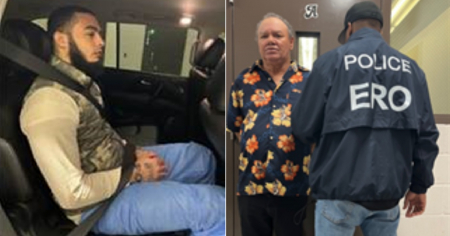
The Cuban Deivy Alemán Oropesa, who self-deported from the United States after receiving a departure order from the Immigration and Customs Enforcement (ICE), showcased his new reality in Cuba in a video and urgently requested help to reunite with his family, especially with his youngest daughter, who suffers from a serious heart condition.
"I am making this video from Cuba to tell you that I am experiencing the most difficult moments of my life. I can't hug or support my daughter, who needs it," Alemán expressed in a testimony recorded for journalist Javier Díaz of Univisión 23.
Since his return to Palmira, in the province of Cienfuegos, Deivy has been unable to find a job and is living with his parents.
Take the time to share with his eldest son, whom he hasn't seen since he left the island over seven years ago. Deivy assures that his mind and heart are in Orlando, Florida, where his wife Yisel Miguel Sarduy and his youngest daughter, a U.S. citizen, reside.
Communication with her family depends on the frequent power outages on the island. "We can only see each other through video calls, as long as there is electricity," she lamented.
Alemán voluntarily left the United States on September 14 to avoid ICE detention and forced deportation, under a migration supervision order (form I-220B).
The family separation has had a strong emotional impact, especially on the youngest child, whose mother tearfully described the distress she experiences every day.
"Every time she hears a car or someone knocks on the door, she thinks it's him," said Yisel, who fears that this physical distance could worsen her daughter's health. The cardiologist who sees the girl has warned that any emotional imbalance could trigger severe complications in her already fragile condition.
"I would like to thank everyone for all the support my family has received. It has been incredible," said the mother in another video also published by journalist Díaz. "The little girl needs her dad," she repeated through sobs.
The story of this family has sparked a wave of solidarity. Cubans in the United States have offered support with food, housing, and care for the mother and daughter.
Currently, the family is awaiting a response from immigration authorities regarding the I-130 petition submitted by Yisel for the reunification process. However, Deivy's return to the United States could take up to two years, unless the case is addressed for humanitarian reasons.
Meanwhile, the Cuban father continues in Cuba, unable to work or send financial assistance, hoping that someone will hear his plea. “I just want to return to them as soon as possible,” he states.
Frequently asked questions about the case of Deivy Alemán Oropesa and the deportation of Cubans in the U.S.
Why did Deivy Alemán Oropesa self-deport from the United States?
Deivy Alemán Oropesa decided to self-deport from the United States to avoid prolonged detention by Immigration and Customs Enforcement (ICE). He received a voluntary departure order after a routine appointment with ICE, and chose to return to Cuba to avoid being arrested and forcefully deported, which would prevent him from returning to the country for at least five years.
What is the current situation of Deivy Alemán's family in the United States?
Currently, Deivy's wife, Yisel Miguel Sarduy, and their youngest daughter, who suffers from a serious heart condition, remain in the United States. The family is facing a painful separation, as the girl needs her father's emotional support to avoid worsening her health condition. Yisel has requested assistance so that her husband can return as soon as possible, as this separation could have severe consequences for the child's health.
What impact does Deivy Alemán's deportation have on his family?
The deportation of Deivy Alemán has had a devastating impact on his family. The separation has left his sick daughter without the emotional and financial support of her father, which exacerbates her delicate health situation. Additionally, his wife, Yisel, is experiencing distress, fearing that the physical distance will further affect their daughter's well-being. The family is relying on the approval of the reunification request to be together again.
What steps is the family taking to reunify in the U.S.?
Deivy Alemán's family has submitted an I-130 petition to the U.S. Citizenship and Immigration Services (USCIS) as part of the family reunification process. They are seeking humanitarian consideration for the case due to their daughter's severe medical condition. In the meantime, Yisel and her daughter remain in the United States, receiving community support and hoping that the authorities can expedite the process.
Filed under: