
Related videos:
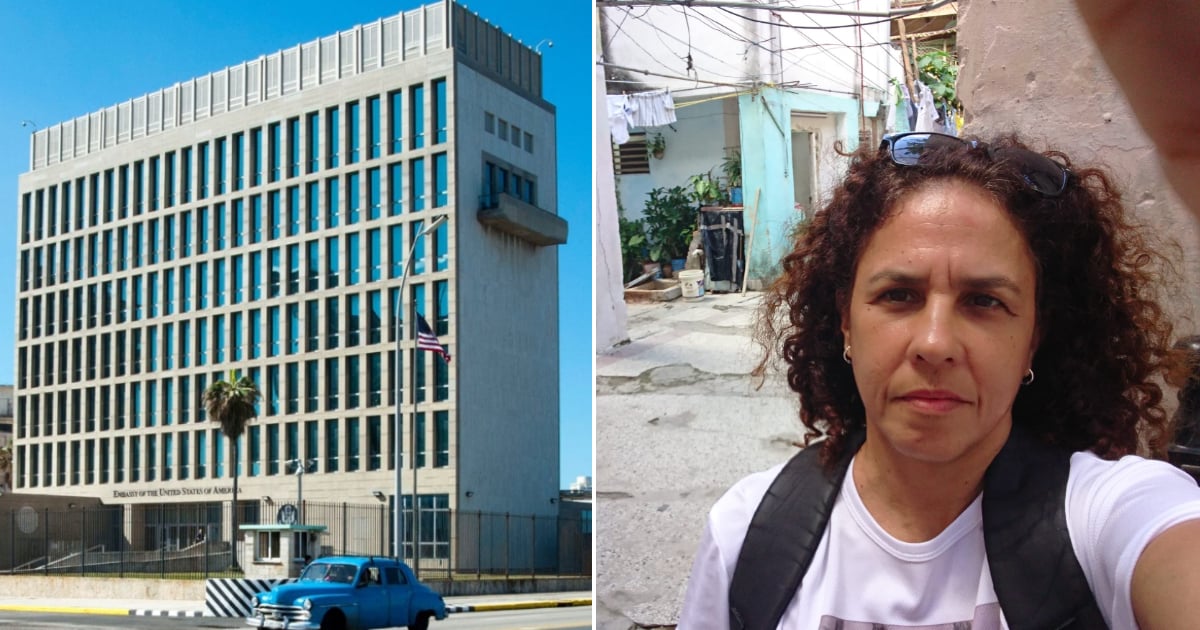
The Cuban journalist and writer Yania Suárez reported that the government of the United States denied her a visa to attend an event to which she had been officially invited, describing it as an unjust decision possibly motivated by political reasons.
"I was just denied a visa to the United States. It was an official invitation, and believe me, I am really confused. Upset and confused," she wrote on her Facebook profile. According to the consular notice she received, she did not sufficiently prove the reasons for her trip or her ties to Cuba, which she described as absurd.
"I understand that this is the response given to every candidate, especially if they are Cuban. Anyone with their eyes even slightly open will realize that I have chosen to be in Cuba," he added.
The essayist, who has studied in Canada and received scholarships at American universities, recalled that she has always returned to Cuba after traveling. "I live with the feeling that everyone has left except me," she wrote. She also recounted that in 2004 she was denied another visa for cultural reasons, in 2009 she decided not to apply for one because she wanted to return to Cuba, and in 2022 she lost a scholarship after undergoing a long administrative process.
"I would like to know what I have done wrong? Could it be that I haven't been Trumpist enough lately and it's already clear which way the new hysteria is going?" they wondered. "Could it be the usual disdain towards us?"
Although he acknowledged the friendly treatment from the consular staff, he criticized what he describes as a “xenophobic trend” that harms Cubans with proper documentation. "Perhaps it is related to the new xenophobic trend that expels Cubans with valid papers, which prevents us, as long as this administration lasts, from applying for tourist or study visas simply because we live in Cuba,” he pointed out.
Previous obstacles: a lost scholarship in 2023
In 2023, Suárez lost a doctoral scholarship at the University of Pittsburgh, after spending more than two months in Haiti waiting for a visa that never arrived. The process, described as "administrative," extended until his financial resources were exhausted.
In statements to CiberCuba at that time, he said: “If I had crossed the border illegally, I would be inside by now. It would have been much better if I had been a pro-government journalist!” He added: “This time I cannot blame State Security, but rather our supposed allies.”
Reactions: support, attacks, and polarization
Suárez's complaint generated a wave of solidarity among activists, intellectuals, and journalists both inside and outside of Cuba. However, it also sparked attacks on social media, especially following her veiled criticism of the Donald Trump administration.
In a second post, she denounced a campaign of virtual lynching: “As soon as I dared to speak a little bit negatively about Trump, there are supporters ready to snitch on me,” she wrote, referring to users who accused her of being a communist and attacked her for not aligning ideologically with the conservative exile.
"ONCE CHIVATÓN, ALWAYS CHIVATÓN," he joked in one of the responses.
A critical voice that makes one uncomfortable
Yania Suárez has been a victim of censorship on the island. In February of this year, she was expelled from the Ludwig Foundation of Cuba after participating in a debate about a documentary on Nicolás Guillén Landrián, where she questioned the omission of key biographical aspects related to the filmmaker's dissidence.
The journalist argues that within Cuba, there has been an attempt to "redefine" Landrián as an misunderstood artist, but without acknowledging his connection to opposition activism and his involvement in the Cuban Committee for Human Rights.
A stricter migration context
The visa denial to Suárez occurs amidst an increasingly restrictive immigration policy from the U.S. government. Under the Trump administration, controls have been tightened, both in granting and revoking visas, with particular focus on Cuban citizens.
In May of last year, the Chargé d'Affaires in Havana, Mike Hammer, confirmed that immigration laws are being enforced more strictly to prevent the entry of individuals with recent ties to state institutions or the Communist Party.
"We want to prevent repressors from being on the streets of South Beach, enjoying a mojito," she stated.
On his part, the current Secretary of State, Marco Rubio, has stated that “coming to the United States with a visa is a privilege, not a right.” The tightening of immigration policies also includes greater oversight of already granted visas, with the possibility of revocation due to non-compliance or suspicions of immigration violations.
"The more I am distanced from power, the more I gain in freedom."
Despite the obstacles, Suárez remains determined: “The good news seems to be the hallmark of my destiny: the more the powers push me away, the more I gain in freedom.”
"Maybe in the end, I might even end up thanking them," she concluded.
Frequently Asked Questions about Yania Suárez's Visa Denial and U.S. Immigration Policies towards Cubans
Why was the visa denied to Yania Suárez?
Yania Suárez's visa was denied for failing to sufficiently prove the reasons for her trip and her ties to Cuba, according to the consular notice she received. She considers the decision to be unjust and possibly motivated by political reasons, in a context of more restrictive immigration policies towards Cubans by the U.S.
How do Trump's immigration policies affect Cubans?
Trump's immigration policies have tightened controls for Cubans, impacting the granting and revocation of visas. This includes travel restrictions for Cuban citizens, making it harder for them to enter the U.S. with temporary visas and complicating processes such as family reunification.
What reactions has Yania Suárez's visa denial generated?
The denial of a visa to Yania Suárez has generated a wave of solidarity and support among activists, intellectuals, and journalists, although it has also provoked attacks on social media. Her criticism of the Trump administration and her denunciation of a "xenophobic trend" have further polarized opinions both within and outside of Cuba.
Filed under: