
Related videos:
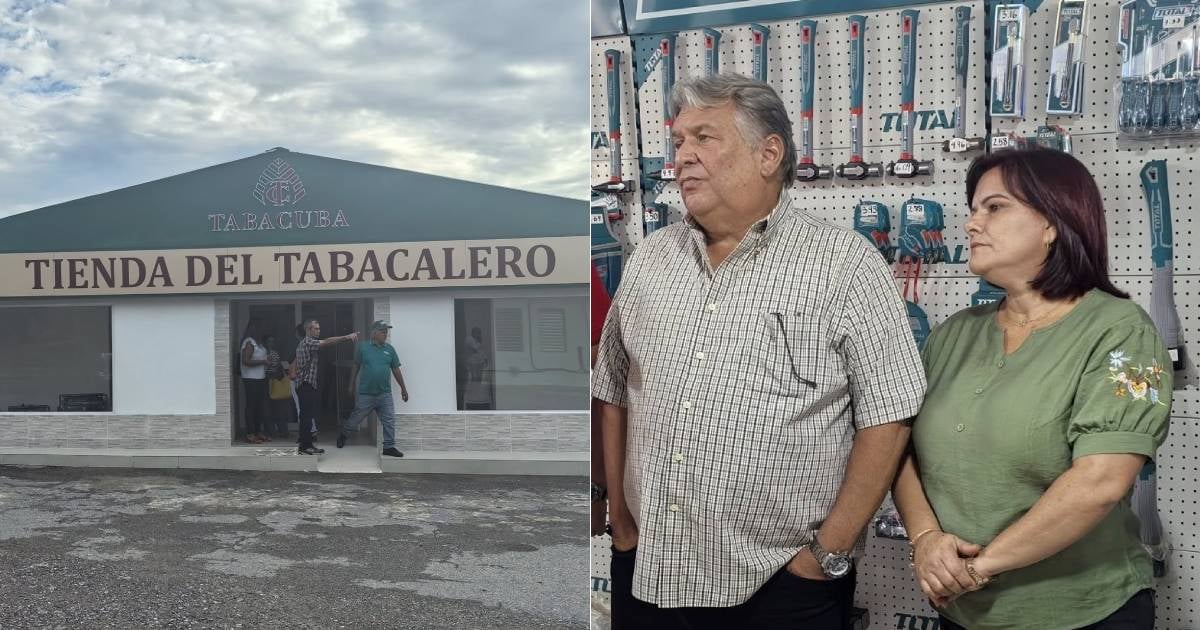
The president of the Tabacuba Business Group, Marino Murillo Jorge, inaugurated a new store in Pinar del Río in freely convertible currency (MLC) aimed at tobacco producers.
The store, located in the Base Logistics Business Unit of Pinar del Río, on the Las Ovas road, will sell hardware items such as machetes, scales, screws, electric generators, and cement.
The opening was presented as a "significant advance" in support of farmers in the sector, although the fact has caused unrest among those who see such measures as a new mechanism to retain control of the MLC that is paid to tobacco farmers, while the population grapples with an increasing shortage of cigars and exorbitant prices in the informal market.
In June,
Official words contrast with reality: wealth flows into state coffers, while those who cultivate and process the world's most coveted leaf struggle to survive on insufficient income.
From Mercedes-Benz to MLC stores: the trap of stimulus
The store opening comes just days after the delivery of Mercedes-Benz vehicles to Cuban tobacco growers, which Tabacuba presented as an incentive but which, in practice, functioned as an operation to absorb the foreign currency accumulated by the farmers.
That money, which never reaches producers in actual dollars, becomes a virtual figure that barely retains value. With the MLC falling in the informal market against a dollar that is increasingly strengthening, farmers feel trapped in a system that offers them cars or stores but denies them the right to freely access the foreign currency they generate.
The background of the inauguration
The new location in Pinar del Río is not a gesture of support, but another twist in Tabacuba's strategy to keep a sector that generates hundreds of millions in foreign currency under control.
With Murillo at the helm, remembered for the failed Tarea Ordenamiento that worsened the economic crisis, the approach remains the same: to open MLC showcases and dress up what many farmers describe as a trap as an incentive.
Facebook/ Grupo Empresarial Tabacuba.
Facebook/ Tabacuba Business Group.
In the Pinar del Río region, producers wake up early to irrigate with the limited electricity available; in the neighborhoods of Havana and Matanzas, smokers pay a fortune for a pack of cigarettes. And amid this reality, the MLC stores emerge as the official solution, although what they reveal is an ever-deepening gap between the propaganda rhetoric and the harsh daily life of Cubans.
Frequently Asked Questions about the MLC Store for Tobacco Producers in Cuba
What is the MLC store inaugurated by Marino Murillo in Pinar del Río?
The MLC store in Pinar del Río is an establishment intended for tobacco producers, where hardware items such as machetes, scales, fasteners, electric generators, and cement are sold. This store has been presented as a support for the tobacco sector, but it has generated criticism as it is seen as a mechanism to maintain control over the MLC paid to the growers.
What is the objective behind opening MLC stores for tobacco producers?
The stated objective is to support tobacco producers by providing them with a place to acquire necessary supplies for their work. However, many criticize that these stores operate as a mechanism of control of the MLC, as farmers must pay in this virtual currency for the basic resources they need, while the value of the MLC continues to decline in the informal market.
Why are tobacco producers not satisfied with Tabacuba's measures?
Tobacco producers are dissatisfied because, despite promises to improve their living conditions, the measures implemented do not provide for fair wages or real access to the value of their exports. Instead of receiving dollars or euros for their crops, producers obtain MLC, a currency that they cannot freely convert and which has lost value compared to the dollar and the euro.
What problems do Cuban farmers face due to the use of MLC?
The farmers are facing the devaluation of the MLC, which translates into a loss of purchasing power. Furthermore, they are required to buy supplies in this currency, without being able to convert it into real foreign currency. This limits their ability to meet their basic needs and affects their quality of life, as they cannot freely access the dollars they generate from their exports.
Filed under: