
Related videos:
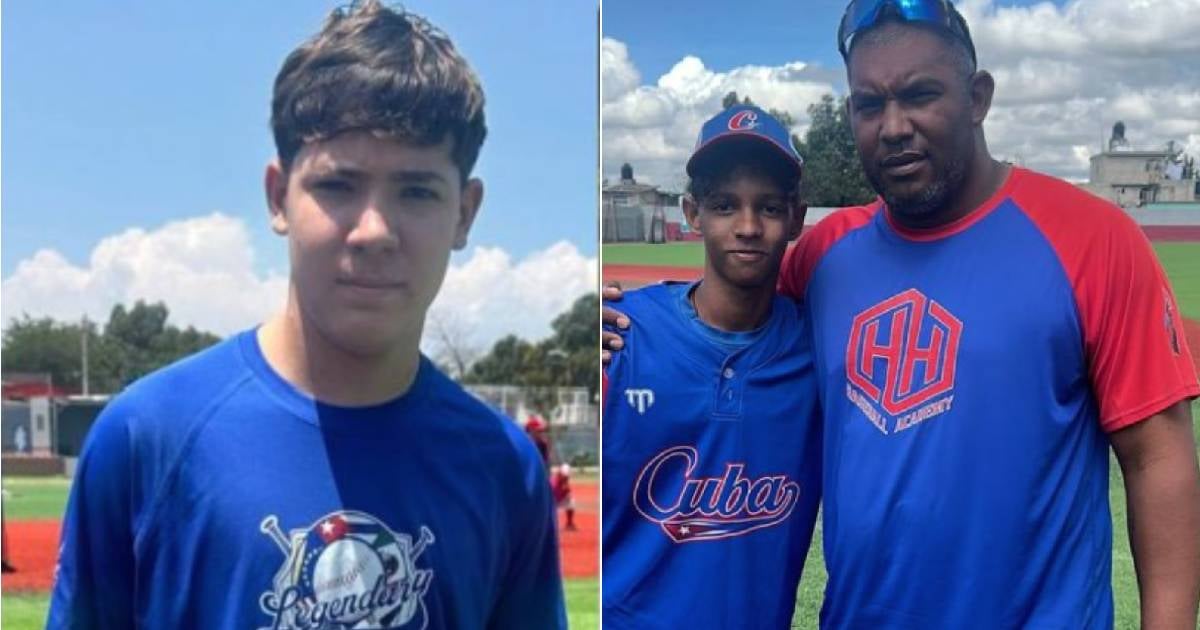
Two promising Cuban baseball players, Ryder Fabián Pérez (13 years old) and Jean Carlos Cárdenas (15), recently left the island and settled in Mexico, where they will seek to develop their skills with the aim of signing with a Major League organization in the future.
According to journalist Francys Romero, both prospects will join the Legendary Academy, located in Zumpango, a training center known for preparing young talents for professional baseball in the United States.
The communicator stated on Facebook that Ryder Fabián Pérez was part of the Cuba U-10 team in 2022, excelling both as a positional player and as a pitcher.
For his part, Jean Carlos Cárdenas participated in the Little League tournament in the Dominican Republic that same year, representing Santa Clara, where he demonstrated outstanding skills for his age.
The exit of these young individuals fits within the growing wave of Cuban talents who choose to develop outside the country, due to the limitations of the state sports system and in search of greater opportunities in the demanding international circuit.
The exodus of players is unstoppable
The exodus of Cuban baseball players continues to grow at an unstoppable pace, characterized by the constant departure of young athletes under 17 who leave the island in search of better sports and economic opportunities.
Many of them see in countries like Mexico, the Dominican Republic, or the United States a real opportunity to develop in professional academies, sign with Major League organizations, and achieve a future that the Cuban sports system can no longer guarantee them. Structural limitations, the lack of stable international competitions, and the economic crisis that directly affects sports have turned this path into the most viable option for many talents.
Currently, entire families risk leaving their country to offer their children opportunities that are unattainable in Cuba. Material shortages—from basic equipment to adequate nutrition—and the lack of a solid sports project push dozens of young people to emigrate each year.
For many, this exodus is not merely a gamble on sporting development, but a means of escaping a system that does not provide real prospects for growth or stability. The phenomenon, far from coming to a halt, reflects the progressive deterioration of Cuban baseball and the direct impact of the national crisis on one of its historically most emblematic disciplines.
Frequently Asked Questions About the Exodus of Cuban Baseball Players to MLB
Why are young Cuban baseball players emigrating to countries like Mexico and the Dominican Republic?
Cuban young baseball players are emigrating in search of better sports and economic opportunities. The limitations of the state sports system in Cuba, along with the lack of international competitions and the economic crisis, have led many to seek development in professional academies outside the country, especially in Mexico and the Dominican Republic, with the hope of signing with Major League organizations.
What role do academies like Legendary play in the development of these young talents?
Academies like Legendary in Mexico are essential for the development of young Cuban talents. These academies prepare prospects for professional baseball in the United States, providing specialized training and opportunities to be seen by MLB scouts.
What challenges do Cuban baseball players face when trying to sign with MLB organizations?
Cuban baseball players face multiple challenges when trying to sign with MLB organizations. These include adapting to a new training system, overcoming legal and visa barriers, and showcasing their talent in front of scouts. Additionally, they must deal with economic and personal uncertainty when leaving their home country.
How does this exodus of talent affect the quality of baseball in Cuba?
The exodus of talent has significantly weakened the quality of baseball in Cuba. The ongoing loss of young prospects before they can establish themselves in Cuban baseball has lowered the level of competition in the National Series. This, in turn, affects the development of the sport on the island and limits training opportunities for new players.
Filed under: