
Related videos:
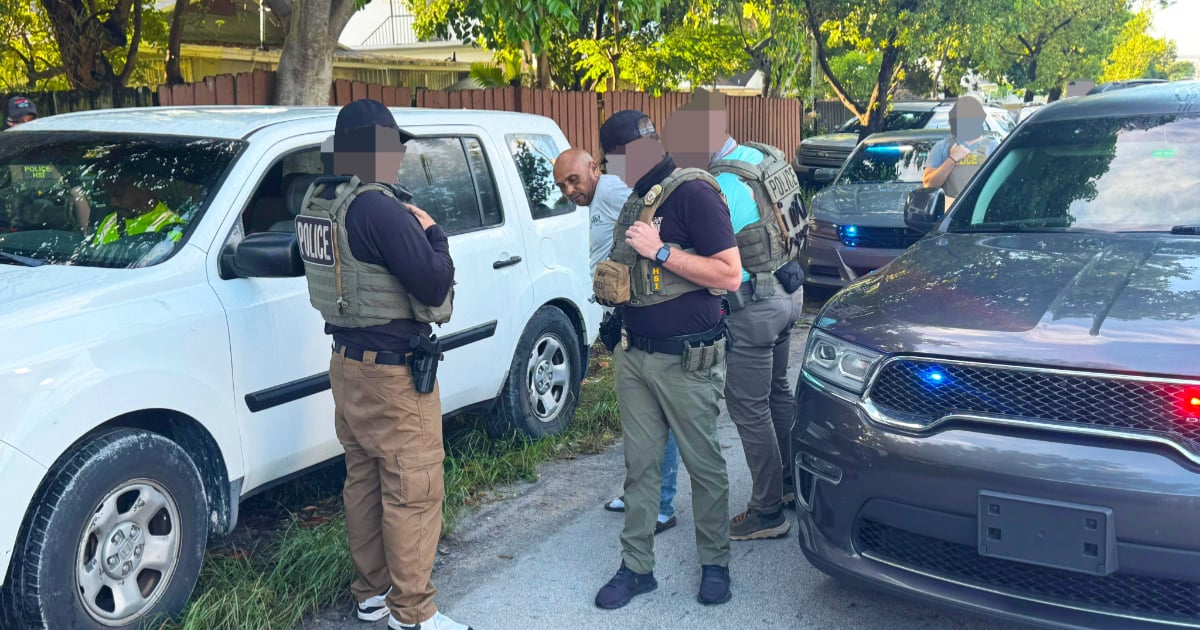
Florida sheriffs requested $250 million in state funding to bolster their involvement in immigration enforcement, in coordination with President Donald Trump's administration, through technological equipment, bonuses for officers, and improvements in temporary detention capacity.
The applications submitted to the State Board of Immigration Law Enforcement—comprised of Governor Ron DeSantis, Attorney General James Uthmeier, Agriculture Commissioner Wilton Simpson, and Chief Financial Officer Blaise Ingoglia—were evaluated this Tuesday.
This is the first disbursement of funds allocated during a special legislative session held in February.
In total, 56 law enforcement agencies submitted requests exceeding 14 million dollars. The amounts range from the 10,882 dollars requested by Gulf County to over a million from the Seminole County Sheriff's Office.
Among the requested items are body cameras with AI-assisted translation, vehicle license plate readers, portable fingerprint scanners, shackles, double beds for detainees, safety mattresses, transport vans, and funding for overtime and bonuses.
Flagler County Sheriff Rick Staly has requested over $725,000, of which $341,124 would be allocated for real-time translation software capable of handling more than 50 languages. The aim, according to his request, is to facilitate communication during interventions with individuals who do not speak English, which could reduce misunderstandings and enhance the safety of the officers, the request notes.
Various agencies are also requesting funds for license plate readers (LPR), the information from which would be shared with federal agencies such as the Immigration and Customs Enforcement (ICE). This system allows for vehicle location tracking and the development of movement patterns to plan detention actions.
The funds also include bonuses of up to $1,000 for certified officers acting as immigration agents participating in joint operations with ICE, as well as incentives for prison staff involved in the detention of immigrants.
In addition, the marshals are seeking approximately 4.7 million dollars to increase bed capacity in temporary detention centers, and another 2.7 million to cover transportation expenses for unauthorized immigrants.
For example, Miami-Dade County requested $946,000 for the reimbursement of detention beds, while Flagler is asking for over $57,000 to set up 34 double beds.
These actions occur within the framework of strengthening collaboration between state and federal authorities to intensify the enforcement of immigration laws.
The 287(g) program, which allows state and local agents to perform federal immigration tasks, has grown by 577% in Florida since January 2025, with over 325 active agreements.
The deputy director of ICE, Madison D. Sheahan, praised the collaboration with Florida agencies and thanked Governor DeSantis, highlighting the "critical work to protect our communities and ensure the removal of dangerous individuals."
Thanks to the leadership of Trump and DHS Secretary Kristi Noem, local agencies receive funding for each trained officer, including reimbursements for salary, benefits, overtime, vehicles, cell phones, and other equipment.
The Pinellas County Sheriff, Bob Gualtieri, has been instrumental in the development of a new state coordination plan. The strategy divides Florida into 18 regions, with sheriffs responsible for transporting detainees to federal centers, even in cases of arrests on solely civil charges.
"If we are going to do this, we need the tools to achieve it," Gualtieri stated. "This is a new normal and it will be with us for a long time," he added, referring to President Donald Trump's anti-immigrant policy.
Frequently Asked Questions about the Strengthening of Immigration Control in Florida
Why are Florida sheriffs requesting 250 million dollars for immigration enforcement?
The marshals are seeking these funds to strengthen their involvement in immigration enforcement through the acquisition of technological equipment, bonuses for officers, and improvements in temporary detention capacity. This request is part of a coordinated effort with state and federal government to intensify the enforcement of immigration laws in Florida.
What equipment and resources are planned to be acquired with the requested funds?
Among the requested items are body cameras with AI-assisted translation, vehicle license plate readers, and portable fingerprint scanners. Additionally, there is a goal to fund overtime hours and bonuses for certified officers functioning as immigration agents who work in joint operations with the Immigration and Customs Enforcement (ICE).
How is immigration control coordinated in Florida between state and federal agencies?
Immigration control in Florida is coordinated through agreements like the 287(g) program, which allows state and local agents to carry out federal immigration tasks. Florida leads in the number of 287(g) agreements, enabling close collaboration with ICE to carry out detentions and deportations of undocumented immigrants.
What impact does the immigration control plan have on migrant communities in Florida?
The immigration control plan in Florida has generated fear and distrust in migrant communities, as it intensifies raids and deportations, often in collaboration with ICE. This affects families that have lived in the state for years, raising concerns about family separation and job loss due to restrictive policies.
Filed under: