
Related videos:
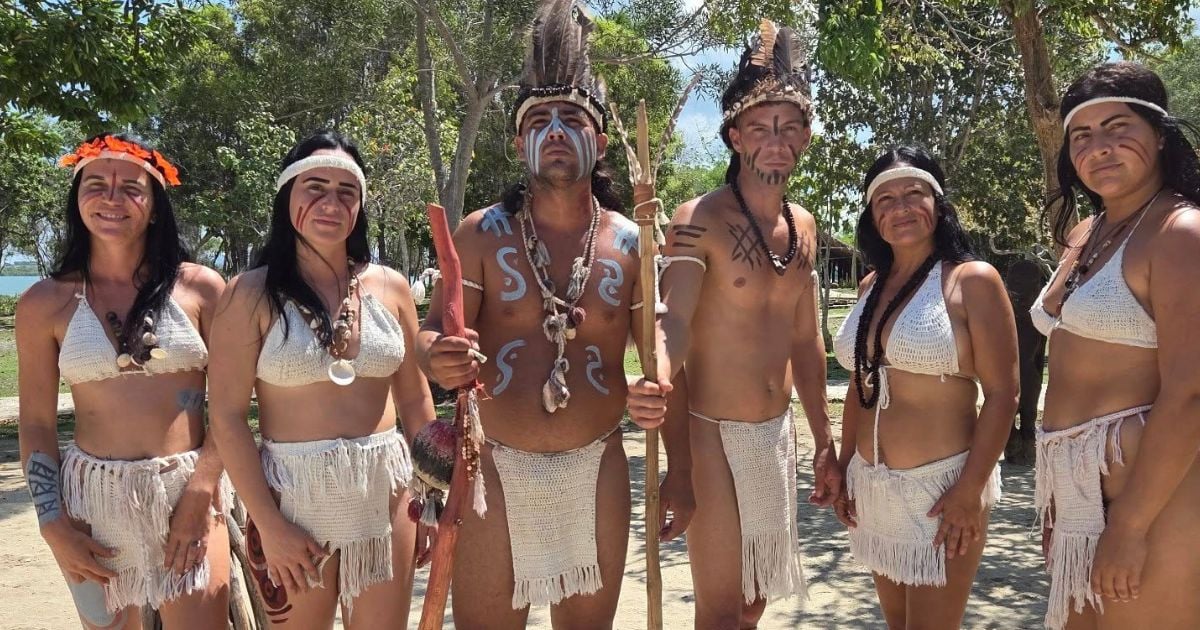
A post on the Facebook page Holguín en Fotos sparked a wave of reactions this weekend after sharing images of workers at the Bariay National Monument Park in the province of Holguín, dressed as the ancient Cuban aborigines.
"They are workers of the Bariay National Monument Park paying homage to the deepest roots of our country. Dressed as the ancient aborigines, they recreate the ancestral dance of the areíto, a symbol of community, joy, and respect for nature," stated the text accompanying the photos published on Saturday.
Although the intention behind the tribute was praised by some users, many others reacted with mockery, sarcasm, or criticism, considering that the staging evoked more of an unintentional satire on the country’s regression than a cultural representation.
The tribe is advancing, and that bothers them,” commented the user Carlos Camilo, in a phrase that quickly references one of the slogans used by the Cuban government.
“They are ready for you to rediscover them,” Jorge Luis ironized, referring to the arrival of Christopher Columbus in Cuba, when the population was indigenous.
"When a costume stops being one," wrote Axel Rose in an open reference to the current economic crisis endured by the Cuban population.
Yoanis Escobar Domínguez stated: “It is not a tribute, it is a training,” because there has been much discussion on social media about the regression that the nation has experienced in every way.
“That's the future of the Cuban,” said Luis Rodríguez, while Leonardo Aguilar added: “Cuba is almost there; it just needs a little more to return to those times.”
Others defended the representation, arguing the importance of reclaiming cultural roots and paying tribute to indigenous peoples.
“Very beautiful. Let's not lose our culture and traditions in our country,” commented Esperanza Bernal Álvarez.
Mayelin Escalona also shared her experience: “Lovely place, I had the opportunity to enjoy their dance and their beautiful show.”
From the very page Holguín in Photos, Yannay María Sintes, apparently affiliated with the park collective, responded to the criticisms: “Here we are, ready day by day to carry out our work and welcome every visitor who arrives from all over. Bariay is undoubtedly your best option for breathing fresh air and experiencing a magnificent time surrounded by nature and history that continues to thrive thanks to our efforts.”
The Bariay National Monument Park is recognized as the site where Christopher Columbus is believed to have first landed in Cuba in 1492.
Today it is part of the historical and cultural heritage of the island and often offers recreations related to pre-Columbian indigenous cultures.
The publication has become an unexpected social barometer, blending nostalgia, humor, criticism, and cultural pride.
A debate that, beyond the performance, seems to reflect a broader reality about the tensions and perceptions currently experienced in the country.
Frequently asked questions about the cultural debate at the Bariay National Monument Park
Why has the portrayal of workers dressed as indigenous people in Holguín generated controversy?
The representation has generated controversy because many see it as an unintentional satire of the country's regression, while others defend it as a tribute to Cuba's cultural roots. The criticism focuses on the fact that the scene seems to reflect the economic and social crisis, rather than a genuine cultural homage.
What is the significance of the Bariay National Monument Park in Cuba?
The Bariay National Monument Park is recognized as the site where Christopher Columbus first landed in Cuba in 1492. It is part of the historical and cultural heritage of the island and offers recreations related to pre-Columbian indigenous cultures.
What opinions have Cubans expressed on social media about the event in Bariay?
Opinions are divided. Some Cubans criticize the event as a symbol of the country's regression, while others defend the importance of preserving and paying tribute to cultural roots. Social media has been a space for debate, mixing nostalgia, humor, and critique.
Filed under: