
Related videos:
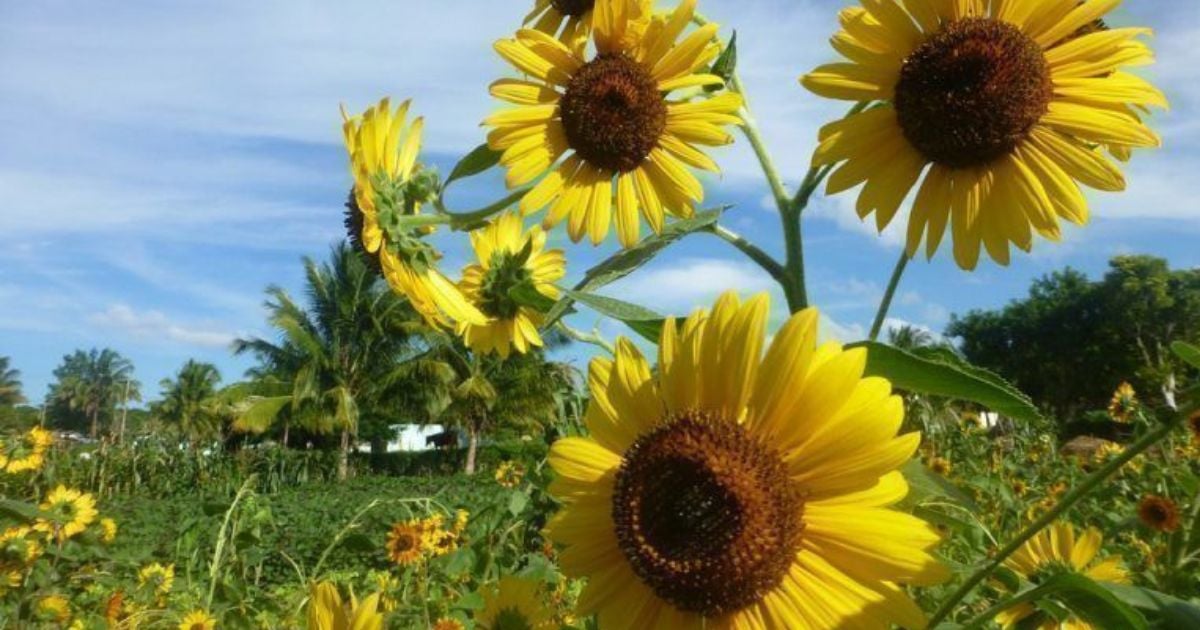
In the midst of the severe food crisis that Cuba is facing, the government in Ciego de Ávila comes forward with a new promise: to cultivate sunflower and other oilseed plants with the aim of producing edible oil locally and reducing dependence on imports.
According to the official newspaper Granma, the province of Avila has expanded its plantations to over 650 hectares, mainly in the municipalities of Ciego de Ávila, Baraguá, and Ciro Redondo.
Authorities assert that the strategy aims to replace imports and move towards the so-called “food sovereignty”, the same rhetoric that the regime has repeated time and again in a country that suffers from hunger.
Agronomist Rolando Macías Cárdenas, one of the producers enrolled in the program, planted nine hectares of sunflower following the potato crop.
Although he acknowledged the irrigation problems caused by power outages and the lack of supplies, he stated that the experience was encouraging.
"We achieved six tons of seeds in nine hectares, an acceptable yield despite the difficulties," he said to the newspaper.
Macías acknowledged that the plan needs to address "several problems" such as the availability of seeds, fertilizers, fuel, and machinery, in addition to defining the marketing of the oil.
"It wasn't as successful as we expected, but we didn't incur any losses, and that encourages us to keep going," he stated.
Other farmers, like Roberto Perdomo Díaz, also grow sunflowers and peanuts, although they face the same obstacles.
"We must fight against the resource deficit, because we cannot allow what was born with so much effort to die," he commented.
The initiative, launched in 2024, also includes the cultivation of sesame, soybeans, and peanuts, and is supported by local scientific centers that are developing biofertilizers and agricultural technologies to improve yields.
In parallel, engineers from the agro-industrial company Bolivia and the Turiguanó genetic complex are working on the creation of oil-extraction machines.
The provincial government claims that the project has created new jobs for women and young people and is part of the efforts to ensure food self-sufficiency.
However, experts warn that the actual impact will depend on production capacity and whether the oil effectively reaches consumers.
Although the initial sunflower plantations are seen as a step towards self-sufficiency, the shortage of supplies, power outages, and lack of industrial infrastructure continue to be the main obstacles for this agricultural plan to meet the needs of the population.
In the midst of this sea of promises, a government-affiliated journalist recently lamented that the price of a bottle of oil almost equals the minimum pension in Cuba.
“1,400 pesos for a bottle of oil! A hundred pesos more and it would be equivalent to my grandmother’s pension. Suddenly, I had that recurring mental calculation since inflation started to rise,” said Boris Luis Alonso Pérez in an opinion piece published in Girón, the local state newspaper in Matanzas.
Frequently Asked Questions about Sunflower Oil Production in Ciego de Ávila
What is the objective of sunflower cultivation in Ciego de Ávila?
The sunflower cultivation in Ciego de Ávila aims to produce edible oil locally to reduce dependence on imports and move towards "food sovereignty."
What challenges does oil production face in Ciego de Ávila?
Production faces several challenges such as shortages of supplies, power outages, lack of machinery, and issues in the commercialization of oil. These obstacles hinder the agricultural plan from effectively responding to the population's demand.
What is the public perception of the "food sovereignty" announced by the government?
Despite official speeches about "food sovereignty," the public perception is one of skepticism and frustration. Many families' tables remain empty, and government promises do not translate into concrete improvements in access to basic food.
What other crops are included in the agricultural program of Ciego de Ávila?
In addition to sunflower, the agricultural program in Ciego de Ávila includes the cultivation of sesame, soy, and peanuts, with the support of local scientific centers that develop biofertilizers and agricultural technologies to enhance yields.
How does the energy crisis affect sunflower production in Ciego de Ávila?
The energy crisis adversely affects the irrigation of sunflower crops due to power outages, further complicating production and the achievement of the goals set by the local government.
Filed under: