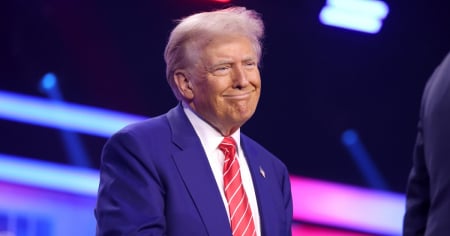
Donald Trump proclaimed the end of the war in Gaza this Monday during a speech before the Knesset, the Israeli Parliament, where he announced the beginning of a new era of peace, cooperation, and reconstruction in the Middle East.
In his address, the U.S. president stated that the release of hostages, the return of bodies to Israel, and the cessation of hostilities mark not only the end of a conflict but "the historic dawn of a new Middle East."
He expressed gratitude to Prime Minister Benjamin Netanyahu, as well as to Arab and Muslim countries that collaborated to pressure Hamas and allow for the return of the hostages.
Trump celebrated that "the forces of chaos, terror, and ruin are now weakened, isolated, and completely on the defensive," thanks to joint operations and the Israeli military power backed by the United States.
In his remarks, he also mentioned advisors and key figures such as Steve Witkoff and Jared Kushner, attributing a decisive role to them in the negotiating process.
The leader emphasized that a nearly unanimous regional agreement was reached to demilitarize Gaza, disarm Hamas, and ensure Israel's security. He insisted that, following the military victory, it is time to transform those achievements into development and prosperity for the entire region.
Trump extended an invitation to more countries to join the Abraham Accords and proposed creating an international platform to channel investments into infrastructure, education, health, and technology in Gaza and neighboring nations. He promised that the United States and its allies would contribute to this new phase from a position of strength.
He even addressed Iran, asserting that Washington is willing to cooperate if its leadership renounces terrorism, ceases its threats, and recognizes Israel's right to exist.
The speech concluded with a reaffirmation of the historic bond between the United States and Israel, and an ambitious vision for regional integration that connects cities and economies through trade and diplomacy.
"If peace can prosper in Jerusalem, it can also thrive throughout the Middle East," he stated.
The conflict between Israel and Hamas has reached a turning point with the signing of an agreement that includes a ceasefire and the release of hostages.
Both parties agreed to cease hostilities after weeks of fighting, paving the way for a significant de-escalation in Gaza. This understanding was made possible through the mediation of regional actors and intense international diplomatic pressure.
The Israel Defense Forces have begun a gradual military withdrawal from key areas of the Palestinian enclave, as part of the commitments set forth in the agreement.
Meanwhile, humanitarian teams and international observers began to access affected areas to coordinate assistance and assess structural damage.
The diplomatic offensive was led by U.S. President Donald Trump, who personally announced the peace agreement and promised economic and institutional support for the reconstruction of Gaza.
The president presented this phase as the beginning of a regional transformation driven by pragmatism, shared security, and economic development.
In the days prior, Trump had already expressed optimism following a statement from Hamas in which the organization expressed its willingness to engage in dialogue about a long-term solution.
Frequently asked questions about the end of the war in Gaza and Donald Trump's role
How was the end of the war in Gaza achieved?
The end of the war in Gaza was achieved through intense negotiations mediated by President Donald Trump. These included a 20-point peace plan that outlined a cessation of hostilities, the release of hostages, and an ambitious program for the reconstruction of Gaza under international supervision. The pressure exerted on Hamas to accept the agreement and the collaboration of countries such as Egypt, Turkey, and Qatar were also crucial in the process.
What role did Donald Trump play in the cessation of the war in Gaza?
Donald Trump played a crucial role in the negotiations to end the war in Gaza. His administration presented a comprehensive plan that was accepted by Israel and Hamas, facilitating the ceasefire and the release of hostages. Trump also promoted international cooperation and used his influence to pressure the parties to accept the agreement, resulting in a significant shift towards peace in the region.
What does the peace plan presented by Trump for Gaza include?
Trump's peace plan includes the cessation of the war, the release of all hostages, and a reconstruction program for Gaza. Furthermore, it proposes the demilitarization of the region, the withdrawal of Israeli troops, and the establishment of a transitional government without the participation of Hamas. The plan also advocates for investment in infrastructure, education, and technology to promote prosperity in Gaza and its neighboring countries.
What was the international reaction to the peace agreement in Gaza promoted by Trump?
The international reaction to the peace agreement was largely positive. Leaders from around the world congratulated Trump on the success of the negotiations, highlighting the agreement's potential to bring lasting peace to the region. However, doubts were also expressed regarding the full implementation of the agreement, particularly concerning compliance from both Hamas and Israel.
Filed under: