
Related videos:
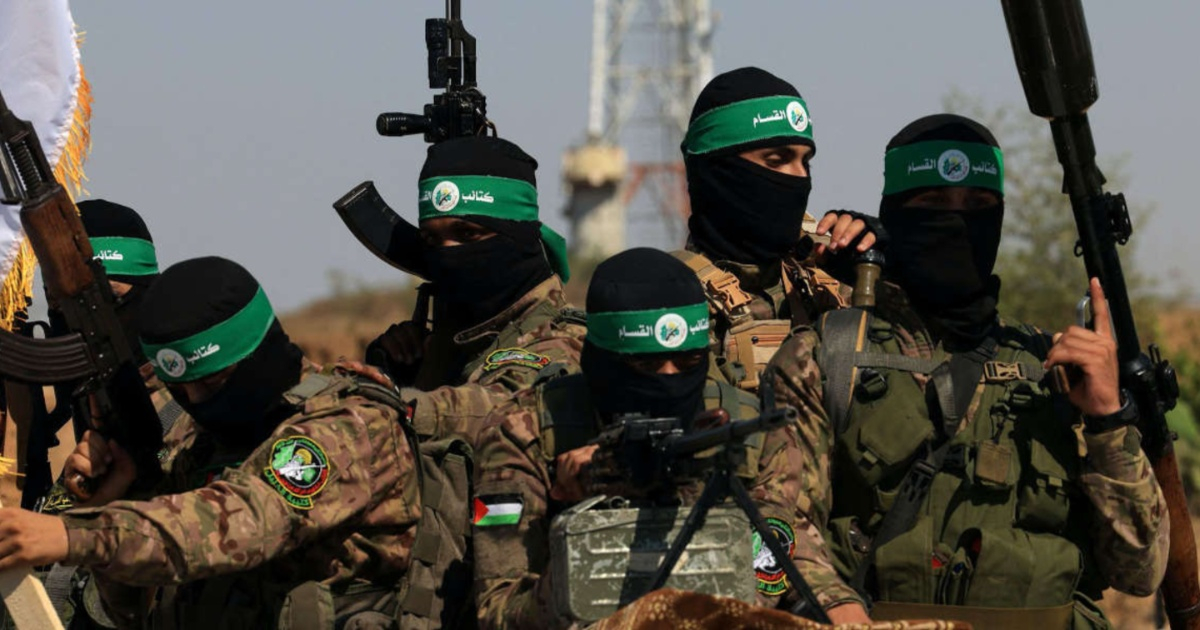
Hamas has informed mediators that it agrees to hand over its weapons to an Egyptian-Palestinian committee, but it rejects the proposal for the management of the Gaza Strip to pass to an international transitional committee as suggested in President Donald Trump's peace plan.
According to information provided to EFE by sources familiar with the negotiations, the Islamist movement acknowledges the entry of Palestinian security forces trained in Egypt and Jordan into Gaza.
It also suggests that the civil administration of the Strip be transferred to an administrative committee affiliated with the Palestinian government (PA), to negotiate in parallel: one team with Israel (through mediators) and another with the Palestinian Authority.
Hamas also rejects the presence of former British Prime Minister Tony Blair as “governor of Gaza” —would only accept remote oversight— and demands to “clarify” the mechanisms for implementing Trump's plan, as well as guarantees that Israel will not resume its offensive once the agreement is reached.
Among the central conditions, the group demands a “permanent ceasefire”, the “complete withdrawal” of the Israeli Army from the Strip, unrestricted access for humanitarian aid, the return of displaced individuals to their residential areas, and the immediate initiation of comprehensive reconstruction under the supervision of a Palestinian national body of technocrats.
Additionally, it proposes a "fair prisoner exchange agreement." Regarding the hostages, sources cited by EFE state that Hamas is willing to release “all hostages and prisoners, both alive and deceased” if an agreement is reached.
It also requests that leaders of the movement be allowed to leave Gaza with assurances from the United States that they will not be pursued.
The spokesperson for the Ministry of Foreign Affairs of Qatar —the mediating country— stated that, if a pact is finalized, the release of the hostages would be the first phase and would signify the “end of the war.” He mentioned 48 hostages (both alive and deceased) in an exchange for Palestinian prisoners and emphasized that the results must be “definitive, not temporary,” implemented gradually to prevent a resumption of hostilities.
Indirect talks between Israel and Hamas continued on Tuesday in Sharm el Sheikh, following an initial session held “in a positive atmosphere,” focused on identifying bottlenecks. Hamas sent its chief negotiator Jalil al Haya to lead the delegation.
The Trump Agreement
The President of the United States, Donald Trump, had previously presented a comprehensive plan to end the war between Israel and Hamas in the Gaza Strip, which includes an immediate ceasefire, the establishment of a transitional government without the presence of the Islamist group, and the release of all hostages within a maximum of 72 hours after the acceptance of the agreement.
Donald Trump issued an ultimatum to the terrorist group in the event they do not accept the terms: “A hell will be unleashed like never seen before.”
The leader also urged Palestinian civilians to move to safer areas within Gaza. “To all innocent Palestinians: move to safe places. You will be well cared for by those who are ready to help,” he wrote.
This agreement would bring an end to nearly two years of war in Gaza, which has left over 66,000 Palestinian dead —including 17,000 minors— according to the Gaza Ministry of Health.
Frequently Asked Questions about the Agreement between Hamas and Trump's Peace Plan
What is Hamas's position on disarmament and the release of hostages?
Hamas has agreed to surrender its weapons to an Egyptian-Palestinian committee, but it sets conditions such as a permanent ceasefire and guarantees that Israel will not resume its offensive. Additionally, they are willing to release all Israeli hostages, whether alive or dead, as part of a fair prisoner exchange agreement.
What conditions has Hamas imposed for the implementation of Trump's peace plan?
Hamas demands a permanent ceasefire, the complete withdrawal of the Israeli Army from the Gaza Strip, unrestricted access for humanitarian aid, and the return of displaced persons to their places of residence. Additionally, it seeks for the civil administration of Gaza to transition to an administrative committee affiliated with the Palestinian government and does not accept the presence of an international transitional committee.
What does Donald Trump's peace plan for Gaza include?
Trump's peace plan proposes an immediate ceasefire, the release of all hostages within 72 hours, and the establishment of a transitional government in Gaza without the participation of Hamas. It also includes an ambitious reconstruction plan for the enclave under international supervision and a prisoner exchange agreement.
How has the international community reacted to Trump's plan for Gaza?
The plan has received support from some international allies such as Israel and several Arab countries, but it has also faced opposition within Israel and rejection from Hamas. The international community is divided, with some countries concerned about the humanitarian and political impact of the plan, particularly regarding the demilitarization of Gaza and the displacement of its population.
Filed under: