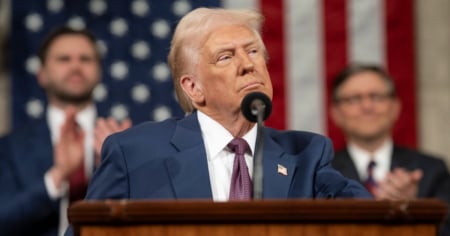
The President of the United States, Donald Trump, has intensified pressure on Congress, specifically on the Democrats, warning that he will eliminate public assistance programs if the federal government shutdown, which reached its fourteenth day on Tuesday, continues with no signs of resolution.
In a press conference from the White House, Trump issued one of his most controversial threats since the beginning of the government shutdown.
“Democrats are being killed by the government shutdown, we are shutting down their programs that we opposed and they will never return,” he declared defiantly.
The leader assured that he is prepared to present a list of government programs backed by the Democrats that he will terminate if the legislative deadlock continues for another week.
Although he did not provide specific details, he made it clear that these would be initiatives he described as “outrageous and semi-communist”; and concluded with a sharp warning: "They will never return."
A Stalled Congress
Meanwhile, the U.S. Senate held its eighth vote on a proposal previously approved by the House of Representatives.
However, once again, the legislators failed to reach a consensus.
The lack of agreement reflects the deep stalemate between both parties, just as the holiday season approaches, exacerbating the atmosphere of uncertainty.
Negotiations are at a standstill due to differences in priorities: democrats insist on including greater public health benefits, while republicans demand that the budget be approved as it stands, refusing to sit down to negotiate adjustments.
Consequences of the closure: Layoffs and operational chaos
The current government shutdown, driven by a dispute between Republicans and Democrats regarding the Affordable Care Act (Obamacare), has rendered several agencies non-functional and has left tens of thousands of federal employees without pay.
The impact of the shutdown is already being strongly felt in several key sectors.
According to official reports, hundreds of federal employees have been laid off on direct orders from the White House, plunging many families into economic uncertainty just before the end of the year.
Moreover, the country is facing significant delays in air traffic and an increase in delays at the borders with Mexico, due to a shortage of operational staff in key agencies.
The impacts are not only limited to the economy but also extend to national security and the regular functioning of the administration.
What's next?
Trump's warning marks an escalation in the pressure strategy towards the Democrats, with potential consequences for the most vulnerable sectors of American society.
If the threat materializes, the national debate could revolve around which programs will be affected, and whether the shutdown is being used as a tool for political blackmail.
For now, the country remains paralyzed at the institutional level, while uncertainty grows among employees, travelers, border communities, and beneficiaries of public aid.
On Monday, the Speaker of the House, Republican Mike Johnson, warned that the current government shutdown threatens to become the longest in the nation's history.
Frequently Asked Questions About the U.S. Government Shutdown and Trump's Threats
Why is the U.S. government shut down in 2025?
The government shutdown in 2025 is due to the lack of agreement between Republicans and Democrats on the federal budget, especially regarding health subsidies under the Affordable Care Act (Obamacare) and other expenditures. Democrats are demanding the extension of subsidies that are set to expire, while Republicans are looking to cut or eliminate these expenses. The dispute has led to an institutional gridlock, affecting the operation of public services and the payment of salaries to federal employees.
What threats has Donald Trump made regarding the government shutdown?
Trump has threatened to eliminate public assistance programs backed by Democrats if the government shutdown continues. He has described some of these programs as "outrageous and semi-communist" and stated that they will never return if a decision is made to shut them down. This threat adds to the pressure on Congress to reach a budget agreement.
What are the consequences of a government shutdown for federal employees?
The government shutdown has left tens of thousands of federal employees without pay, and according to official reports, hundreds have been laid off. The lack of a budget agreement has paralyzed agencies and non-essential services, also affecting sectors such as air traffic and border crossings. The impact is significant, creating economic uncertainty for many families.
What role do health subsidies play in the government shutdown conflict?
Health subsidies under the Obamacare program are a central point of disagreement in the budget conflict. Democrats are looking to renew these subsidies, which expire at the end of the year, as they are crucial for the healthcare access of over 24 million Americans. Republicans, on the other hand, want to discuss this issue at a later time and resist including it in the current budget agreement.
Filed under: