
Related videos:
For the third consecutive year, the state of Florida tops the national list of literary censorship in public schools, with 2,304 titles banned or removed from school libraries.
This is reported in a report by PEN America, one of the leading writer associations that advocates for freedom of expression and literature as a fundamental right.
"Never before in the life of any American have so many books been systematically removed from school libraries across the country.", warns the document.
“This right -the right to discover- is being taken away from students under the pretext of their ‘protection’”, the report adds at another point, highlighting that the bans on books harm public school systems and limit education.
Although the figures refer to prohibitions in specific districts - it does not mean that books are banned state-wide - the report reveals a troubling pattern that has turned Florida into a model replicated by other jurisdictions.
Nationally, there have been 22,810 cases of book bans in 45 states and 451 public school districts since July 2021, in what PEN America describes as a “crisis without precedent.”
A trend driven by state laws and political pressure
The escalation of literary censorship in Florida is not coincidental.
In 2022, Governor Ron DeSantis signed law HB 1467, which restricts access to books in classrooms if they contain sexual references or references to LGBTQ+ individuals.
Subsequently, it enacted other regulations such as the well-known “Don’t Say Gay” and the “Stop WOKE” law, which restrict discussions on sexual orientation, gender identity, racism, and sexism.
These laws have created a climate of fear among librarians and educators, who choose to remove books as a preventive measure, even before a formal review is completed.
As the report indicates: “97% of the prohibitions did not originate from mandatory laws, but from the fear of violating them.”
Banned books in Florida: classics, contemporary literature, and science
The list of banned books in Florida school districts includes everything from classic works to bestsellers for young adults and academic texts.
Among the most striking, prohibited even in one district of the state:
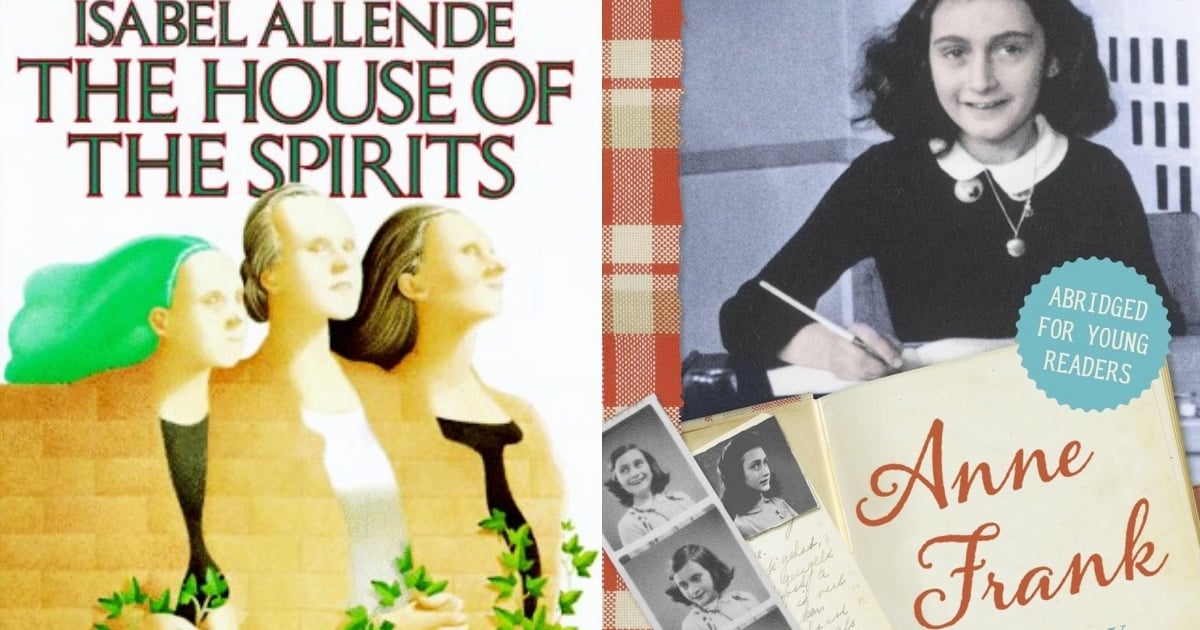
-The Diary of Anne Frank, graphic version by Ari Folman.
-Blue Eyes (The Bluest Eye), by Toni Morrison.
-The Handmaid’s Tale, by Margaret Atwood.
-One Hundred Years of Solitude, by Gabriel García Márquez.
-The House of the Spirits, by Isabel Allende (pending investigation in Hillsborough County).
-The Fox, by Isabel Allende.
-Fahrenheit 451, by Ray Bradbury.
-The Perks of Being a Wallflower, by Stephen Chbosky.
-Wicked, by Gregory Maguire.
-Breathless, by Jennifer Niven.
-Sold, by Patricia McCormick.
-Ace of Spades, by Faridah Àbíké-Íyímídé.
-What Girls Are Made Of, by Elana K. Arnold.
-A Complicated Love Story Set in Space by Shaun David Hutchinson.
Even biology textbooks were removed for addressing topics such as climate change, evolution, COVID-19, and the use of masks.
A national phenomenon that is intensifying
During the 2024-2025 school year, 6,870 titles were banned across 87 school districts in 23 states, affecting 2,308 authors, 243 illustrators, and 38 translators.
The most banned book of the past year was A Clockwork Orange (La naranja mecánica) by Anthony Burgess, prohibited in 23 districts of the country.
What is a ban on school books?
PEN America defines school banning as any action that, due to the content of the book and in response to external pressures (from parents, authorities, laws), restricts or removes its availability for students, whether in school libraries, classrooms, or as part of the curriculum.
The detected forms of censorship range from total bans to restrictions by educational level or the requirement of parental permissions.
Behind the phenomenon: fear, ideological control, and erosion of rights
"This attack on students' freedom to read is a slippery slope... Today, that escalation is no longer hypothetical," the report warns.
According to PEN America, the censorship campaign is driven by conservative groups that exploit parents' fears to impose their ideology on public education.
Decisions often do not arise from regular review processes, but rather from reactions to isolated complaints or lists of titles circulated on social media.
Only 4% of cases between 2021 and 2022 followed recommended review procedures.
This censorship has become "an expected part of the educational routine," and according to PEN, "banning books has become normalized, detracting from the educational experience and disproportionately affecting historically marginalized groups."
An Extending Threat: Beyond the Books
Censorship has also reached book fairs, literary donations, and even manuals on freedom of expression.
Rejected textbooks, banned curricula for including Christopher Columbus as a controversial figure, or references to the Black Lives Matter movement are just a few examples.
According to PEN America, the attacks go beyond explicit content: they aim to "destroy open educational climates, eliminate critical narratives, and erase representations of diverse communities."
Despite the increase in censorship, the report highlights the mobilization of parents, authors, students, librarians, and organizations such as the ACLU, Let Utah Read, EveryLibrary, and Fight for the First, who are fighting to reverse the bans.
“Where there are daily prohibitions, there is daily resistance,” asserts PEN America, which documented defense actions in 70 of the 87 school districts with censorship.
The case of Florida is today the most emblematic of an ideological offensive that is spreading across the United States.
What began as a campaign to "protect children" has ended up censoring essential stories needed to understand the world, diversity, and the human experience.
PEN America summarizes it forcefully: “This isn't about the censorship of a book. It's about total control of history.”
Defending the freedom to read—in schools, libraries, and homes—is also defending democracy, civil rights, and equitable access to education.
Frequently Asked Questions about Book Censorship in Florida
Why does Florida lead the ban on books in schools?
Florida leads the ban on books in schools due to a series of state laws and political pressures that restrict access to certain content, particularly those related to sexual orientation, gender identity, and racial issues. These measures have been driven by Governor Ron DeSantis as part of a broader conservative agenda.
What are some of the banned books in Florida?
Among the banned books in Florida are classics such as "The Diary of Anne Frank" by Ari Folman, "The Bluest Eye" by Toni Morrison, and "One Hundred Years of Solitude" by Gabriel García Márquez. Additionally, biology textbooks have been removed for addressing topics such as climate change and evolution.
How does the book ban affect students in Florida?
The banning of books restricts education and impoverishes the educational experience of students by limiting their access to different perspectives and narratives. This disproportionately affects historically marginalized groups and diminishes students' ability to understand diversity and the human experience.
What is PEN America's stance on book censorship in the U.S.?
PEN America believes that book censorship is an unprecedented crisis in the U.S. and warns that this trend is an attack on freedom of expression and the right of students to discover. The organization criticizes that censorship is being normalized and impoverishes education by eliminating critical narratives and representations of diverse communities.
Filed under: