
Related videos:
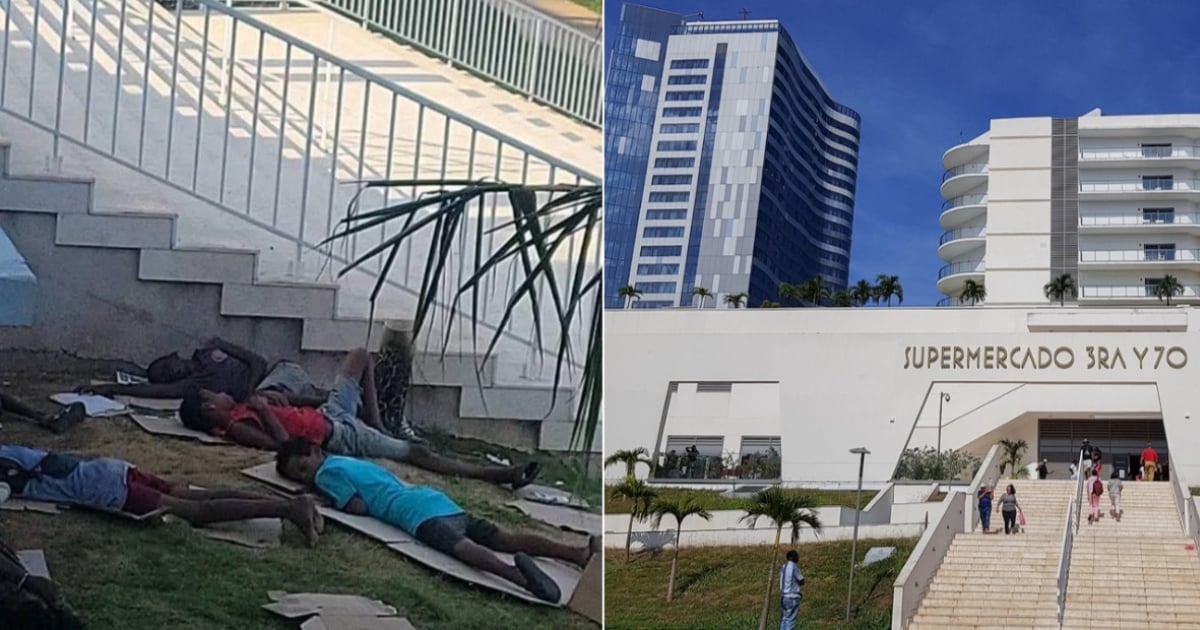
In a rather unusual event within the "Cuban democracy," National Assembly representative and businessman Carlos Miguel Pérez Reyes acknowledged this Wednesday that there are shortcomings in the care of minors in Cuba, following a recent report about several children sleeping in the gardens of the Muthu hotel, in Playa municipality, Havana.
The situation came to light after Cuban citizens and journalists shared images of at least six minors who spend the night in that tourist area, without protection or institutional oversight. This has sparked outrage among Cubans, particularly given that the country promotes itself as humanistic and protective of childhood.
Pérez, founder and president of the technology company Dofleini, wrote on Facebook that "in Cuba, with very few resources, a lot is being done for children," and listed the main official child protection programs, such as PAMI, the free education system, and homes without parental support.
However, he acknowledged that the Playa case highlights failures in the coordination of institutions and a weak response to social issues.
The lawmaker stated that, after reviewing the case on the ground, none of the minors belong to the municipality of Playa, but rather come from other areas, which does not diminish the problem.
"This shows that municipalities achieve a better understanding of their social cases, but when people move to another territory, the monitoring becomes diluted," he wrote.
Pérez also noted that the Ministry of the Interior's Child Care Council is the body responsible for these cases and that there are complaints and files regarding similar situations.
"Reporting and collecting minors does not alone resolve the root of the phenomenon," he warned, while calling for more effective coordination between Child Services, Social Work, Public Health, and local governments.
The parliamentarian lamented the lack of sensitivity among some officials and parts of the population, who—according to him—now see the presence of children in the streets as something "normal" and merely limit themselves to taking photos.
What the deputy does not mention—or conveniently decides to omit—is that the problem of children wandering, scavenging for food in the garbage or living on the streets, while it does not occur on every street in Cuba, is becoming less and less frequent.
"This phenomenon is everyone's responsibility, not just that of Minors," he emphasized, although he could have directly pointed to culprits, but that would be asking a lot from a congressman.
At least he acknowledged that the problem is not isolated. In the capital, there are increasingly more places where children can be seen asking for money or sleeping in public spaces, with no visible consequences for the responsible adults.
The images of the children sleeping on the floor reignited the debate about poverty and child neglect in Cuba, a topic that the regime often denies despite the economic decline and the collapse of social services.
Situation of Child Neglect in Cuba
What has the Cuban deputy revealed about the situation of minors in Havana?
Deputy Carlos Miguel Pérez Reyes acknowledged shortcomings in the care of minors in Cuba, highlighting that several children are sleeping in the gardens of the Muthu hotel in Havana without institutional protection, which has sparked outrage and debate over the lack of child protection in the country.
What is the Cuban government's response to the presence of children on the streets?
The government, through statements from Díaz-Canel and other officials, has acknowledged the existence of child begging, but often holds families responsible for these situations. No specific public policies have been announced to address the problem structurally, leaving the root of the phenomenon unresolved.
What impact does the economic crisis have on Cuban children?
The economic crisis in Cuba has exacerbated poverty and child insecurity. Many families are facing shortages of food and medicine, and inflation has significantly weakened the purchasing power of salaries, severely impacting the well-being of children.
What programs exist in Cuba to protect minors?
In Cuba, there are programs such as PAMI, the free education system, and homes without parental care. However, the current situation has highlighted shortcomings in the coordination of these institutions, which has weakened the response to the social issues affecting minors.
How has Cuban society reacted to the issue of children in the streets?
The Cuban society has shown indignation and concern regarding the situation of children on the streets. Citizens and journalists have denounced the lack of action from institutions, and the situation has reignited the debate about poverty and child neglect in the country.
Filed under: