
Related videos:
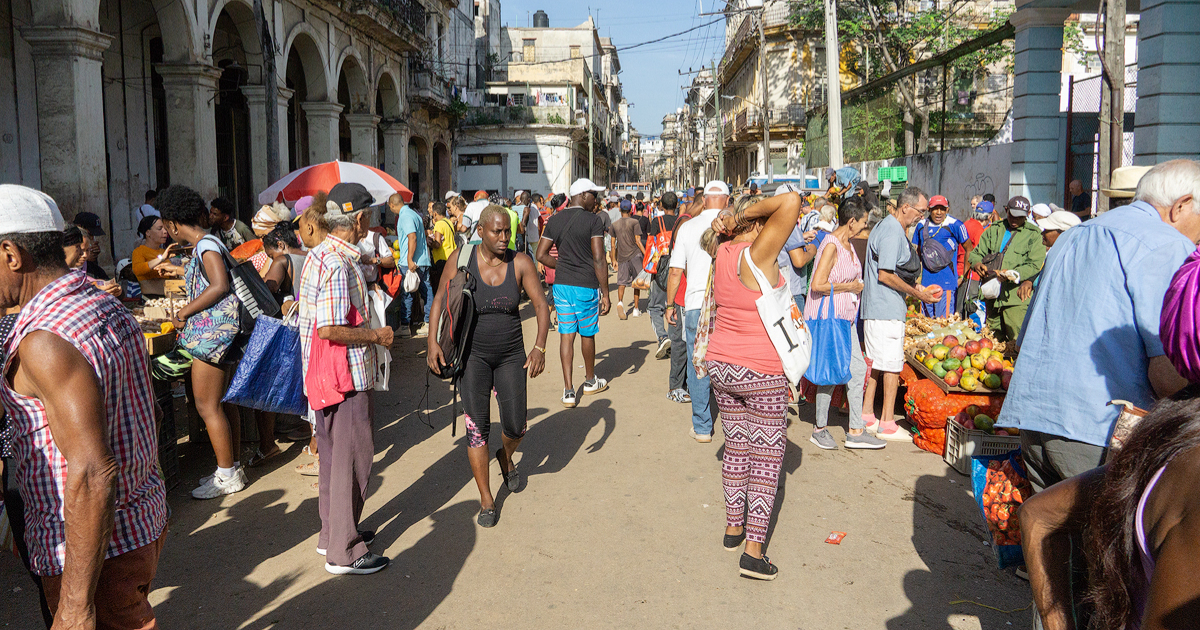
The maximum prices imposed by the Cuban regime for agricultural products in Havana are once again disregarded. Despite official resolutions, control operations, hefty fines, and speeches about "commercial discipline," the reality in the markets of the Cuban capital is different: shortages, inflated prices, harassed vendors, farmers unable to cover their costs, and a population caught between repression and hunger.
A few weeks before the implementation of Resolution 148/2025, which established differentiated price caps for different types of markets, pro-government reporters visited various sales points in Havana and documented widespread non-compliance with the measure. At fairs, agricultural markets, and popular areas such as Tulipán, Santiago de las Vegas, Palatino, or Boyeros, actual prices double or triple the official values.
The results of that survey were gathered in a report published in Cubadebate, which details examples such as papaya sold at 80 pesos per pound, compared to the established price of 40; cassava and sweet potato at 50 and 60 CUP, respectively, when the limit is 25; taro at 150, double the allowed price; and strings of garlic between 2,500 and 3,500 pesos. Most stalls did not display the official price list, and in many cases, the vendors themselves were unaware of the current regulations.
The gap between regulation and reality was acknowledged even by interviewed residents. A neighbor from Avenida Norte described the speed bumps as “a band-aid on a wound,” denouncing the absence of inspectors or their corruption. Another resident in Primelles expressed feeling vulnerable despite being aware of the established prices: “either I buy what I need at the price they set, or I leave empty-handed.”
Repression with fines, but no results
As a response to the evident chaos, authorities have chosen to strengthen the inspection apparatus. In recent weeks, enforcement actions have been carried out in multiple municipalities, imposing fines of up to 16,000 Cuban pesos and making confiscations in cases deemed as speculation or violations of price ceilings.
In the Plaza de la Revolución municipality, a vendor was sanctioned for offering products with inflated prices in nine categories. At fairs such as the one at 17 and 8, fines of 10,000 CUP were imposed for selling peppers at 380 pesos and cucumbers at 70. In Arroyo Naranjo, four violations were reported, totaling 29,000 CUP. Similar cases occurred in Diez de Octubre, Habana del Este, Guanabacoa, and La Lisa.
But neither the numbers nor the raids have had any effect. In the busiest markets of the capital, products remain inaccessible and the supply is still limited. In the Tulipán agromarket, according to gathered testimonies, prices remain the same as before the price cap. In other areas, street vendors offer more variety, but at prices well above the established rates. Many of them, alerted by the presence of inspectors or patrols, hide or flee before being fined.
In this context, control does not foster trust, but rather increases precariousness. A citizen remarked that the prices displayed on the boards do not match what is actually charged. Another suggested harsher penalties, even police involvement, to curb abuses. However, the consensus seems clear: without a strong production chain and without real access to supplies, compliance with price caps is illusory.
Producers drowning in costs
The official report also highlighted the difficulties faced by the farmers. Herminio, a farmer from the La Salud area, explained that although he is aware of the resolution, he cannot match the prices set. “How am I supposed to sell malanga at their price when just putting it in the ground costs me a fortune?” he stated. He also mentioned the lack of labor and logistical costs as factors that make it unfeasible to comply with the official scheme.
Other vendors noted that they must pay for fuel in dollars to transport goods from the countryside to the city, which further increases the cost at every link in the chain.
Repeated measures, null results
The government has resorted to this type of regulation on more than one occasion. At the end of September, it reimposed price caps following a wave of operations against street vendors, under the pretext of "protecting the consumer." However, the measure only served to authorize higher prices in the markets most frequented by the population, such as those of supply and demand and the street vendors.
A few days later, the tightening of controls with fines of up to 16,000 pesos demonstrated that the priority is not to ensure access to food, but to strengthen the state control apparatus.
The paradox is evident: those who sell on the street are pursued while higher prices are permitted in supply and demand markets —where a large part of the population obtains goods out of necessity, not choice—. Repression replaces economic policy. Punishment replaces solutions.
Meanwhile, the shortages continue in state markets and the rising cost of food has become a constant in the life of the everyday Cuban.
Between the norm and the necessity
The Resolution 148, like others before it, collides with an economic reality that the government refuses to acknowledge: without sufficient production, without accessible supplies, and without efficient distribution chains, no decree can control prices.
In this situation, neither producers, nor sellers, nor consumers have any margin. The former cannot cover their costs, the latter risk fines and confiscations, and the last group—the people—either pay the price or go without food.
The so-called "consumer protection" does not manifest at the table, but rather in a list posted in an office. On the streets of Havana, the weight of hunger continues to prevail over any price cap.
Filed under: