
Related videos:
While many Cuban families endure power outages of up to 20 hours a day, hospitals lack medicine, and a wave of viruses overwhelms healthcare services, the Electric Union (UNE) and the Ministry of Energy and Mines took their employees out to march in support of the regime of Nicolás Maduro this Friday.
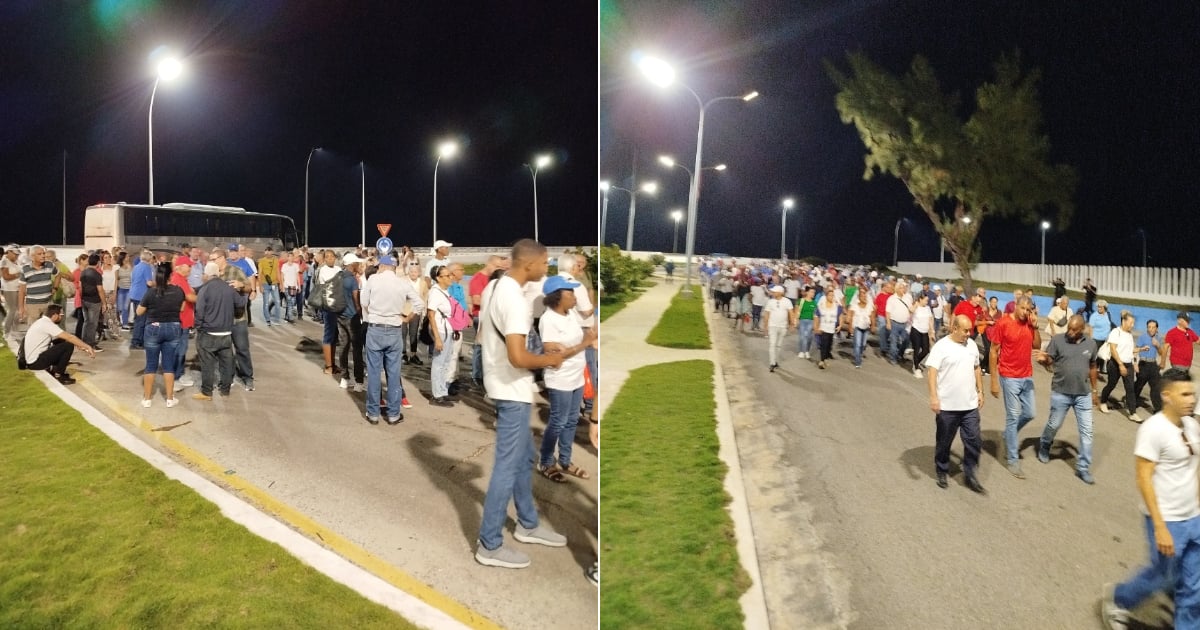
The images, published by UNE and Minister Vicente de la O Levy, show dozens of workers marching early in the morning through Vedado and later gathering in front of the statue of Simón Bolívar, under the slogan #CubaConVenezuela.
On social media, the Energy Minister wrote: “We will overcome,” while various parts of the country remained in darkness.
The popular reaction was swift. On the UNE's own Facebook page, hundreds of users denounced what many called a "provocation" and "brazen disrespect." "You need to stop," one wrote. "Why don’t you march to fix the thermal power plants?" another chided. "How ironic: so much light for a march while we’re without electricity," commented a Cuban from Matanzas. The responses, filled with anger, sarcasm, and frustration, far outnumbered the few supportive messages.
The discontent was widespread. Many criticized that, amidst the fuel shortage, the government continues to allocate resources for political events. "They even have electricity to march," "Cuba is shutting down and you’re marching," "Circus and more circus," were some of the most commonly heard phrases.
The concentration this Friday was part of the so-called "Tribune in Solidarity with Venezuela," called by the regime amid a health and energy crisis, with hospitals overwhelmed by outbreaks of dengue, chikungunya, and Oropouche fever, a shortage of serums, medications, and exhausted medical staff.
While in the capital the workers of the electrical sector marched with banners and slogans, in the eastern part of the country, neighbors from Baire (Santiago de Cuba) took to the streets to demand food, electricity, and freedom. According to videos shared on social media, dozens of people marched shouting “Enough already!” and “Freedom!”, while the regime responded with internet blackouts and the deployment of patrols.
This past Friday, the Electric Union reported that Havana did not experience blackouts the day before, unlike almost the entire country. Its technical report indicated a generation deficit of over 1,300 megawatts, yet the capital maintained a stable electricity supply. This disparity once again sparked criticism: while the lights remained on in the city hosting the forum for Venezuela, people in provinces like Granma and Santiago de Cuba protested in the darkness and scarcity.
The contrast is evident: while the people protest for hunger and blackouts, the regime organizes parades to show “solidarity” with chavismo.
The criticism has also come from the artistic world. Hours before the parade in support of Maduro, actor Luis Alberto García questioned the government’s marches and rallies, reminding that “the country is falling apart” and wondering if “Gaza and Caracas shouldn't take priority over Matanzas and Cárdenas.”
This is not the first time that the UNE has participated in an event of this kind. Just a week ago, the company's workers were mobilized to the José Martí Anti-Imperialist Tribune to show support for Palestine, while much of the country remained in darkness. That call also sparked a wave of outrage among the citizens.
Today, while the dome of the Ministry of Energy and Mines poses for cameras in Vedado, Cubans continue to sleep without electricity, cooking with flashlights and waiting for a solution that never arrives. The contrast remains the same as always: political tribunes, yes; electricity, no.
Frequently Asked Questions about the Energy Crisis and Mobilizations in Cuba
What is the current situation regarding blackouts in Cuba?
Cuba faces widespread and massive power outages that have left much of the population without electricity for most of the day. The crisis is attributed to a combination of factors such as fuel shortages, technological obsolescence, and poor state management. Cubans are experiencing prolonged power cuts that severely impact their daily lives.
Why is the Electric Union of Cuba participating in political events while there are blackouts?
The Electric Union (UNE) has been mobilized by the government to participate in political events supporting foreign regimes, such as that of Venezuela, amid the energy crisis. This has caused outrage among Cubans, who believe that the regime's priorities are distorted, dedicating resources to political propaganda instead of addressing the internal issues of blackouts and shortages.
How has the Cuban population reacted to the parades and power outages?
The reaction from the population has been one of outrage and frustration. Many Cubans have turned to social media to express their discontent with the political mobilizations amid endless blackouts. The criticism focuses on the disconnect between the regime's political campaigns and the energy crisis that impacts the quality of life for citizens.
What measures is the Cuban government taking to address the energy crisis?
The Cuban government has attempted to implement measures such as the installation of solar parks, but these actions are insufficient to resolve the energy crisis. The lack of significant investments in electrical infrastructure and the scarcity of fuel continue to be critical issues that the government has not been able to effectively address.
Why does the capital of Cuba have priority in electricity supply?
During the energy crisis, Havana has been prioritized in electricity supply compared to other provinces, which has generated criticism and discontent across the country. This situation reflects a disparity in the distribution of resources, perceived as unfair by citizens who are enduring prolonged blackouts in their localities.
Filed under: