
Related videos:
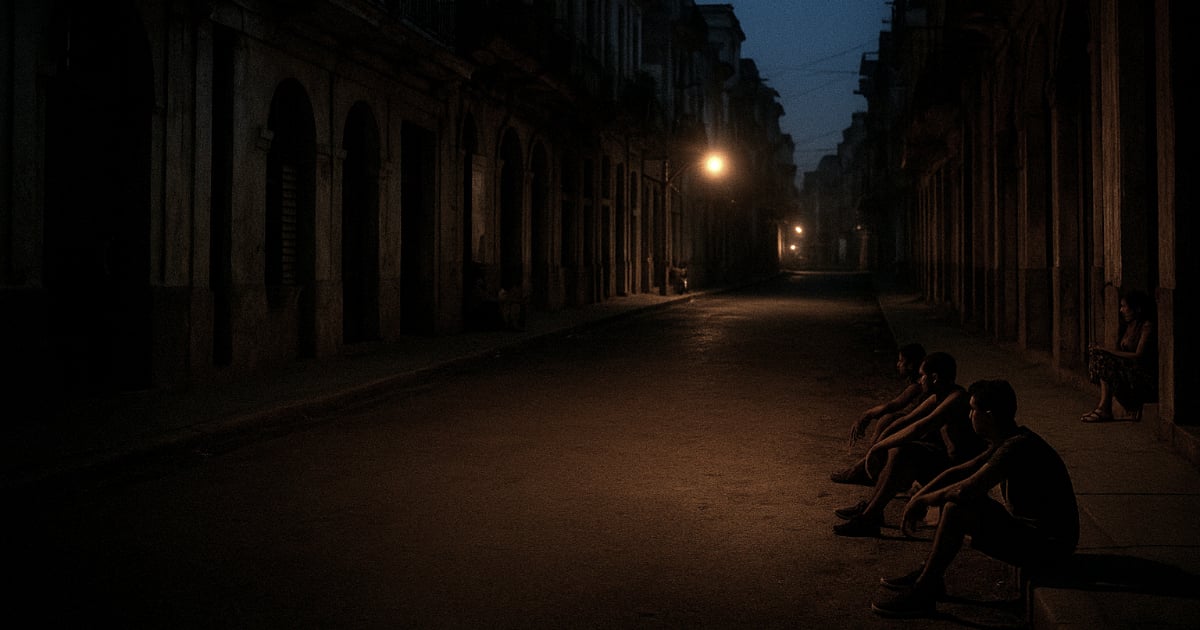
Cuba awoke once again in the dark: despite the repeated promises from the regime to stabilize the national electric system, the country remains trapped in a cycle of endless blackouts that now exceed 20 hours daily in several provinces, while the deterioration of the energy sector worsens.
According to the from Unión Eléctrica (UNE) dated this Tuesday, it is expected that around 50% of the country will experience a power outage during the peak hours at 7:50 PM, with an estimated maximum demand of 3,350 MW compared to a mere availability of 1,750 MW, resulting in a deficit of 1,600 MW and a projected impact of 1,670 MW.
UNE itself acknowledged that the service was affected for 24 hours on Sunday and continued not to be restored during the early hours of this Monday, confirming that power outages not only persist but have become a national constant.
The energy report specifies that the availability of the National Electric System (SEN) at six in the morning was 1,620 MW, compared to a demand of 2,600 MW, with 993 MW affected by generation deficit.
During the daytime, a medium impact of 1,250 MW is expected, which will extend power outages in most provinces.
Among the causes of the collapse, the state-owned company reported that the Unit 8 of the CTE Mariel, the Unit 5 of the CTE Diez de Octubre, Units 1 and 2 of the CTE Felton, and the Unit 3 of the CTE Renté are out of service.
Additionally, Unit 2 of the Santa Cruz Thermoelectric Plant and Unit 4 of the Carlos Manuel de Céspedes Thermoelectric Plant in Cienfuegos are undergoing maintenance.
In addition to the structural failures, there are thermal limitations of 326 MW and a lack of fuel, which keeps 43 distributed generation plants out of service, with 322 MW idled, along with another 172 MW unavailable due to a lack of lubricant, bringing the total impact to 494 MW for this reason.
The official report mentions that during peak hours, 50 MW could be added through distributed generation engines and another 30 MW with the entry of turbine 5 from Energás Jaruco. However, even with these additions, the deficit will continue to be critical and structural.
The energy situation on the island, far from improving, has deteriorated under the current administration, which continues to promise "stability" while Cuban families endure entire days without electricity, water, and refrigeration amidst the heat and outbreaks of illness.
Social media and citizen reports reflect a growing desperation due to the blackouts that impact daily life, work, and food availability.
In provinces such as Holguín, Santiago de Cuba, Villa Clara, and Pinar del Río, power outages lasting more than 18 and even up to 22 hours have become routine, while in the capital, the so-called "programming blocks" from the UNE are no longer being adhered to.
Solar production, which the regime presents as an energy alternative, remains insufficient.
The 32 new photovoltaic parks contributed only 2,103 MWh in the latest report, with a maximum capacity of 446 MW, a minimal figure compared to the system's needs.
While the government tries to showcase progress in renewable energy, the population faces total blackouts, empty refrigerators, and spoiled medications, a situation that reflects the failure of energy policy and the lack of investment in infrastructure.
Frequently Asked Questions about the Energy Crisis in Cuba
What is the main cause of blackouts in Cuba?
The primary cause of power outages in Cuba is the lack of electricity generation capacity due to the obsolescence of thermal power plants, a shortage of fuel, and inefficient management of the national electric system. Breakdowns and prolonged maintenance in the plants, along with a scarcity of resources, exacerbate the situation.
What impact do power outages have on the daily lives of Cubans?
Prolonged blackouts, which can exceed 20 hours a day, seriously impact the daily lives of Cubans. Without electricity, families struggle to preserve food, access drinking water, work, and study. Furthermore, the blackouts contribute to a shortage of medications and affect sanitation in hospitals.
Is there any solution to the energy crisis in Cuba?
Although the Cuban government has promised stability and attempted to showcase progress in renewable energy, such as the installation of photovoltaic solar parks, these measures have been insufficient to resolve the energy crisis. Significant investment in infrastructure, maintenance of plants, and diversification of energy sources is needed to achieve a sustainable solution.
How does the energy crisis affect the Cuban economy?
The energy crisis negatively impacts the Cuban economy by interrupting industrial production and essential services. Power outages prevent companies from operating efficiently and decrease the capacity of productive sectors to meet both domestic and external demand, further weakening an already fragile economy.
Filed under: