
Related videos:
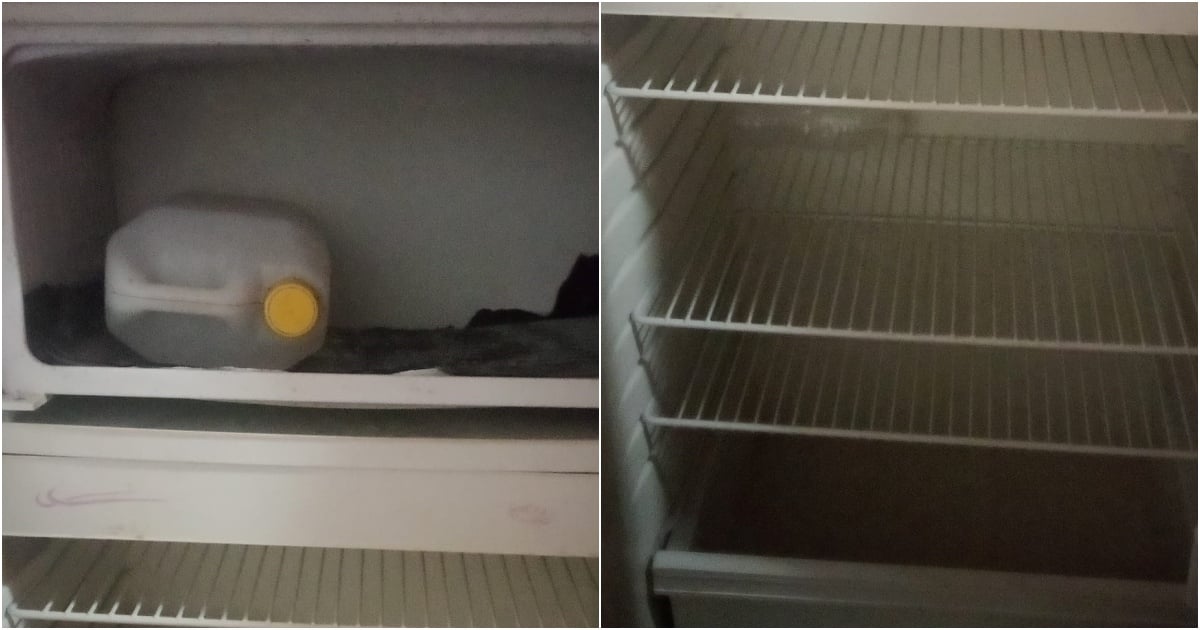
In Cuba, where temperatures exceed 30 degrees Celsius for much of the year, a refrigerator is not a luxury but a vital necessity. However, for most families, keeping it running has become an impossible mission.
According to the Food Monitor Program, an observatory that highlights food insecurity on the island, most households are in a constant struggle to preserve basic food items.
In addition to the scarcity, there are power outages that last up to twenty hours a day and voltage spikes that end up burning out refrigerator motors that have been in use for over twenty years.
What would be a technical problem in any other country becomes a daily drama in Cuba, highlighting the collapse of the economic and energy system.
Everything began with the call for the Energy Revolution driven by Fidel Castro in 2005, when the regime decided to replace more than two and a half million old refrigerators —many of which were manufactured in the United States— with Chinese models from the Haier brand.
The plan, presented as a modernization, was actually an imposition: the State confiscated the old equipment and provided the new ones on credit, deducting their cost directly from salaries, the observatory recalled.
Twenty years later, those Chinese refrigerators, designed to last between seven and ten years, are collapsing en masse.
Burned compressors, gas leaks, and broken thermostats are part of everyday life for Cubans.
Repairing one costs more than 40,000 pesos, while the average state salary barely exceeds 6,600 CUP.
In other words, a repair amounts to more than six months' salary, an unreachable figure for most families.
The problem is exacerbated by power outages and voltage fluctuations, which cause any repair to last only a few weeks.
Without refrigerators, Cubans cannot store perishable food and are forced to buy daily from understocked markets or from small and medium-sized enterprises at exorbitant prices.
The consequence is more spending, longer lines, and more hunger, emphasized Food Monitor Program.
The regime, true to its style, has responded with empty promises and partial solutions.
Repair brigades sent to provinces like Matanzas, Pinar del Río, or Havana ended up paralyzed due to a lack of parts.
Instead of acknowledging the failure, the authorities blame external factors and evade their responsibility in the country's energy management.
Two decades later, the Energy Revolution that Castro's regime presented as a success has become a symbol of another national disaster: an improvised project that sacrificed sustainability for propaganda, and today leaves millions of Cubans with broken refrigerators and empty stomachs.
Frequently Asked Questions about the Energy and Economic Crisis in Cuba
Why does it cost six salaries to repair a refrigerator in Cuba?
Repairing a refrigerator in Cuba costs over 40,000 pesos, far exceeding the average state salary of 6,600 CUP. This situation is due to the age and deterioration of appliances, voltage fluctuations, and the lack of spare parts in the market. The problem is worsened by prolonged blackouts that affect the lifespan of the equipment.
How does the energy crisis affect food security in Cuba?
The energy crisis in Cuba, characterized by blackouts that can last up to 36 hours, prevents food preservation and forces families to reorganize their lives based on the availability of electricity. The lack of proper refrigeration and the challenges of cooking have led many people to consume food immediately, which increases spending and food insecurity.
What is the environmental impact of the energy crisis in Cuba?
Due to the energy crisis and prolonged blackouts, the use of firewood as an energy source for cooking has surged, contributing to deforestation and loss of biodiversity in Cuba. This practice, driven by the need for survival, is eroding soils and increasing the risk of natural disasters, which exacerbates the country's environmental vulnerability.
What strategies do Cuban families employ to cope with the energy crisis?
Due to the lack of electricity and gas, Cuban families have turned to cooking with firewood and charcoal, improvising stoves, and reorganizing their daily routines to make the most of the few available hours of electricity. These survival strategies are essential to cope with the crisis, but they come with significant health and environmental risks.
Filed under: