
Related videos:
The President of the United States, Donald Trump, said this Sunday that his administration is evaluating the possibility of importing meat from Argentina as part of a plan to reduce domestic market prices and alleviate the inflation affecting American consumers.
According to the agency Associated Press (AP), Trump made the announcement aboard Air Force One during a flight returning from Florida to Washington.
"We could buy some meat from Argentina," the president stated. "If we do, that will lower the prices of meat here," he added.
The president had promised days earlier to take measures to control inflation, driven by the rising costs of essential goods such as food.
Meat prices in the United States have remained high due to the drought that has impacted livestock and the reduction of imports from Mexico, where a livestock plague forced restrictions on exports.
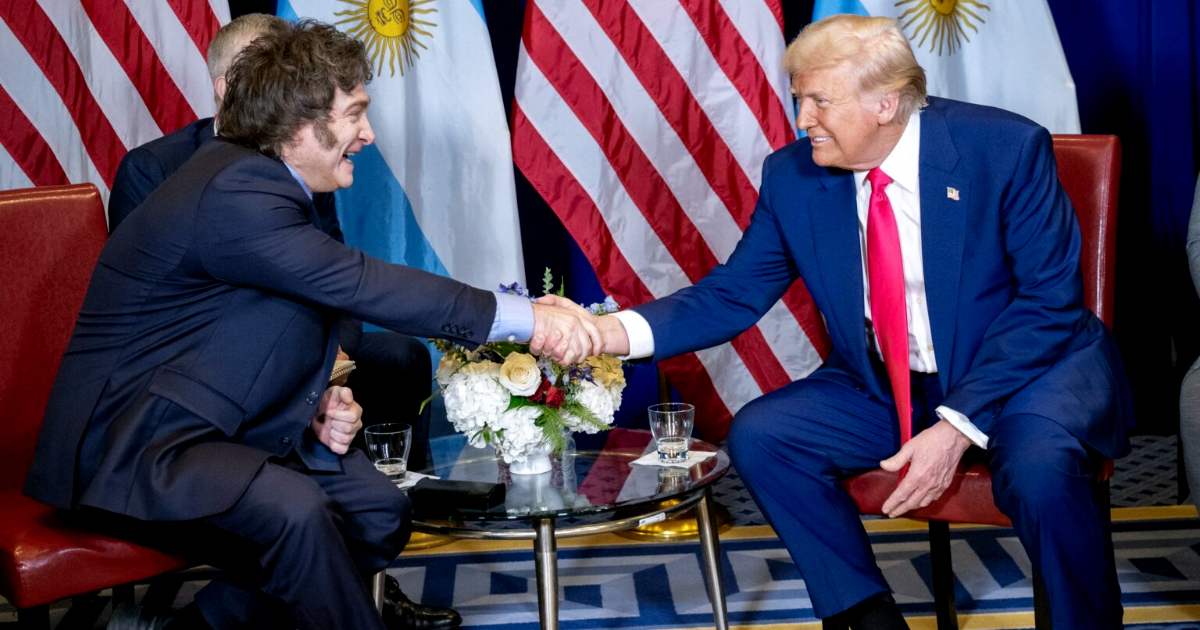
The proposal to import Argentine beef aims not only to stabilize the U.S. market but also to politically support its ally, President Javier Milei, who is facing a severe economic crisis and the devaluation of the Argentine peso.
Trump has been promoting a $20 billion credit line agreement with Buenos Aires, along with additional financing from sovereign funds and the private sector, aiming to support Milei's government before the midterm elections in Argentina.
The eventual purchase of Argentine beef would mark a shift in U.S. trade policy, which has traditionally protected its meat industry.
Nevertheless, Trump stated that "the priority is the wallet of the Americans," and that any decision "will be made with consumers and price stability in mind."
If implemented, the measure could have a dual effect: helping Milei stabilize his economy through foreign currency inflow and providing relief to American consumers amid rising living costs.
The U.S. Secretary of the Treasury, Scott Bessent, stated in September that Washington was prepared to do whatever it takes to support the Argentine economy and President Javier Milei.
His statements were made amid a tense political and financial climate in Argentina, following Milei's decisive defeat of his party, La Libertad Avanza (LLA), in the legislative elections in the province of Buenos Aires on September 8.
"Argentina is a systemically important ally for the U.S. in Latin America, and the Treasury Department is ready to do what it takes within its mandate to support the country. All options for stabilization are on the table," Bessent wrote on his official X account.
A few days ago, during Javier Milei's visit to the White House, the President of the United States confirmed a financial rescue of 20 billion dollars for Argentina.
But he set a condition: support depends on the electoral outcome of the South American nation.
“If he loses, we won’t be generous with Argentina,” Trump stated before the cameras, revealing that support is not unconditional, but rather political.
Frequently Asked Questions about the Importation of Argentine Beef and Its Impact on the Economic Policy of the U.S. and Argentina
Why does the United States consider importing meat from Argentina?
The United States is considering importing meat from Argentina as part of a plan to reduce prices in the domestic market and ease inflation affecting American consumers. This measure is in response to the rising costs of basic products such as food, exacerbated by drought and the reduction of imports from Mexico due to a pest in the livestock.
What effects would the importation of meat to the United States have for Argentina?
The import of Argentine beef to the United States could help stabilize the Argentine economy by bringing in foreign currency, which would provide support for President Javier Milei amid a severe economic crisis and the devaluation of the Argentine peso. Additionally, it is part of an economic support package that includes a $20 billion credit line agreement.
What is Trump's stance on trade policy with Argentina?
Donald Trump has clearly shown political support for Javier Milei, conditioning the economic backing from the United States on Milei's continued hold on power. In addition to considering the import of beef, Trump has promoted a significant credit agreement with Argentina, although this support is linked to favorable electoral outcomes for Milei, which has led to accusations of foreign interference.
How do Trump's tariff policies relate to inflation in the U.S.?
Trump's tariff policies have contributed to the rise in prices of imported goods, which has impacted inflation in the United States. While significant revenue has been generated from tariffs, these costs are often passed on to consumers, resulting in higher prices for products in the domestic market.
Filed under: