
Related videos:
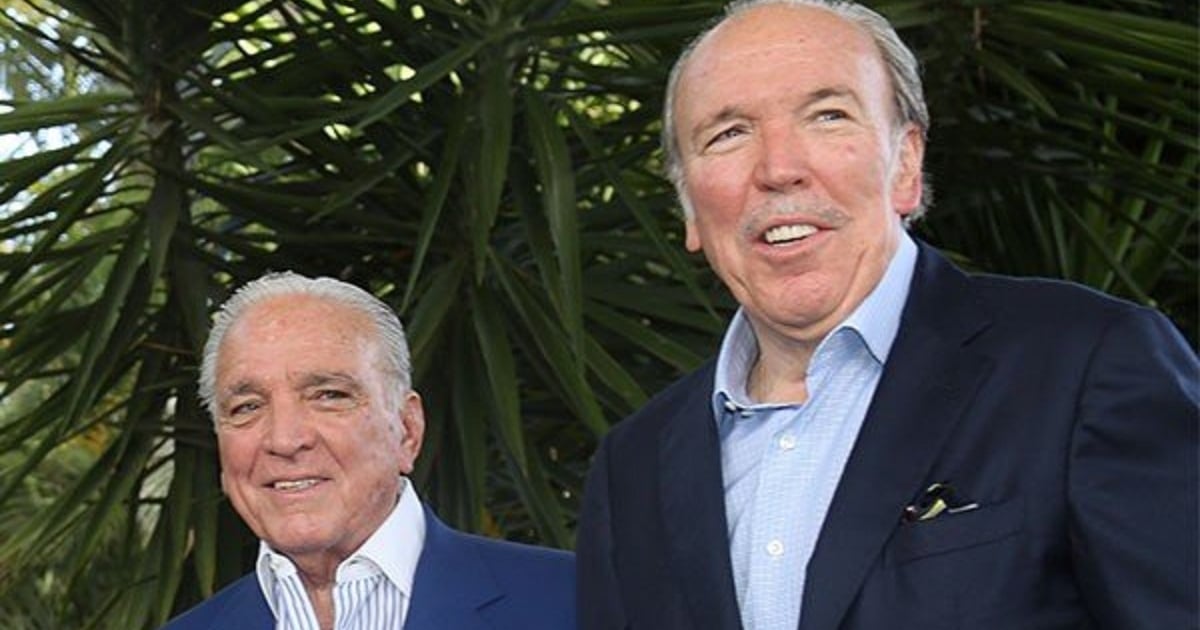
The Fanjul brothers, Cuban exiles and owners of a billionaire sugar empire in the United States, have once again come into the media spotlight following the publication of an extensive report in Forbes, which details their fortune, political influence, and close relationship with President Donald Trump.
According to the article, one of the triggers for the renewed prominence of the family was a conversation between Trump and Coca-Cola CEO James Quincey during the president's second inauguration.
Upon learning that the company did not use cane sugar in its flagship product, Trump called his old friend José “Pepe” Fanjul —who is 81 years old— to question that decision.
The call ended up planting the seed for the announcement of a new line of Coca-Cola made with cane sugar grown in the United States, in which, according to Forbes, the Fanjul family will be involved.
With an estimated fortune of 4 billion dollars, the brothers —Pepe, Alfy, Alexander, Andrés, and Lillian— control Domino Sugar, Florida Crystals, and the largest sugarcane refinery in the world.
Only Florida Crystals generated revenues of $5.5 billion in 2024, according to the cited magazine.
The family also owns the Casa de Campo resort in the Dominican Republic and holds a stake in Central Romana, the largest private employer and landowner in the country.
The Fanjul family arrived in the United States in 1959 after losing everything during the Cuban Revolution. They raised funds among exiles and started from scratch in Florida, where they purchased land in the agricultural area of Lake Okeechobee.
In 1984, they made their major leap by acquiring operations from Gulf and Western, positioning themselves as a sugar industry powerhouse.
Today, the ASR group they control is the largest cane sugar refiner in the world, emphasized the cited source.
In addition to their business success, their political influence has been consistent and cross-cutting. Although they historically donated to both parties, since 2016 the family and their companies have donated more than 7 million dollars to Trump's fundraising committees and super PACs.
Pepe Fanjul has hosted fundraising events and, according to Forbes, even organized an event on the same day that Trump was convicted of falsifying business records in New York.
The article also addresses the controversies that have followed the clan: accusations of environmental pollution in Florida, forced labor on their plantations in the Dominican Republic, and a lobbying network of over 20 million dollars since 1999 to maintain subsidies and tariff protection.
The price of sugar in the U.S.—almost double the international price—is supported by measures driven from power, many of which are now reinforced in the Big Beautiful Law promoted by Trump.
Despite the criticism, a family spokesperson defended their legacy as a representation of the "American dream," asserting that their success is due to hard work and determination.
However, voices such as those from the Cato Institute warn that this is a story of economic power shaped by political influence and privilege.
Frequently asked questions about the Fanjul brothers and their influence on the sugar industry and politics in the U.S.
Who are the Fanjul brothers and what is their influence in the U.S.?
The Fanjul brothers are Cuban-American exiled entrepreneurs who control a sugar empire in the United States. They own companies such as Domino Sugar and Florida Crystals, and have an estimated fortune of 4 billion dollars. In addition to their success in the sugar industry, they have significant political influence in the U.S., having donated more than 7 million dollars to political committees and campaigns for Donald Trump.
How are the Fanjul brothers involved with the change in Coca-Cola's recipe?
The change in Coca-Cola's recipe to use cane sugar instead of corn syrup was influenced by a conversation between Donald Trump and the CEO of Coca-Cola. Trump reached out to José "Pepe" Fanjul to discuss the use of cane sugar grown in the U.S., in which the Fanjul family will be involved. This change strengthens the close relationship between Trump and the Fanjul brothers.
What are the controversies associated with the Fanjul brothers?
The Fanjul brothers have faced accusations of environmental contamination in Florida and forced labor in their plantations in the Dominican Republic. They have also spent over 20 million dollars on lobbying to maintain subsidies and tariff protection in the U.S. sugar industry. These actions have sparked criticism regarding their political and economic influence.
How have the Fanjul family managed to keep sugar prices high in the U.S.?
The price of sugar in the U.S. is nearly double the international price due to tariff protection measures and subsidies that have been driven by political lobbying. The Big Beautiful Law, promoted by Trump, has strengthened these measures, benefiting the Fanjul family and their sugar empire.
Filed under: