
Related videos:
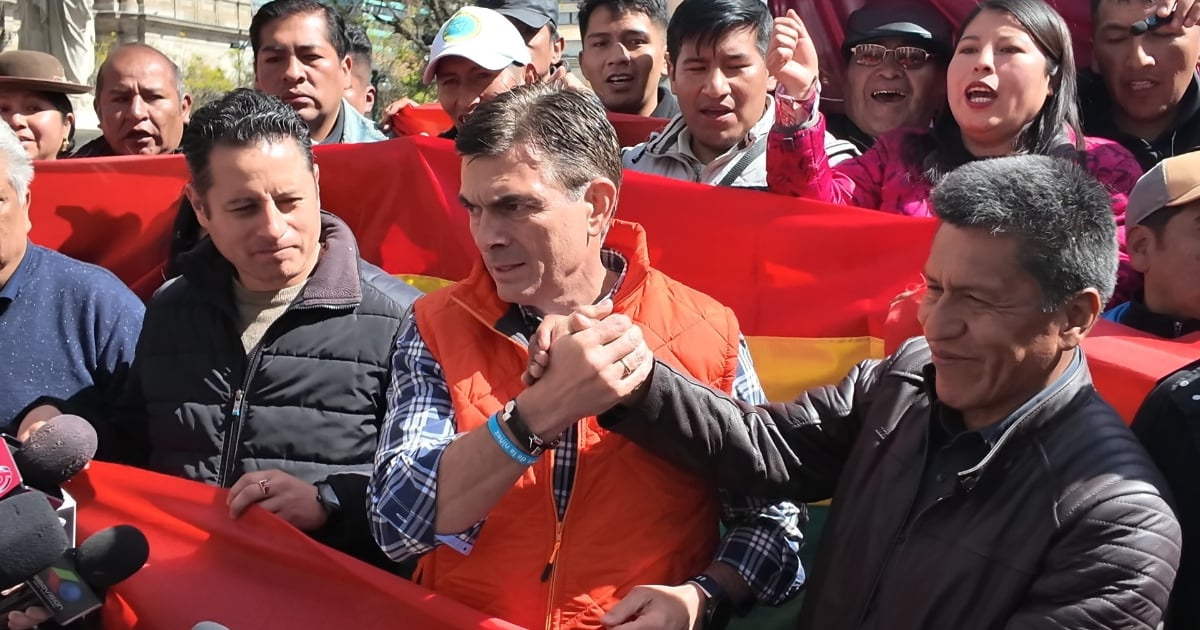
Bolivia has undergone a decisive political shift. Senator Rodrigo Paz Pereira from the Christian Democratic Party (PDC) has been elected as the new president with 54.61% of the votes, defeating former president Jorge “Tuto” Quiroga, who received 45.39%, according to the preliminary count from the Supreme Electoral Tribunal, with 97.86% of the records verified.
Son and great-nephew of former presidents, Paz represents a shift after two decades of governance by the Movement for Socialism (MAS), the party of Evo Morales, which launched the so-called "indigenous revolution."
The new president, 58 years old and born in the Galician exile of Santiago de Compostela, will take office on November 8, bringing an end to a cycle of power characterized by populism and state intervention.
"The country is beginning a new chapter. It is a time for unity and for working for the homeland. Bolivia first," declared the elected vice president Esman Lara, a police captain who gained popular support for his anti-corruption speech and his connection with the working classes through social media.
The new government will take office with a relative majority in the Plurinational Parliament (70 out of 155 seats), which will require Paz to negotiate with Libre (53) and Unidad Opositora (35). The MAS, which once controlled all four branches of government, will barely retain two seats, reflecting its political collapse.
Paz's most urgent challenge will be to rescue the Bolivian economy, which is affected by inflation, a shortage of foreign currency, and long lines to obtain fuel.
His program, summed up in the phrase "capitalism for all and money for the people," aims to attract private investment and sign agreements with American companies to import gasoline and diesel from Brazil, Paraguay, and Argentina.
Why does this change in Bolivia matter to Cuba?
Rodrigo Paz's election not only transforms Bolivia's internal politics but also directly impacts the alliance landscape in Latin America.
During the governments of Evo Morales, Bolivia was one of the main political and economic allies of the Cuban regime, alongside Venezuela, Ecuador, and Nicaragua. Its break from this ideological axis represents a significant loss of support for Havana, which has seen its regional influence diminish.
Several agreements signed during the Morales era —such as the controversial contract with Boliviana de Aviación (BoA) to maintain an unprofitable route to Havana, resulting in losses exceeding 2.5 million dollars, according to parliamentary reports— may be reviewed by the new government, which is more pragmatic and less inclined to uphold projects driven by political motivations.
Furthermore, the shift could have direct consequences for Cuban migrants in Bolivia, where in recent months there have been reports of detentions and cases of asylum seekers held at airports. The arrival of a more institutional and less ideologically driven government could open a different dialogue with Cubans in transit and review the migration practices that have impacted compatriots from the Island.
Finally, the defeat of the MAS carries a powerful symbolic meaning for Cuba. While Díaz-Canel's regime remains mired in an economic crisis, with blackouts, food shortages, and massive emigration, the political shift in Bolivia demonstrates that authoritarian and personalist projects can falter, and that the Latin American electorate is seeking moderate alternatives focused on management and economic recovery.
The message is clear: the region is moving towards change, and although Havana may resist, its political environment is no longer the same. The victory of Rodrigo Paz could mark the beginning of the end of regional support for 21st-century socialism, and with it, a new phase of isolation for the Cuban regime, as well as increased regional pressure and support for its independent civil society.
Impact of Rodrigo Paz's Victory in Bolivia and Its Repercussions in Cuba
Who is Rodrigo Paz and why is his election significant for Bolivia?
Rodrigo Paz Pereira is the newly elected president of Bolivia, representing the Christian Democratic Party (PDC). His election is significant as it symbolizes a change after two decades of governments from the Movement for Socialism (MAS), previously led by Evo Morales. This political shift reflects a break from populism and a new direction towards a more pragmatic and capitalist approach.
How could the political change in Bolivia affect Cuba?
The political change in Bolivia could significantly impact Cuba, as Bolivia under the government of Evo Morales was one of the main allies of the Cuban regime. The break from the ideological axis of 21st-century socialism could weaken the political and economic support that Havana received from Bolivia. This could mean a loss of regional support and an increase in isolation for the Cuban government.
What challenges does Rodrigo Paz face as the new president of Bolivia?
Rodrigo Paz faces the urgent challenge of rescuing the Bolivian economy, which is affected by inflation, a shortage of foreign currency, and issues with fuel supply. His program proposes attracting private investment and signing agreements to improve access to gasoline and diesel, which will require effective political negotiation in a divided parliament.
What message does Rodrigo Paz's victory send to other countries in Latin America?
The victory of Rodrigo Paz sends a clear message that authoritarian and personalist projects can be exhausted, reflecting a trend in Latin America towards more moderate political alternatives focused on management and economic recovery. This change in Bolivia may inspire similar movements in other countries in the region, especially in those weary of the unfulfilled promises of socialist regimes.
Filed under: