
Related videos:
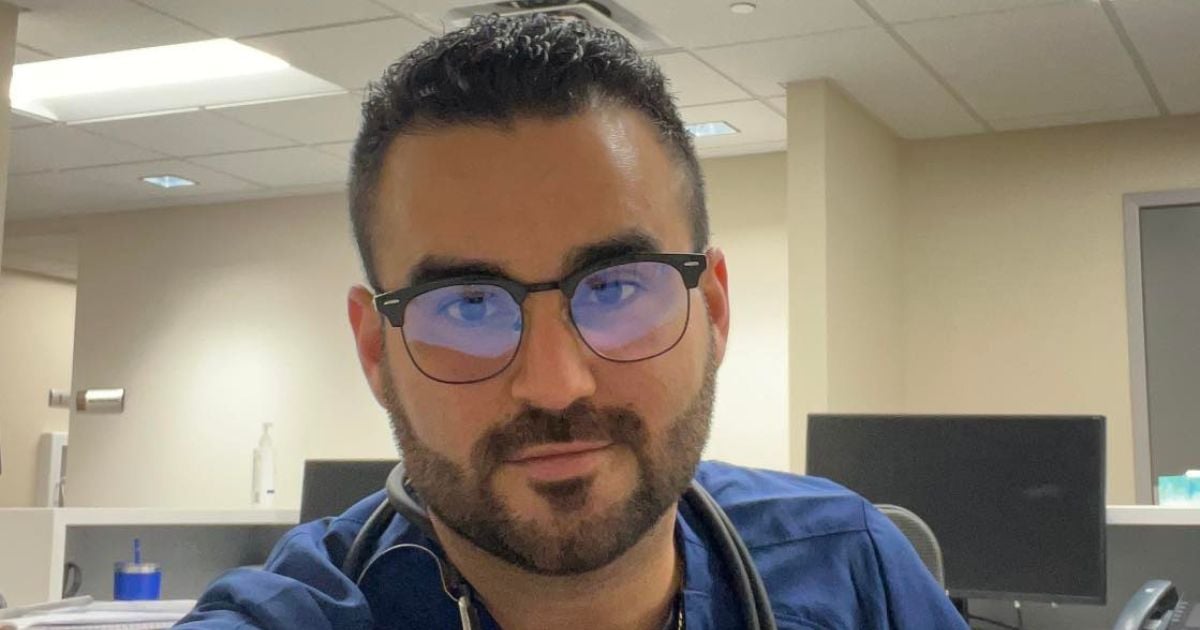
The Cuban doctor Manuel Guerra revealed in a social media post the long ordeal he suffered at the hands of the regime, which used him, regulated him, pursued him, and ultimately left him on the streets after years of political harassment and humiliation.
In his testimony shared on Facebook, Guerra recounted that during his residency in Gynecology and Obstetrics in 2018, he attempted to leave the country with a temporary travel authorization, but was blocked by Julio Yamel Verdecia, who was then the director of Lenin Hospital in Holguín and is currently the provincial director of Public Health.
“I couldn’t even obtain a passport without his authorization,” wrote the doctor, who added: “As if I were his property, he simply denied it to me.”
That refusal, he said, was the beginning of a chain of reprisals. After posting on Facebook a phrase that said "if I am not given vacation, I will take it myself," he was removed from his medical specialty.
The sanction was accompanied by an arbitrary immigration regulation, which the regime maintained until 2021, when —as reported— State Security asked him to leave the country to spare him a trial for "disobedience and contempt."
“They practically begged me to resign and leave the country,” he recalled.
At that moment, Manuel was involved in the civic project Archipiélago, one of the most active opposition platforms in recent years, and he believed he could contribute to change from within.
But shortly after, he was arrested, threatened, and forced to sign in weekly at a police station, as if he were a criminal.
His account also includes an experience that marked his definitive break with the system.
In 2019, desperate due to the limitations and persecution, he attempted to leave the country illegally through the El Salado area, between Artemisa and Havana.
During the attempt, he fell victim to an undercover operation by the Port Authority of Mariel, led by officers who—according to reports—were collaborating with the very traffickers they claimed to be pursuing.
Guerra recounted that he was detained, insulted, and beaten by a major in the National Revolutionary Police at the Caimito unit.
“They called me a traitor, a worm, and other insults I prefer not to repeat. They denied me medical care, and I spent the night in a cell without water or food,” he wrote.
After three days of being held captive, he was released at midnight, without money, without documents, and far from his province, forced to sleep on the street.
“ I slept like an abandoned dog,” recalled the doctor who then, from the United States, breathed in freedom.
When he tried to recover his belongings, he was informed that they had "disappeared," and his personal documents and 500 dollars were stolen.
"I saw with my own eyes a lieutenant colonel take my identification from my wallet and say, 'Ah, so there's a doctor in the group.' They denied everything, but the witnesses confirmed it," he recounted.
Despite the abuses, the doctor insists that his case is just one among thousands.
"I understood beyond any doubt that I was living in a dictatorship run by criminals," he wrote, stating that his experience was the turning point that led him to openly denounce the regime.
“Today I understand that I did not make a mistake in leaving. Had I stayed, I would be just another political prisoner. The system punishes dignity and rewards submission,” he concluded.
Frequently Asked Questions about the Situation of Cuban Doctors and the Regime
How does the Cuban regime affect doctors trying to emigrate?
The Cuban regime is implementing repressive measures against doctors trying to emigrate, such as withholding professional documents, imposing eight-year bans on reentry into the country, and extorting them with their titles. This control aims to curb defections and maintain dominance over healthcare personnel.
What accusations has the Cuban doctor Manuel Alberto Guerra Guerrero made against the regime?
Manuel Alberto Guerra Guerrero reported that the Cuban regime used him, pursued him, and ultimately left him on the streets after years of political harassment. He was obstructed in his attempts to leave the country and sanctioned for posting criticisms on social media. According to his testimony, he experienced arbitrary detentions, threats, and the loss of his belongings during an attempt to illegally leave Cuba.
What is the current situation of the health system in Cuba according to exiled doctors?
Exiled doctors like Manuel Guerra describe the Cuban health system as a "dying organism." They denounce the deterioration of hospitals, the lack of medications, and the massive exit of professionals, contrasting with the official narrative of being a "medical powerhouse." They assert that the system lacks resources, freedom, and ethics, which hinders quality care.
What consequences do Cuban doctors face after abandoning missions abroad?
Cuban doctors who leave missions abroad face severe reprisals from the regime, such as being barred from returning to Cuba for eight years and losing access to their professional documents. These measures aim to punish those who seek independence from state control and maintain the regime's narrative of international cooperation.
Filed under: