
Related videos:
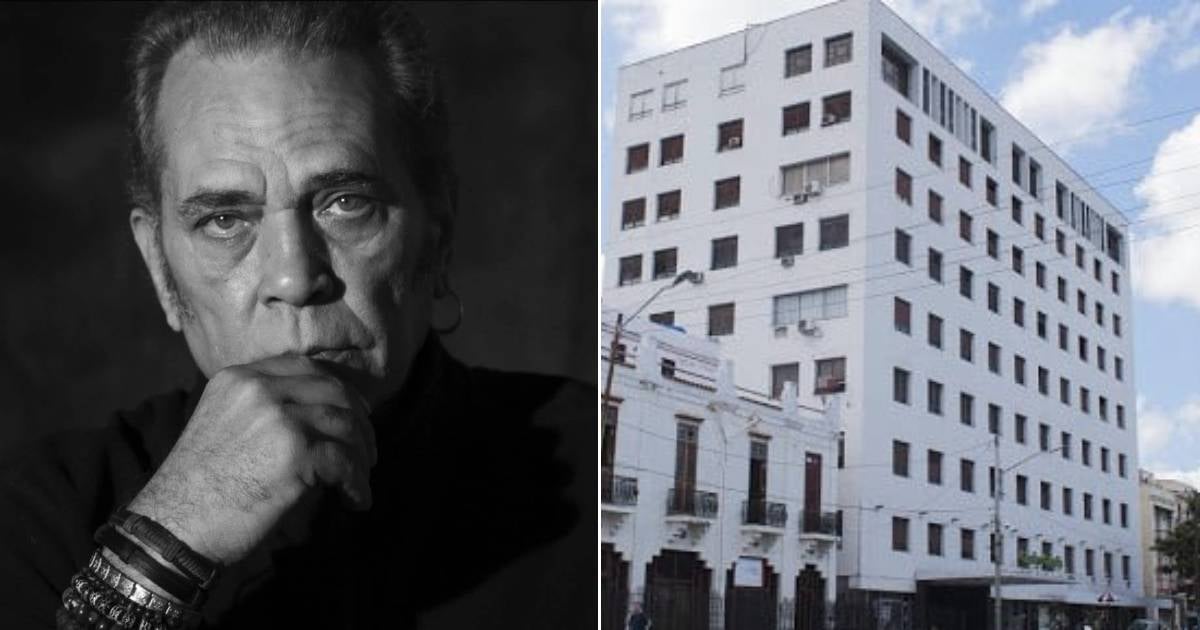
The renowned Cuban actor Luis Alberto García Novoa publicly spoke out in defense of filmmakers Enrique “Kiki” Álvarez and Esteban Insausti, after it was revealed that the Cuban Institute of Art and Cinematographic Industry (ICAIC) ended their employment relationships without prior notice, also falsifying a supposed “voluntary resignation.”
"I don't want this ignominy to be relegated to oblivion amidst so many unpleasant things that are being handed to us daily.", García wrote on his Facebook profile.
I am from a time when loyalty meant loyalty: to friends, to principles, to life's work, and to lives lived through those works. Neither Kiki nor Esteban deserve this affront.
The actor's message, one of the most respected voices in Cuban film and television, emerges amidst the growing discontent within the artistic sector due to acts of censorship and exclusion affecting various creators on the island.
The filmmaker Enrique “Kiki” Álvarez revealed this week that the ICAIC terminated his contract and that of the director Esteban Insausti effective August 1, 2025, without prior notice or formal explanation.
According to a detailed report, when he went to the Human Resources office, he was informed that he had been let go "by his own decision," even though there was no documentation in his records to support this claim.
“Goodbye, ICAIC. Our relationship has always been tense, marked by my desire to help transform you into an Institute capable of ensuring filmmakers' right to express the harsh reality in which we live,” Álvarez wrote in a text titled In the Open, where he indicates his definitive break with the state institution.
The director of La Ola and Venecia linked his expulsion to his public criticism of censorship, his membership in the Cuban Filmmakers Assembly (ACC), and his reports of irregularities in the Cuban Film Promotion Fund.
Insausti described the decision as "a bureaucratic act of exclusion," reminding that cultural institutions "do not belong to the current officials, but to the artists and the people."
Álvarez's publication sparked a wave of reactions among artists, producers, and critics.
The director Orlando Rojas labeled the ICAIC as “Corrupt Institution of Authoritarian and Infamous Commissioners” and called for a boycott of the upcoming Festival del Nuevo Cine Latinoamericano in Havana.
The filmmaker Rosa María Rodríguez pointed out that this is “another act of exclusion against a creator for thinking differently,” while the critic Joel del Río described Álvarez as “one of the filmmakers who has most revitalized the narratives of Cuban cinema” and cautioned: “For the ICAIC, he is expendable, just as I will surely be when this post circulates.”
The essayist Julio César Guanche described the incident as “a disgrace that never ends,” and the director Pavel Giroud lamented “the complicit silence of colleagues who see opportunities in mediocrity.”
So far, the ICAIC has not made any public statements regarding the accusations of document forgery and arbitrary dismissals. However, this case coincides with other recent instances of censorship and cancellations in the cultural sphere.
This same week, the tribute organized by the group Teatro El Público and the Fábrica de Arte Cubano (FAC) to celebrate the centenary of Celia Cruz was unexpectedly suspended. Performances by the company El Ciervo Encantado were also canceled by order of the cultural authorities.
The Cuban Filmmakers Assembly has denounced that these events are part of a systematic pattern of control and cultural repression. "Our culture cannot continue to be directed by the same censors and inquisitors with long-standing impunity," the organization warned in a recent statement.
Filed under: