
Related videos:
Although the regime has recently boasted about the first kidney transplant performed in the province of Villa Clara, congratulations to the beneficiary and their family, the reality is that one case does not hide the fact that hundreds of Cubans across the country are waiting for this type of procedure, forced to seek help from international organizations and to apply for humanitarian visas in other countries.
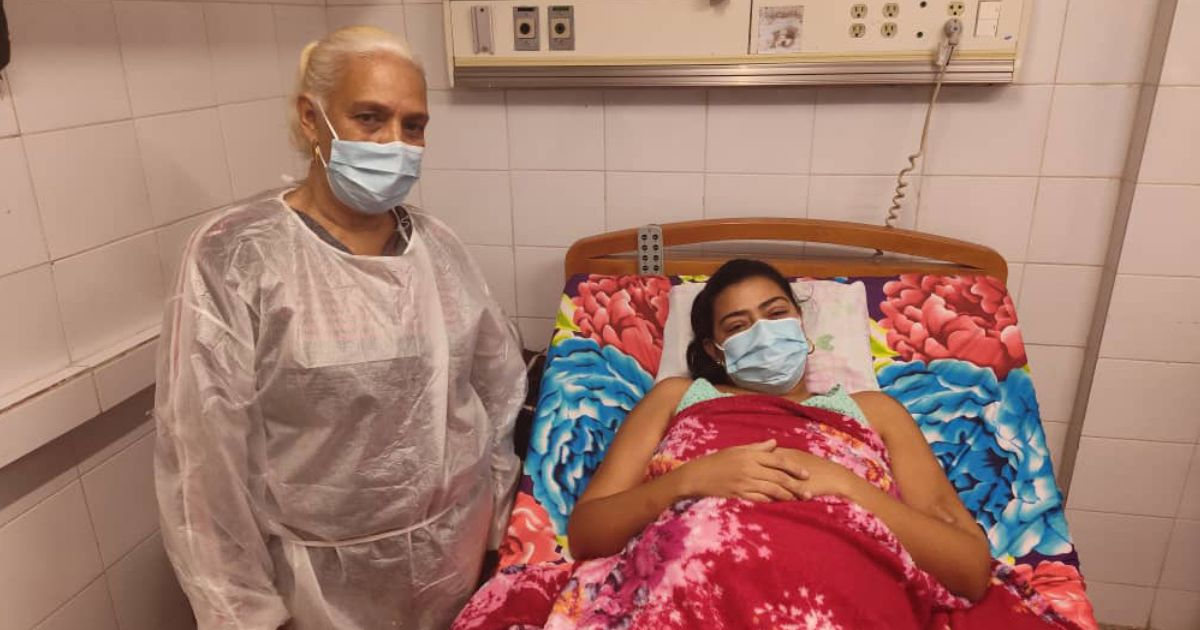
According to a report by the Cuban News Agency, published on the website of the Ministry of Public Health, the first kidney transplant of the year was recently performed at the Arnaldo Milián Castro Clinical Surgical Hospital in Villa Clara, a procedure that brings hope to the patient.
Dr. Yuniel González Cárdenas, a nephrology specialist and regional coordinator for donation and transplants, explained that the procedure was complex but successful, and that the patient, identified as Ianisbel García Martínez, had been on hemodialysis for four years before receiving the new organ.
"Relying on a machine to filter your blood three times a week, cleanse it of toxins, and return it to your body to survive a few more days is exhausting," stated the young woman, visibly emotional.
Since the restart of transplant activities in 2001, the hospital in Villa Clara has performed over 500 kidney transplants, serving not only patients from the province but also from Cienfuegos, Sancti Spíritus, and the municipality of Colón in Matanzas. This is commendable, especially considering that the Cuban healthcare system shows signs of progressive and chronic deterioration every day.
However, the health situation in Cuba is far from what is portrayed by official media.
The lack of reagents, antibiotics, and surgical materials hampers the continuation of transplant programs, and most patients face endless waits due to the shortage of donors and resources.
Many turn to foreign aid campaigns or request humanitarian visas to receive treatment in other countries.
At the international level, a kidney transplant costs between 40,000 and 70,000 dollars, an unimaginable sum for an impoverished population, where more than 80% of Cubans live in conditions of precariousness.
Despite the challenges, Cuban specialists have managed to maintain survival rates comparable to international standards, achieving an 85% success rate in the first year following surgery.
Nevertheless, doctors recognize daily that the lack of technology and medication threatens that stability and that of many other programs.
Each transplant represents a story of faith, science, and humanity. But it also reveals another side of Cuba: that of a collapsed healthcare system, where the solidarity of families and the efforts of medical staff try to fill the gaps left by what the State does not guarantee.
Filed under: