
Related videos:
From the alleys of Beijing to the clandestine laboratories of Mexico and the money laundering routes in the United States, the rise of Zhi Dong Zhang -alias "Brother Wang"- reveals the global face of modern drug trafficking.
His recent arrest in Cuba, after fleeing from Mexico using false documents, has sparked a new chapter in a plot that spans continents.
While the governments of Mexico and the United States are working to ensure his extradition, the Cuban government has not issued any official statement about the arrest of the drug trafficker on its territory, despite the seriousness and extent of the charges against him.
A global operator: From China to America, with multiple faces
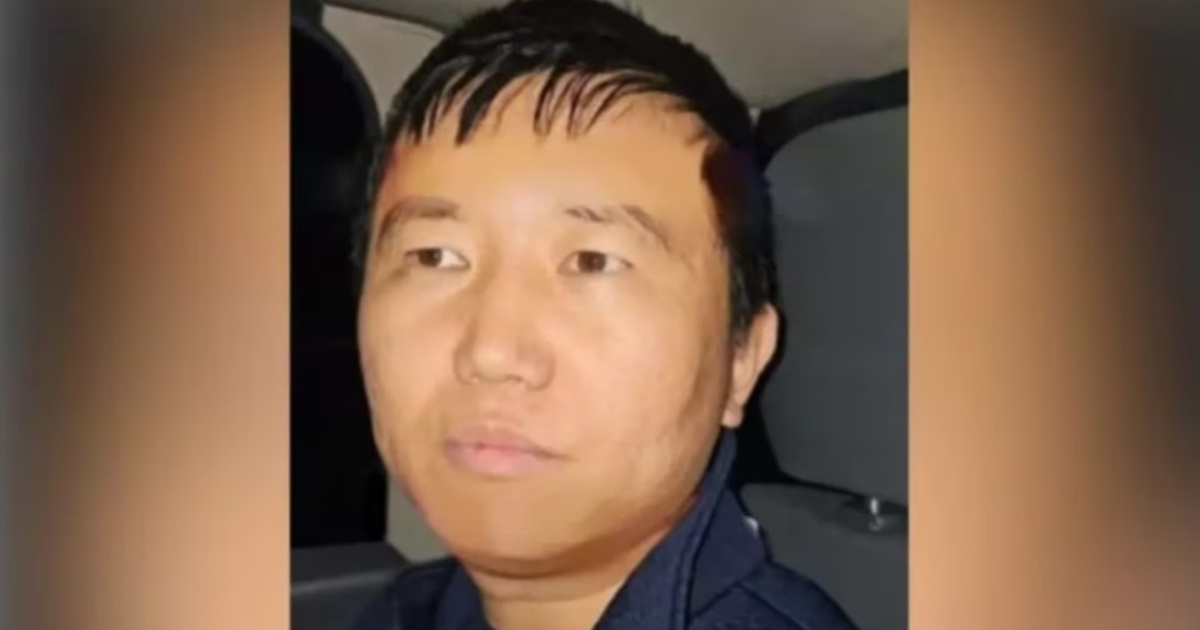
Zhi Dong Zhang was born in 1987 in the Chinese capital. Of medium build, with black hair and brown eyes, his appearance does not reveal the extent of his criminal power.
However, his history is more revealing: he moved around the world with fake passports and used multiple identities, including "El Chino," "Tocayo," "Pancho," and "Nelson Mandela."
The DEA accuses him of leading a transnational drug trafficking and money laundering network since at least 2016, with bases in Los Angeles and Atlanta, and connections in Central America, South America, Europe, and Asia.
His criminal operations include the transportation of over 1,000 kilos of cocaine and nearly 2,000 kilos of fentanyl from Mexico to the United States.
Connections with Mexican cartels and multi-million dollar money laundering
Zhang did not act alone. He was the key link between China and the Mexican cartels, specifically the Sinaloa Cartel and the Jalisco New Generation Cartel (CJNG).
A Mexican cell from their network was collecting the money from drug sales to local traffickers, and a Chinese cell was laundering it through more than 150 shell companies and 170 bank accounts in the U.S., with deposits not exceeding $100,000 to avoid raising alerts.
According to court documents in Georgia, between 2020 and 2021, their network laundered at least 20 million dollars using entities such as Bank of America, JP Morgan, and Wells Fargo.
Most of those funds were directed to a shell company called Mnemosyne International Trading Inc..
In the communications intercepted by the DEA, they used coded terms such as “coffee” (fentanyl) and “food” (cocaine) to disguise their operations.
The arrest in Mexico and the scandalous escape
Zhi Dong was initially arrested in October 2024 during a joint operation in Santa Fe, Mexico City.
Despite being accused of serious crimes, a judge granted him house arrest, which was harshly criticized by President Claudia Sheinbaum.
"There should not have been such a ruling by a judge," Sheinbaum said, pointing to judicial corruption as the cause of decisions that undermined the fight against drug trafficking.
In July 2025, Zhang escaped from his home in Tlalpan, where he was being guarded by the National Guard.
Some reports suggest a tunnel was excavated from his residence, in an incident that triggered a diplomatic crisis and exposed the vulnerabilities of the Mexican judicial system.
Frustrated escape to Russia and capture in Cuba
After his escape, Zhang attempted to enter Russia with fake documentation, but he was identified and expelled.
From there, he headed to Cuba, where he was ultimately apprehended by local authorities.
Although the arrest has been confirmed by Mexican and American sources, Cuba has not officially reported on the capture, nor provided details about its legal status or the ongoing extradition proceedings.
Meanwhile, Mexico expects to receive him first before extraditing him to the United States, where he faces federal charges for drug trafficking and large-scale money laundering.
A symbol of the new global criminality
The case of "Brother Wang" starkly illustrates how drug trafficking has adopted more sophisticated and transnational forms.
Zhang not only trafficked drugs; he operated a financial structure parallel to the banking system, utilizing business resources, legal means, and technology to expand his criminal empire.
His capture in Cuba, although significant, raises unanswered questions: what will be the judicial outcome for the kingpin? Will he cooperate with the authorities? How many more like him operate from the shadows?
And above all, why is the Cuban government silent in the face of such a significant case?
For the United States, Zhang is a central figure in the fight against the opioid epidemic.
His network represents a model of organized crime that combines drug trafficking, financial fraud, and institutional corruption on an international level. The pressure now falls on the countries involved—Mexico, Cuba, and the U.S.—to achieve effective cooperation that ensures "Brother Wang" does not evade justice again.
Filed under: