
Related videos:
A person reported having been a victim of a scam in Cuba via WhatsApp, where criminals posed as a relative to ask for money under the pretense of an emergency at the airport.
In a message sent to this editorial, the complainant explained that the scammers contacted a cousin of his mother, posing as him or her, and claimed that they were “at the airport and needed money to pay for luggage.” “My mom's cousin believed them and transferred 40,000 pesos,” he recounted, asking that the case be shared “so that it doesn't happen to anyone else, given the dire situation in Cuba and the wickedness of these people.”
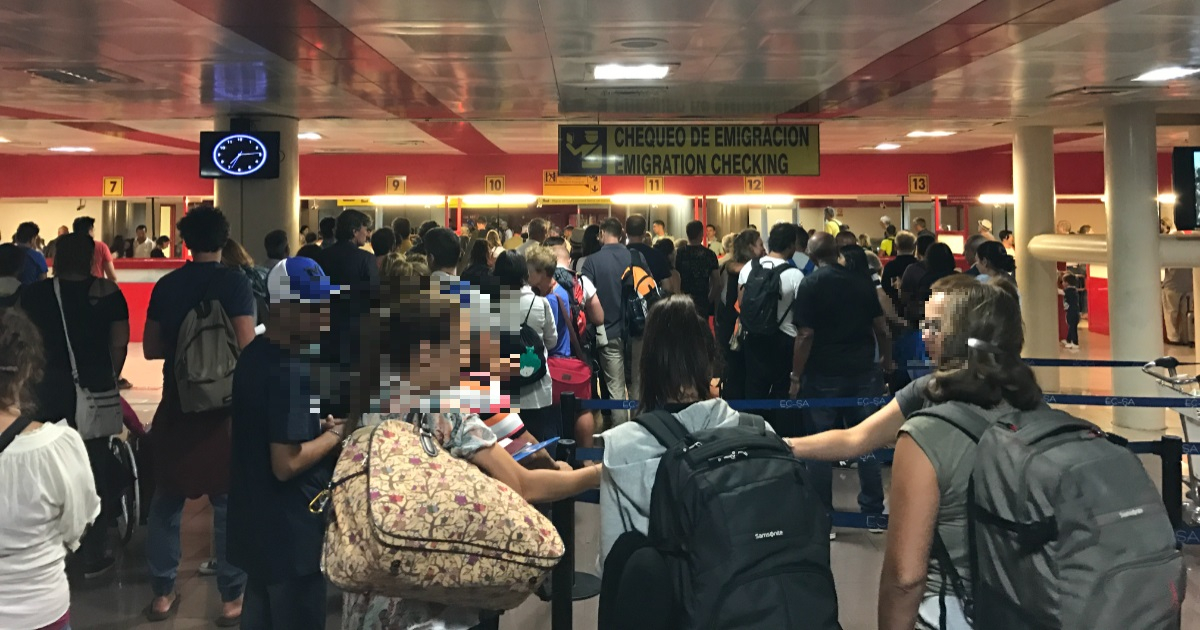
The conversation captures show how the imposter maintains an affectionate tone, using expressions like “my love” and “cousin,” and asks that “you don’t mention anything because I want to give a surprise.” To reinforce the story, he sends a photo of the airport and claims he is having “problems with the luggage,” urgently requesting that the transfer be made. He also demands the receipt: “Send me the screenshot to show it here so that they let me pass the luggage.”
The image used as "proof," however, is not current; rather, it is a photograph from CiberCuba, taken in 2017 at Terminal 3 of the José Martí International Airport in Havana, which was repurposed by the scammers to lend credibility to the lie.
According to the received message, the number had a woman's image as its profile picture, which was later removed. "This is the picture the person had in the contact and then took it down," the complainant clarified.
He also assured that other individuals from the family circle and Facebook were also contacted from the same number, which suggests a planned operation rather than an isolated incident.
"I went to the police and they did nothing, they say that's not a crime."
After the testimony was shared on CiberCuba Noticias on Facebook many users reported receiving similar messages, where strangers posed as relatives or friends who were supposedly at the airport and needed urgent money.
"With me, they tried the same thing; I played along, sent them a fake transfer, and the shameless one called to say I hadn’t sent the money," recounted a user. Another person commented: "It happened to my mom too; someone pretended to be my cousin saying he was at the airport, but thank God she didn’t fall for it." "They did that to me months ago, with photos of the airport and everything. I went to the police, and they didn’t do anything; they say that’s not a crime," wrote another outraged reader.
Among the most common comments, several pointed out that scammers "use real photos and data from social media" and that they "take advantage of people's trust and needs." Others noted that this type of deception "has been happening for years" and questioned the inaction of the authorities: "If the transfer is made to a card, the bank knows who the account holder is; what they don’t want is to work," said a user.
There were also warning messages and advice: “If they don't do a video call, it's a scam,” “never send money via messages,” or “the family should call directly before believing those stories.”
Prevention and warning
Cybersecurity specialists recommend not sending money or personal data without first verifying the identity of the sender, and maintaining privacy on social media to prevent the misuse of photos or family information. They also suggest being cautious of any messages that have an emotional tone or that present urgent situations regarding travel, health, or financial issues.
The testimony and the screenshots confirm that the scammers operate from Cuban numbers, taking advantage of family trust and manipulating victims with messages designed to create a sense of urgency and empathy. So far, it is not known that Cuban authorities have issued a public warning or initiated an investigation into this case.
Filed under: