
Related videos:
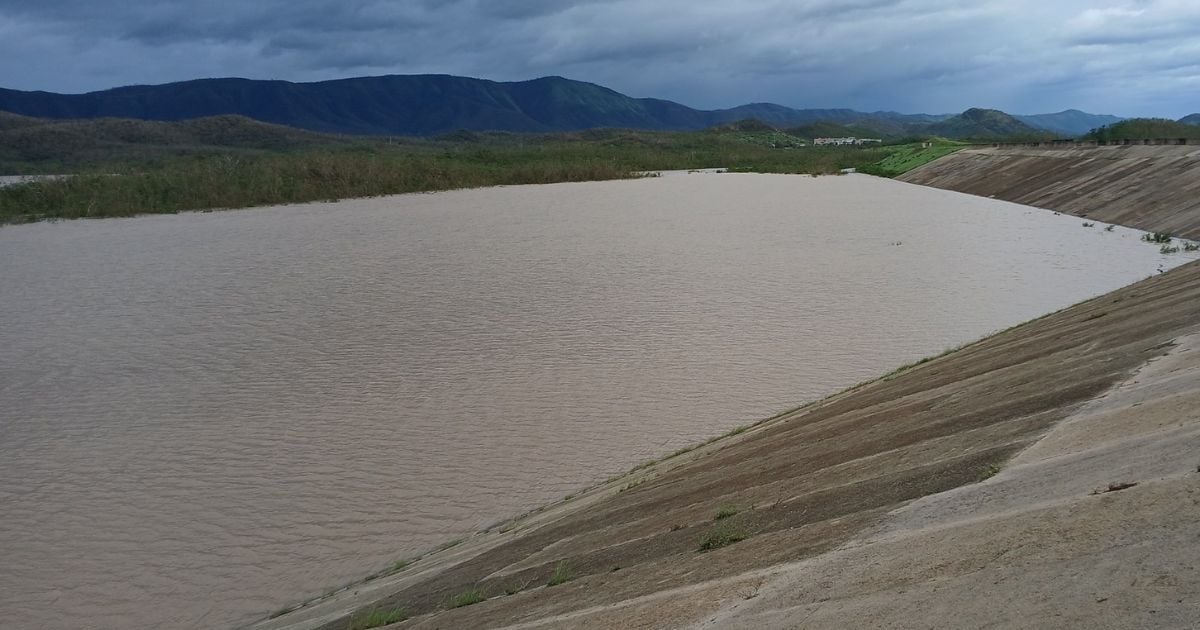
El huracán Melissa, although it left destruction in its wake across eastern Cuba, también provocó un hecho sin precedentes: el embalse Protesta de Baraguá, en Santiago de Cuba, alcanzó su mayor acumulado histórico de agua.
Engineer Katia Yamilka Alarcón Méndez, General Director of the Hydraulic Utilization Company, reported on Facebook that the reservoir reached a historic level of 100.50 meters, with a stored volume of 390.806 million cubic meters.
In addition, he emphasized that it also has a discharge of 6,629 cubic meters per second, while the design flow of the spillway is 8,100 cubic meters per second.
The official noted that this level represents the highest accumulation recorded in the history of the reservoir, built to regulate the waters of the Cauto basin and protect low-lying areas in the eastern part of the country.
The torrential rains caused by Hurricane Melissa rapidly increased the flow, bringing the dam to its maximum capacity.
In another post, Alarcón Méndez reported that the Parada reservoir, also in Santiago de Cuba, currently holds 31.028 million cubic meters, which represents 90.7 percent of its total capacity, after receiving 311 millimeters of rain in 24 hours.
The engineer recalled that this dam, built in 1985, had only reached similar levels on two occasions, the first of which was on October 13, 2007.
The hydraulic authorities are maintaining constant surveillance over the reservoirs in the eastern region due to the risk of overflowing and soil saturation following the passage of Hurricane Melissa, which has caused severe damage to infrastructure, crops, and housing in several provinces of eastern Cuba.
Before Melissa's arrival in the east, the Provincial Defense Council of Santiago de Cuba activated an emergency plan due to the risk of overflowing from two reservoirs and the heavy rainfall that was forecast to accompany the hurricane, which at that time was approaching the country as a powerful Category 4 system.
Filed under: