
Related videos:
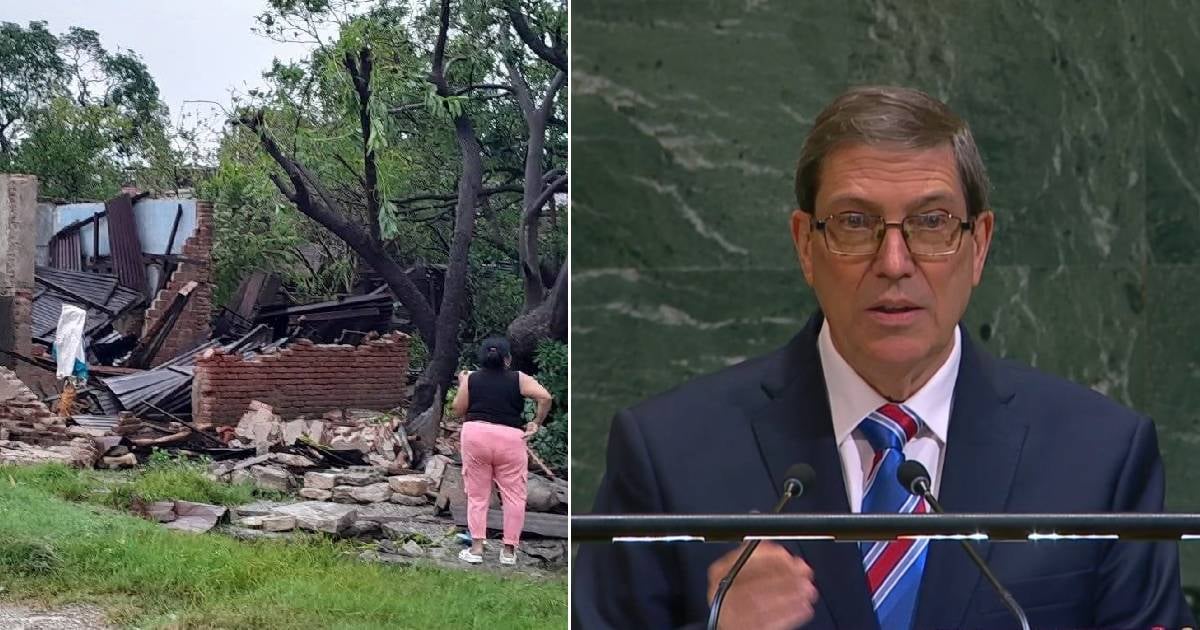
While Hurricane Melissa leaves a trail of destruction in eastern Cuba, the communist regime is keeping its propaganda machinery intact, focusing its narrative on the U.S. blockade and ideological battles, rather than prioritizing the humanitarian emergency faced by thousands of families.
At a time when the eastern part of the island is suffering the devastating effects of the cyclone— with destroyed homes, isolated communities, and food shortages— the Cuban Foreign Ministry published a message on Wednesday on social media that is unrelated to the crisis:
"The continuation of the blockade against Cuba cannot be sustained from a moral standpoint, it is legally unsustainable, and it is counterproductive from an economic perspective. It holds no economic sense."
Propaganda in the midst of disaster
The official apparatus did not stop its political rhetoric even in the face of one of the most powerful hurricanes to hit the island.
While thousands of families in the east are crying out for water, food, and electricity, the state portal Cubadebate posted on its Facebook page: “October 28, 2025, will be remembered in Cuba, not only as another traditional day of tribute to Camilo Cienfuegos but also for the slow and prolonged state of national alert due to the imminent arrival of a catastrophic cyclone in the east of the country.”
The text mixed historical references and political propaganda, claiming that while the country was facing the hurricane, a new resolution against the United States embargo was being debated at the UN headquarters.
The site even released a podcast in which it labeled the citizens' complaints about the lack of preparedness and poor management of the emergency as "fake news."
The contrast: real destruction and empty rhetoric
The official rhetoric seeks to distract from the palpable humanitarian crisis. In the neighborhoods of Santiago de Cuba and Holguín, families report collapsed homes, lack of food, a complete absence of state presence, and total blackouts lasting more than 48 hours.
While the government insists on portraying itself as a victim of the embargo, the reality in eastern Cuba reveals a devastated country without answers, where the priority of the official media seems to be ideological narrative rather than humanitarian aid.
The narrative of the blockade, intact even among ruins
The regime's communication strategy is once again the same: to attribute the effects of its own inefficiency and neglect to the American embargo.
Instead of reporting on the number of affected individuals, destroyed homes, or recovery plans, state media focused their coverage on political "resistance" and the vote against the blockade at the UN.
The contrast between human tragedy and official propaganda highlights, once again, the disconnect between power and the people.
While families struggle to survive, the regime in Havana continues to speak of ideology rather than aid.
Filed under: