
Related videos:
The Civil Defense of Cuba issued its Informative Note No. 4 on Wednesday regarding Hurricane Melissa, announcing that the provinces of Ciego Ávila and Sancti Spíritus, which were under Cyclonic Alert Phase, will return to normalcy starting at 10:00 am, as they were not affected.
In the official text, the National Defense Civil Staff cites the "discipline and solidarity" demonstrated by the population, the leadership bodies, and the media during the passage of the cyclone.
However, the population is urged to pay attention to the influence of the rains and the sea, and to keep the defense recommendations in a reduced capacity active.
The danger continues
The National Hurricane Center (NHC) of the United States warned at 11:00 AM that heavy rains and catastrophic flooding will continue in Cuba, and issued a hurricane warning for the provinces of Granma, Santiago de Cuba, Guantánamo, Holguín, and Las Tunas.
Cuba still has hurricane conditions within the warned area, with expectations of weakening starting this afternoon.
The wind radius confirms the scale of the system: hurricane winds extend up to 65 km from the center, and tropical storm winds extend up to 295 km.
The danger from rain remains critical. In the east, very heavy rains will continue this morning, with totals ranging from 10 to 20 inches and peaks of up to 25 inches in mountainous areas, which could lead to catastrophic flooding and landslides. The rain is expected to diminish in the afternoon.
The storm surge is also a concern. The NHC warns of possible minor coastal flooding in bays and inlets along the northeastern coast.
The official triumphalist discourse against harsh reality
While government offices commend the institutional performance, eastern Cuba remains entrenched in a critical situation.
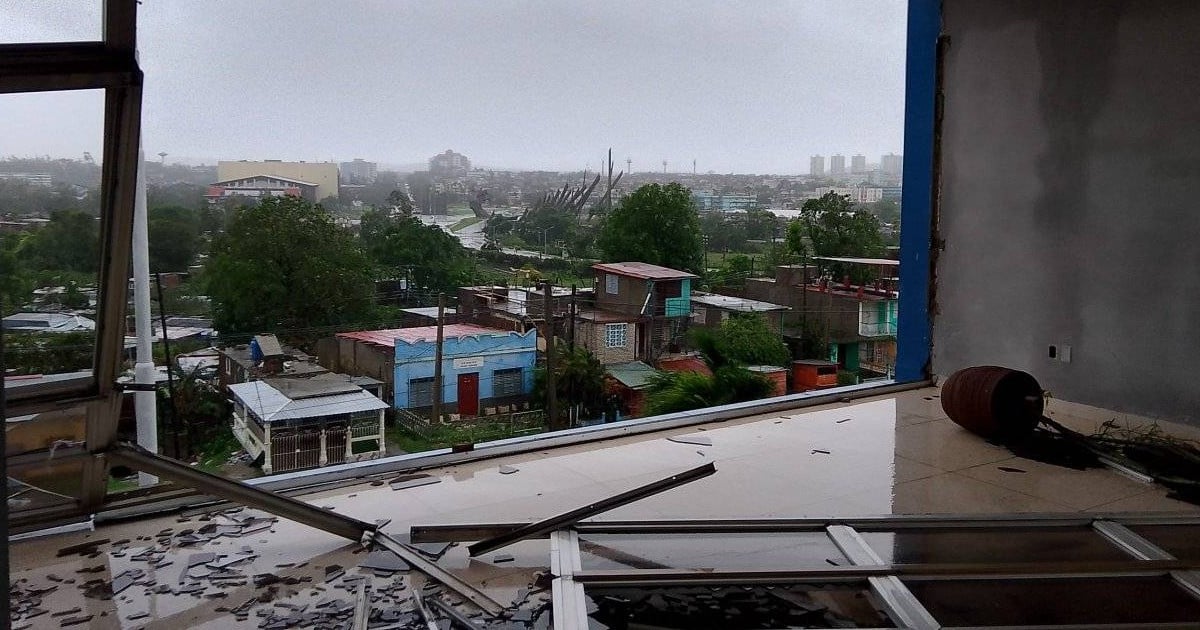
Intense rains, landslides, and storm surges caused by the hurricane have left dozens of communities cut off, homes damaged, and crops devastated in the provinces of Holguín, Santiago de Cuba, Las Tunas, and Granma.
According to data from the Institute of Meteorology, Melissa, which reached category 5 on the Saffir-Simpson scale before making landfall, swept through eastern Cuba with winds exceeding 160 km/h and rain accumulations that, in some areas of Holguín, surpassed 335 millimeters, leading to flooding and river overflow.
The hurricane left the national territory along the northern coast of Holguín, near Banes, heading toward the southwest Atlantic, but its rain bands are still impacting the eastern part of the country, where the saturated ground poses a high risk of landslides and coastal flooding.
Despite this situation, the authorities insist on discussing "preparation" and "organization."
However, in the hardest-hit municipalities, residents' testimonies depict a different reality: homes without roofs, downed power lines, blocked roads, and a population without access to drinking water, electricity, or adequate food supplies.
While official agencies issue reports with a tone of control and complacency, the country's structural crisis exacerbates the impact of each weather event.
The deteriorated sewage and drainage systems collapse with the first rains; the fibrocement and zinc roofs, corroded from years without maintenance, cannot withstand the winds; and the evacuation centers, mostly adapted schools, lack the minimum conditions to accommodate thousands of displaced people.
Melissa has once again exposed the extreme vulnerability of Cuba's infrastructure and the fragility of the state's response mechanisms.
Despite the official rhetoric praising the "solidarity and discipline of the people," citizens continue to face these emergencies virtually alone, relying on makeshift means and lacking basic resources to rebuild their lives.
With the hurricane moving away towards the northeast, Civil Defense announces the end of the alert in some provinces, but in eastern Cuba, normalcy still seems far off.
The country now enters a phase of recovery that, as is often the case, will depend more on individual and community effort than on the effectiveness of the institutions.
Filed under: