
Related videos:
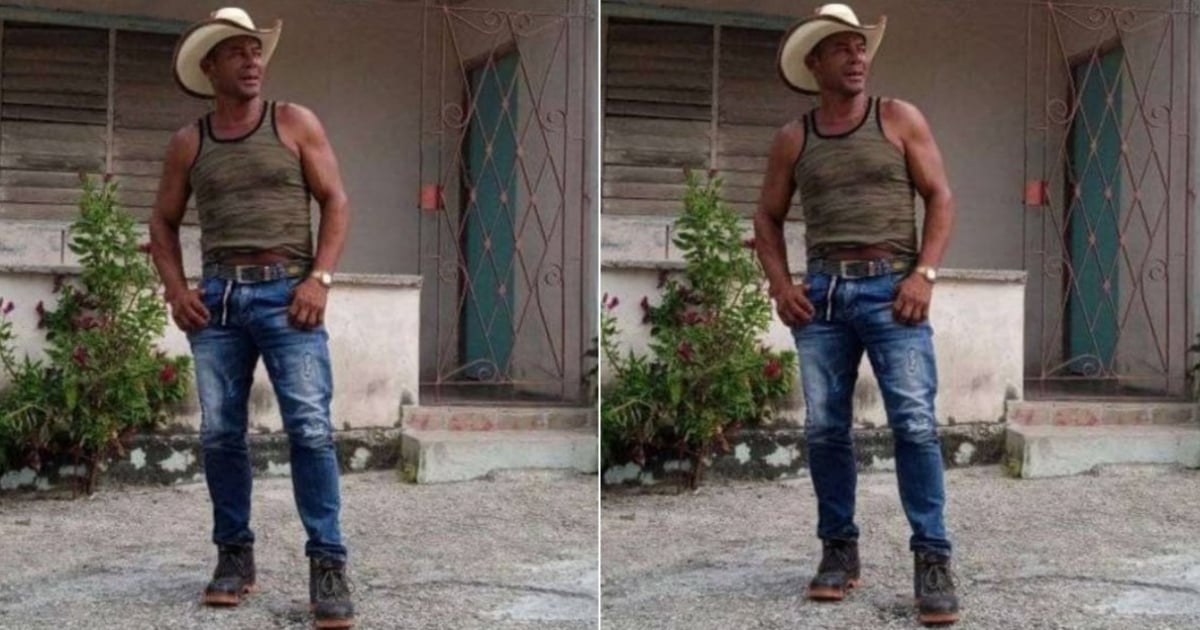
A man identified as Roberto Rodríguez Munder, 56 years old and a resident of Palma Soriano, Santiago de Cuba, is the first confirmed victim in Cuba following the passage of Hurricane Melissa, according to reports from his family and international media.
The deceased was swept away by the current of a river in the La Pedrera neighborhood while trying to cross it during the intense rains that hit the eastern part of the Island.
The news was announced through a post on Facebook by Yesliamnis Gutiérrez, who alerted the community about the tragedy.
"Since yesterday afternoon, this man known to many of us, who was like a father and friend to many, was swept away by the river in the neighborhood of La Pedrera, where he was found this morning drowned. (…) He was better known as Roberto Pedrera. Rest in peace for him," he detailed.
The information was later confirmed by journalist Javier Díaz from Univisión, who stated that he had spoken with neighbors in the area and verified the truth of the event.
"The regime has not confirmed his death, but it is very likely that there are more victims when the waters start receding," the reporter warned on Facebook.
Official silence and contradictions in state discourse
So far, the Cuban regime has not issued any official statement regarding this death or possible additional victims, despite numerous communities in the east still being underwater, with people trapped on the roofs of homes and warehouses calling for help through social media.
Paradoxically, just a few hours earlier, Miguel Díaz-Canel boasted in a meeting of the National Defense Council that no human losses had been reported due to the passage of Hurricane Melissa, which he described as "one of the most intense in decades."
The ruler even dismissed the citizens' complaints, labeling them as "campaigns of disinformation" that, according to him, aim to "undermine the morale of the people."
"If there were any deceased, they would be informed with absolute honesty," said Díaz-Canel.
However, the subsequent silence and the discovery of Roberto Rodríguez Munder contradict that narrative.
Relatives and neighbors confirm the events
According to a report from Noticias 23, Rodríguez Munder's family reached out directly to the television station to share what had happened.
His daughter explained that her father tried to cross a swollen river on Wednesday night, and those who were with him were unable to rescue him.
The body was found on Thursday morning, in the vicinity of the La Pedrera neighborhood.
"He fell while trying to cross a river, and the people accompanying him were unable to rescue him. The body was found in the morning," said the daughter, who requested respect for the family's grief.
The deceased was known in the community for his friendly nature and his willingness to help others.
"He was for many a father and a friend," Gutiérrez wrote in his message, shared on social media.
Catholic Church confirms another victim in El Cobre
While the government continues to withhold information, the Catholic Church in Santiago de Cuba also reported another person who died during the passage of Hurricane Melissa.
The parish priest Rogelio Dean Puerta, rector of the National Sanctuary of Our Lady of Charity of El Cobre, confirmed that an elderly person lost their life in that area, which was devastated by winds and rains.
"Although the material damages are substantial, human life has been preserved, and so far only one fatality is known in the area, an elderly person," the priest stated, without providing further details.
So far, there has been no further statement regarding the deceased individual or the circumstances of their passing.
The religious leader described a bleak picture in El Cobre: destroyed houses, families without shelter, ravaged crops, and a community in shock.
"Our elders say they have never seen anything like it. It has literally devastated the village," he added.
Helplessness and misinformation
While official media remains silent, social networks have become the main source of information for Cubans, who are denouncing the lack of rescues, communication, and state assistance.
In areas such as Cauto del Paso, Guamo, and Grito de Yara, the images show people trapped on rooftops, homes submerged, and rivers out of control.
Authorities insist on speaking of "organization," but the reality on the ground is different: isolated families, irreparable losses, and a state unable to protect its population.
The official discourse, which focuses on blaming external factors, stands in stark contrast to the testimonies emerging from the eastern side of the country that reveal a poor, improvised, and inhumane response to the disaster.
The cost of negligence
The death of Roberto Rodríguez Munder symbolizes the failure of a system that can no longer guarantee the most basic necessity: the life of its citizens.
While the leaders congratulate themselves on their "effectiveness," Cubans are left to face the forces of nature and institutional neglect alone.
In a country where censorship weighs heavier than empathy, tragedies are whispered on Facebook, not announced through official statements.
And although the regime's spokespersons avoid using the word "dead," reality - once again - prevails over propaganda.
Filed under: