
Related videos:
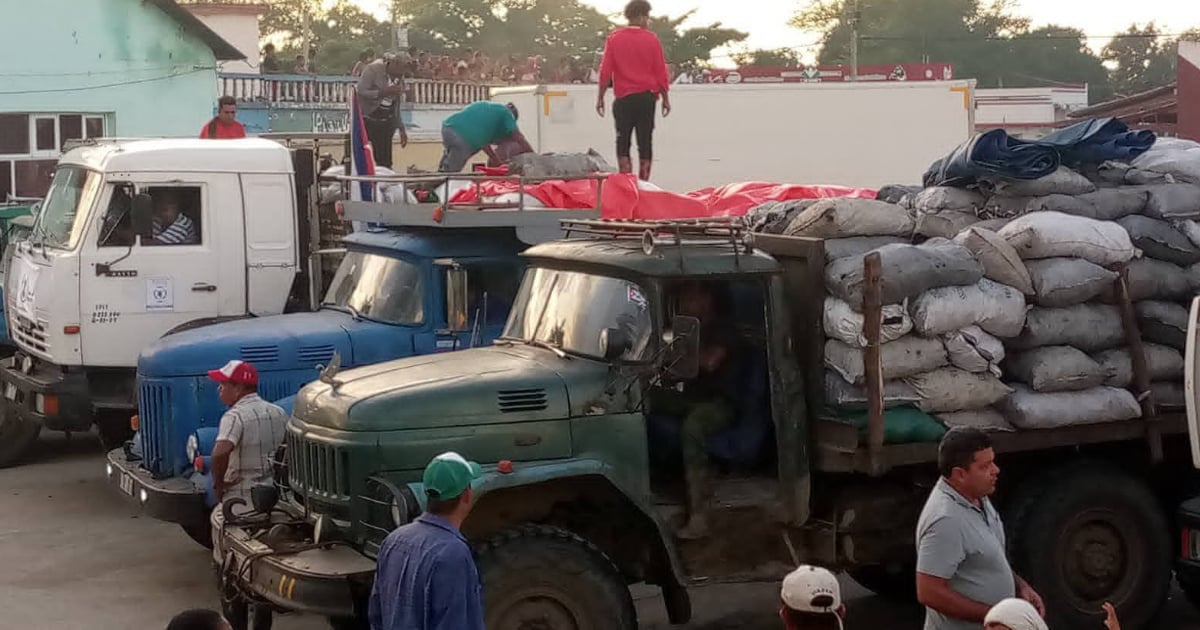
After nearly five days cut off and submerged, the municipality of Río Cauto in the province of Granma began receiving a convoy with resources and state donations aimed at the thousands affected by the flooding caused by the rise of the Cauto River following Hurricane Melissa.
CNC TV Granma reported that the supply trucks include basic food items and hygiene products, and were directed to the evacuation centers where more than 8,000 people are staying.
The delivery arrives with noticeable delays, amidst a critical situation of food shortage, prolonged blackouts, and lack of drinking water throughout the eastern region of the country.
The Municipal Defense Council reported that the resources include products managed by the World Food Program (WFP), among them 2,479 kilograms of rice, 1,406 kilograms of peas, and 812 liters of oil.
The provincial director of Commerce, Raúl Báez de La Torre, also reported that other products have been allocated for evacuation and processing centers, such as coffee, pasta, water, syrup, national beans, plantains, cassava, pumpkin, charcoal, cheese, picadillo, cookies, and bagged soda, along with personal hygiene items—bath soap, laundry soap, and detergent—to be distributed fairly.
The distribution of regulated basic family basket products has also begun, such as rice per consumer and powdered milk for children under six years old.
The governor of Granma, Yanetsy Terry Gutiérrez, confirmed on social media the reopening of the road leading to the municipal capital, which allowed the caravan to proceed.
The intense rains generated by Melissa raised the levels of reservoirs and led to controlled discharges of up to 4,000 cubic meters per second, exacerbating the overflow of the Cauto River, the longest in the country.
The disruption of access left the municipality isolated for several days, without electricity or communication routes. Only now has the provincial government been able to mobilize food, medicine, fuel, mattresses, and hygiene products.
The shipment responds to an obligation of the Cuban state to assist a population that has been facing hunger, unsanitary conditions, and a lack of information in the days following the cyclone. Authorities have not clearly reported how many homes were destroyed or how many crops were lost, while uncertainty remains regarding the restoration of electricity and water supply.
The disaster caused by Melissa once again highlights the structural deficiencies of the disaster response system in Cuba, the reliance on international donations, and the inefficiency of state logistics, which continues to fail in providing timely assistance to those affected.
Filed under: