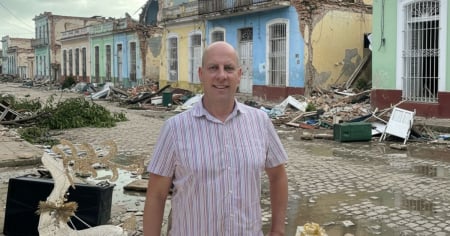
The Cuban activist Norge Ernesto Díaz Blak, (Noly Black), shared a video showing the terrible situation faced by hundreds of families in the Yaguabo community, in the municipality of Cacocum, who lost everything due to the floods associated with the hurricane Melissa.
Four days after the storm passed through eastern Cuba, Noly surveyed the area, which was still flooded due to the overflow of the Cauto River.
The recording shows scenes of desolation: houses completely flooded, belongings floating, dead animals, soaked furniture, and families who only retained the clothes they were wearing.
The young man spoke with residents who, amid sadness, hopelessness, and resignation, are trying to carry on with their lives without knowing how to survive and, later on, how to recover from the massive material losses.
Noly spoke with several cooperative members who told her that all the livestock in the area was lost. They managed to save themselves, along with their little dogs.
"This is what I have," one of them said, pointing to a small backpack. "There’s no mattress, no stove, nothing."
A neighbor pointed out the mark left by the water as it entered a house: above the door.
A couple walking with water above their knees showed the activist the still-flooded state establishments: the cafeteria, the shop, and the offices of INDER and the Police.
A man was carrying an armchair on his shoulders: "This belongs to my dad, who is bedridden. That's his wheelchair," he said.
Other residents could not hold back their tears as they recounted how the police forcibly removed them from their homes, leaving them unable to save anything.
"That is my house. There’s nothing left inside," she expressed with pain.
"Even my food went bad because they wouldn't let me take anything out. They didn't let me take anything, not even the fans, nothing. The pressure cooker, everything, even the food spoiled. I'm suffering from hunger... Some colleagues here give me something to eat," he detailed, feeling dejected.
Noly Black, known for his humanitarian work in Holguín, explained that there are more than 600 houses in such conditions between Yaguabo and the municipal seat of Cacocum after the cyclone passed through.
The young man asked his followers for cooperation to assist these people.
"You see how all of this is, I hope you help me help these families," she expressed.
In an economy marked by structural crisis, declining wages, and scarcity of materials, recovery seems almost like a chimera.
Replenishing a home, a refrigerator, or simply a mattress becomes an odyssey for those who live on a state salary. This is especially true when the infrastructure deteriorates and the institutional response is delayed.
Solidarity among Cubans -both inside and outside the Island- has emerged as the only real mechanism of support.
Donation campaigns, shipments from Miami, and local aid groups operate amidst official neglect. But the question remains: how much longer can a population that is losing everything hold on while waiting for assistance to arrive?
Filed under: