
Related videos:
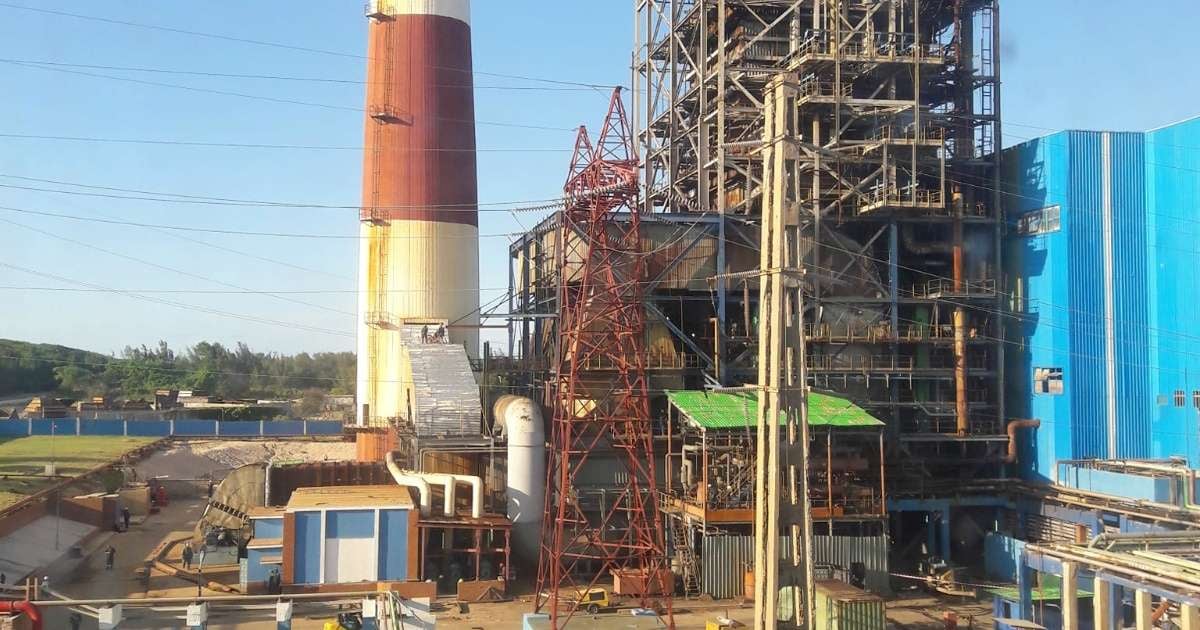
The Antonio Guiteras Thermoelectric Power Plant, located in Matanzas and regarded as the most important in the country, was disconnected from the National Electric System (SEN) this Friday.
The news was initially announced by the Electric Union of Cuba (UNE) through a brief message on Facebook.
However, later they published a clarification that tried, with little success, to calm the storm of criticism.
In its second communication, the UNE explained that the plant would go offline around 9:00 a.m. because its output had decreased to 120 MW, prompting the need for “urgent work” aimed at restoring power.
Unlike the first message, this time a forecast was provided: it is estimated that the shutdown will last four days and it is expected that the thermoelectric plant will synchronize again next Tuesday.
The lack of initial information and the repeated use of empty phrases like "unavoidable defects" immediately sparked public discontent on social media.
An electrical system on the brink of collapse
The departure of the Guiteras occurs at a particularly critical moment for the SEN.
According to the official report from UNE on November 7, the national availability was 1,529 MW, compared to a demand of 2,107 MW, which already represented a deficit of 589 MW in the morning.
For the peak night hours, an even greater imbalance is estimated: a deficit of 1,335 MW, with a total expected impact of 1,405 MW.
The causes are repeating:
-Units damaged in Nuevitas, Felton, and Antonio Maceo.
- Others are under maintenance such as Santa Cruz del Norte and Céspedes.
Severe limitations in distributed generation due to a lack of fuel and lubricants.
-70 power plants out of service, totaling 723 MW unavailable.
Meanwhile, the contribution of the 22 photovoltaic solar parks in the West and Center, although significant (1,959 MWh), remains insufficient to offset the inactivity of the thermal plants.
Reactions: Between mockery, despair, and fury
Social media was flooded with messages of outrage, sarcasm, and frustration.
While some comments approached the situation with dark humor—“this country is an unbearable defect,” one person remarked—the majority expressed deep exhaustion regarding the prolonged energy crisis, the lack of official transparency, and the everyday consequences of power outages: lost food, illnesses, mosquitoes, lack of water, sleepless nights.
Users from all over the country describe desperate situations:
In Santiago de Cuba there are areas in the city center that have been without electricity for more than 12 days and without drinking water for over two months.
In Artemisa, a constant deficit of 180 MW is reported, regardless of the time of day.
In San Antonio de los Baños, power cuts last up to 16 hours a day, with brief moments of electricity that are not enough to charge devices or cook.
In Ciego de Ávila, a resident summed up the situation: “They provide an hour and a half of electricity for 12 hours of outages. No one cares about that.”
-And in Matanzas, the very province where Guiteras is located, many feel they are paying a disproportionate price.
There are also more compelling accusations: from the unequal distribution of blackouts to the claim that certain circuits in the capital remain "untouchable," while the rest of the country is plunged into darkness.
The symbolic weight of the Guiteras
Whenever the CTE Antonio Guiteras is mentioned, the same cycle is revived: ambiguous announcements, a service outage, weeks or months of severe blackouts, and then a reintegration that never guarantees stability.
This plant, which should be an energy guarantee for the western part of the country, has become a symbol of the overall deterioration of the electrical system.
The UNE announced in previous months that this unit would undergo a scheduled shutdown for major maintenance at the end of 2025.
However, this forced exit, deemed "unavoidable," calls into question not only its technical reliability but also the energy planning capabilities of the Cuban state.
Most citizens do not believe that he will return on Tuesday. And even if he does, the population no longer sees these actions as solutions, but rather as part of the same cycle of quick fixes and unfulfilled promises.
Conclusion: a country in the dark, without answers and on the brink
The blackout is not just electrical: it is institutional, economic, and emotional. The departure of the Guiteras is just one more piece of the systemic collapse that the island is experiencing. Every time a plant goes offline, not only does generation decrease: patience, mental health, and the hope of millions of Cubans also fade away.
In light of this situation, the UNE continues to rely on phrases like "unpostponable defects," without providing comprehensive technical explanations, detailed timelines, or, let alone, structural solution alternatives.
It's not just about energy: it's about the right to live with dignity.
Filed under: