
Related videos:
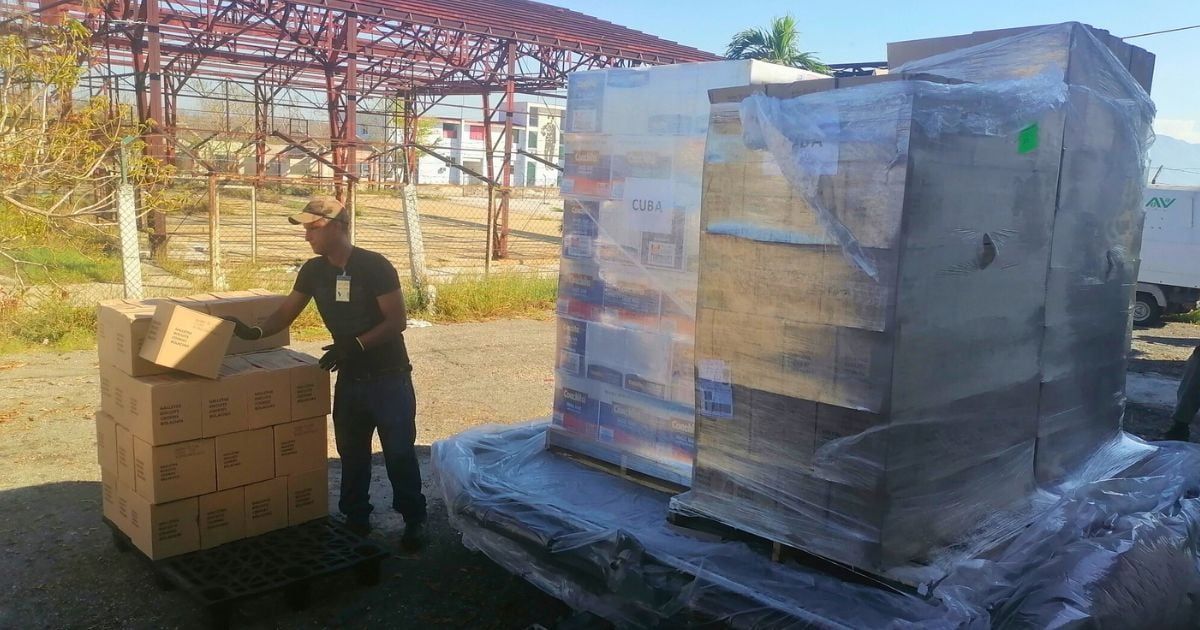
A shipment of humanitarian aid from the Catholic Church in the United States arrived this Sunday in Santiago de Cuba, destined for the dioceses in eastern Cuba that were most affected by Hurricane Melissa.
The information was published on Facebook by the official journalist José Emilio Oliveros Seisdedos, who detailed that the flight landed at Antonio Maceo International Airport with food and medicine delivered by Father Richard Vigoa, on behalf of the Archdiocese of Miami.
According to the publication, the donation is directed to the dioceses of Guantánamo, Santiago de Cuba, Bayamo-Manzanillo, and Holguín, where the Catholic Church maintains community support structures that assist affected families and vulnerable communities.
At the airport terminal, Monsignor Dionisio García Ibáñez, Archbishop of Santiago de Cuba, and Madelaine Cortés Barquilla, Director of Foreign Trade and Foreign Investment for the provincial government, were present to receive the aid sent from the United States.
The arrival of these resources adds to the humanitarian operation of the UN and its agencies in eastern Cuba, which have had to take on functions that the regime is unable to fulfill.
In recent days, the World Food Program (WFP), UNDP, UNICEF, PAHO, and UNFPA have launched a Action Plan for 74 million dollars, of which 11 million have already been mobilized, to assist over a million Cubans affected by the emergency.
In the province of Granma, the UNDP and the WFP are distributing rice, peas, oil, and other basic products, while installing electric generators and photovoltaic solar systems in community centers and universities, in order to ensure energy for the population and emergency services.
In Santiago de Cuba, the UN and the Cuban Red Cross began setting up mobile warehouses and distributing supplies in coordination with Civil Defense, after observing in an aerial survey that Hurricane Melissa had left broken bridges, destroyed roads, and houses without roofs.
Without its own resources or internal response capacity, the Government is increasingly relying on international donations—both religious and multilateral—to meet basic needs such as food, energy, and healthcare in the areas hardest hit by the storm.
Filed under: