
Related videos:
The CiberCuba publication regarding the loss of support for Donald Trump among Latino voters triggered an unprecedented digital storm within hours.
In less than 24 hours, the post surpassed 2,100 comments, becoming the most commented on of the day on the Facebook page of the outlet, a clear reflection of the political polarization affecting the Latino community in the United States, and especially the Cuban-American community.
The article —titled “Latinos turn their backs on Trump: Only 1 in 4 approve of him and Florida trembles with an eye on 2026”— analyzed recent polls indicating a significant decline in support for the Republican president among Hispanics, although Florida stands out as a relative exception.
But what followed was much more than a political debate: an emotional eruption that revealed fractures, passions, and accumulated resentments within the Cuban exile community and among the broader Latino electorate.
Florida, the epicenter of the discussion
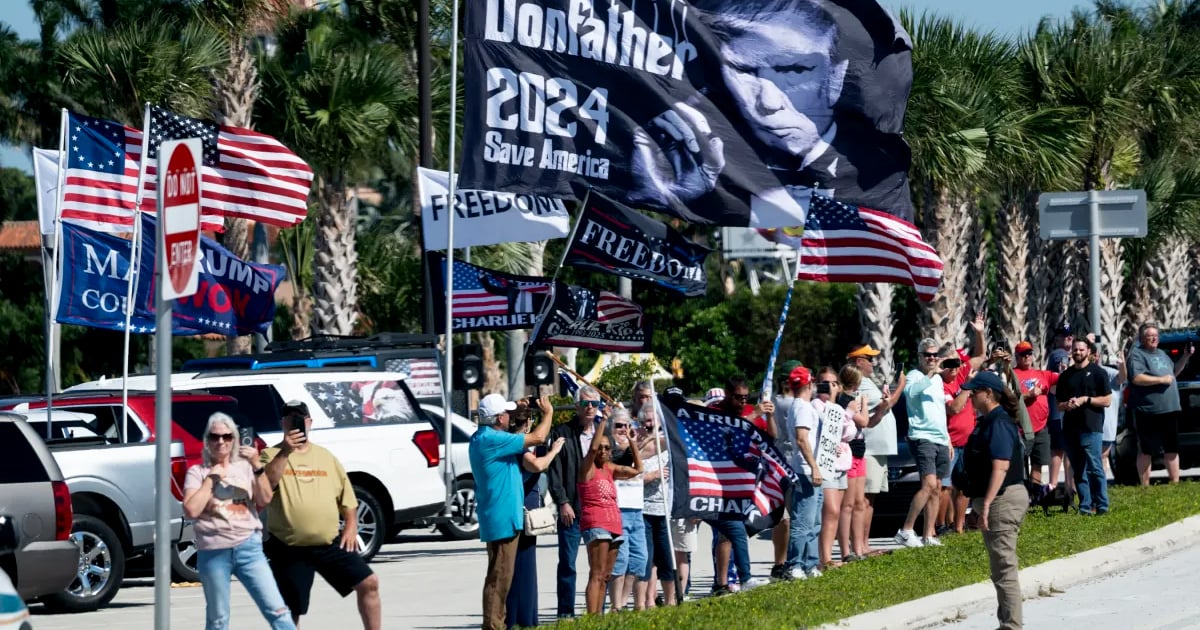
A good number of commentators reacted with disbelief or outrage to the headline. Most of the responses came from Cuban-American users based in South Florida, who fervently defended Trump and questioned both the accuracy of the polls and the credibility of the media.
“Those polls are false, who did they survey? No one has ever asked me anything”, wrote one of the users, in a phrase that was repeated dozens of times with different variations. Another stated: “This is propaganda from the Democrats; we Cubans are sticking with Trump until the end”.
These types of comments, filled with distrust towards the media and pollsters, represented nearly 70% of the total. The tone was one of strong defense: "Florida will remain red, the Latinos who work in this country support Trump", or "Those who complain are illegal, and illegal individuals do not vote".
The anti-communist rhetoric took center stage once again. Several messages equated the Democratic Party with Cuban socialism and thanked Trump for his "tough stance" against the Havana regime. "Cubans know what it is like to live under a dictatorship. That is why we support those who defend freedom and order", wrote another participant.
The debate thus became a symbolic battle between two visions of the country: one that associates Trump with the defense of order, family, and the economy; and another that sees him as responsible for abusive, racist, or morally questionable policies.
The voices of disillusionment
Despite the predominance of pro-Trump messages, the thread also gathered numerous testimonials of regret, criticism, and disillusionment, particularly from Latinos who said they voted for him in 2024 and now feel betrayed.
“I voted for him and I regret it. He promised to deport criminals, and what he has done is separate families and lock up hardworking people”, wrote a user. Another comment was more forceful: “He deceived us. He spoke of protecting us, and now he is hunting our relatives as if they were animals”.
Several messages appealed to the human factor behind the statistics: “This is not about politics, but about shattered families. Many of those deported have no prior records. Where is the justice in that?”.
Others, on the other hand, highlighted the moral contradiction of some voters: “Many who support Trump today forget that one day they crossed the border or sought asylum. Supporting policies that punish your own is not patriotism, it is hypocrisy”.
These messages, although few in number, but rich in arguments, indicated the beginning of an internal fracture even within the Cuban-American bloc, historically loyal to the Republican Party.
An analysis of the debate: Polarization and distrust
The analysis of more than 2,000 comments reveals a deeply polarized and emotional conversation:
- Approximately 65-70% of the messages defended Trump, appealing to his image as a strong and anti-communist leader.
- 25-30% criticized his management, particularly due to immigration policies, the rising cost of living, and the divisive rhetoric.
- 5% expressed neutrality or irony, questioning both Trump and the Democrats.
The dominant emotions were anger, pride, and distrust. Many users expressed themselves from a perspective of identity and belonging, rather than political or economic arguments. Trump was described both as a "savior" and "protector of freedom" as well as a "tyrant" and "enemy of immigrants," depending on the ideological side of the spectrum.
Disinformation was also evident. False claims were repeated—such as "the illegals vote" or "the polls are conducted only by Democrats"—as well as conspiracy theories about the press being "controlled by the left."
The debate fundamentally revealed a crisis of trust in institutions and the media, a characteristic that permeates all of American society, but among Cuban exiles, it takes on a historical nuance: the association between media criticism and political manipulation, inherited from the totalitarian experience in Cuba.
What the digital thermometer reveals
What happened on the CiberCuba Noticias wall goes beyond a simple discussion on social media. It is a gauge of the political mood in Latin America and the emotional weight that Trump still carries among Cuban Americans, his most loyal core within the Hispanic vote.
In contrast to other Latino groups — Mexicans, Puerto Ricans, Central Americans — where support for the Republican Party has plummeted, Cubans maintain a consistent support, rooted in anti-communism and distrust towards the Democratic progressive agenda.
However, within the comments, cracks in that loyalty also emerge: young voices, women, and professionals who reject the treatment of immigrants, the rising prices, and the authoritarian style of the leader.
A user summarized it this way: “I supported him because he promised order, but what he brought was fear. And fear does not bring prosperity.”
A conversation that reveals the pulse of the community
That a single post has generated over two thousand comments in a day is not just a social media statistic; it is a sign of the intense emotional connection between Trump's persona and the Latino community, particularly the Cuban community.
More than a political debate, the comments reveal a struggle of identities: those who see Trump as a safeguard against communism and those who identify him as a threat to the very values he claims to uphold.
In the midst of that confrontation, an undeniable truth emerges: the Latino vote is far from being a uniform bloc.
And if Florida continues to be the Republican stronghold, it is also starting to reflect a larger phenomenon: a divided, vocal, emotional, and decisive Hispanic electorate for the political future of the United States.
Filed under: