
Related videos:
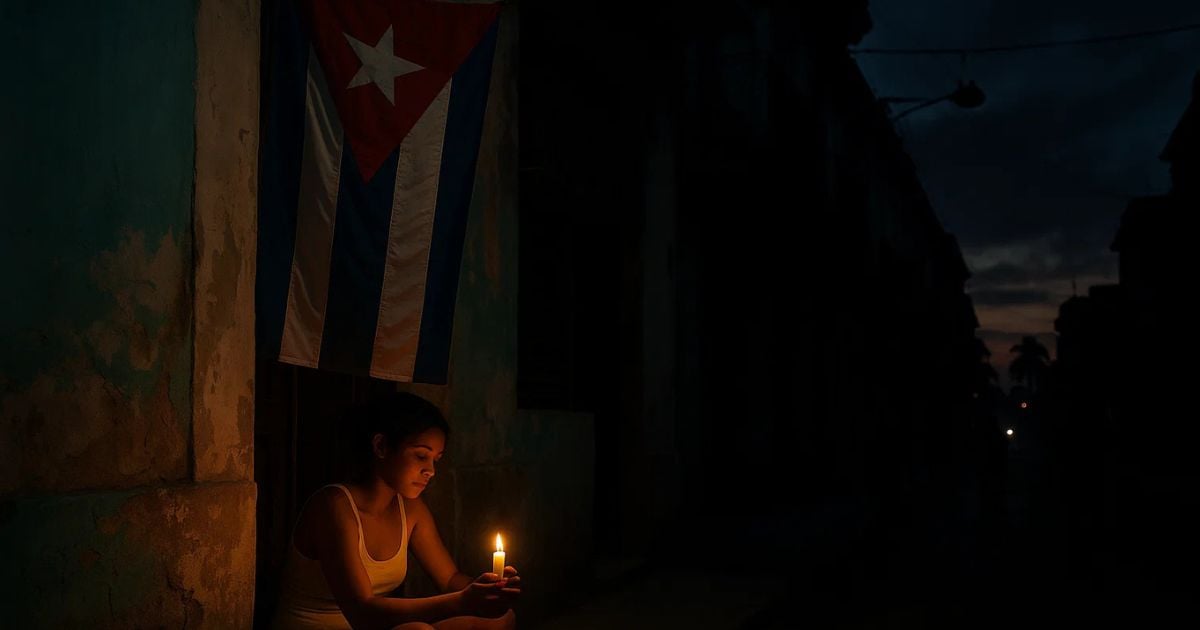
The blackouts show no mercy in Cuba. The Electric Union (UNE) reported a generation deficit exceeding 1,500 MW, leaving the country without electricity throughout Sunday and part of the early hours of Monday, confirming that the energy crisis has become endemic.
According to the latest report from UNE, dated November 10, 2025, the country experienced blackouts throughout the 24 hours of the day and entered this morning without restoration of service.
The maximum impact from the generation capacity deficit reached 1,509 megawatts (MW) at 7:00 PM on Sunday, while another 306 MW were out of service in the eastern part of the country—from Las Tunas to Guantánamo—due to the passage of Hurricane Melissa.
Although the government insists on highlighting the incorporation of 26 photovoltaic solar parks between the West and Holguín, their total contribution was 2,590 megawatt-hours (MWh), with a maximum capacity of 450 MW at noon. This figure is insufficient to alleviate the extent of the collapse.
An electrical system on the brink of collapse
At 6:00 AM this Monday, the availability of the National Electric System (SEN) was 1,435 MW, compared to a demand of 2,375 MW, resulting in a deficit of 962 MW.
The UNE estimates that the impacts could exceed 1,050 MW during midday hours, worsening a situation that occurs endemically across the Island.
The main causes are well-known: an aging thermoelectric plant, lack of fuel, and simultaneous breakdowns. On this day, the following were out of service:
Units 5 and 6 of the CTE Antonio Maceo (Santiago de Cuba)
Unit 2 of the CTE Felton (Holguín)
Under maintenance: Antonio Guiteras (Matanzas), Santa Cruz (Mayabeque), and Carlos Manuel de Céspedes (Cienfuegos)
This is compounded by thermal limitations equivalent to 376 MW offline, 81 distributed generation plants halted due to lack of fuel (615 MW), and an additional 98 MW unavailable due to lack of lubricant. In total, 713 MW are impacted by issues related to energy shortages.
Forecast for peak hours: more blackouts
For the peak evening hours, the UNE anticipates the addition of 50 MW from distributed motors and 110 MW from Moa, resulting in an availability of just 1,595 MW, compared to an estimated demand of 3,050 MW.
The deficit of 1,455 MW indicates a national impact of 1,525 MW, which means widespread blackouts during the night in nearly all provinces.
Havana and the rest of the country: prolonged darkness
In the capital, blackouts have become routine and prolonged, with areas going more than 10 hours without service. Citizen reports indicate daily unscheduled outages and voltage fluctuations that damage appliances.
On Sunday, the highest impact was 216 MW in the afternoon, according to the report from the Havana Company.
While the regime blames the blockade and accumulated technical deterioration, the population is facing a chronic electrical crisis, without any real alternatives and with an official narrative that promises solutions that never materialize.
The expression "endemic blackouts" has become the most accurate description of a permanent reality in today's Cuba, where light—both literally and symbolically—seems like an increasingly distant luxury.
Filed under: