
Related videos:
The United States Supreme Court has issued a key decision that expands the limbo in which more than 42 million people reliant on the Supplemental Nutrition Assistance Program (SNAP), also known as Food Stamps, find themselves.
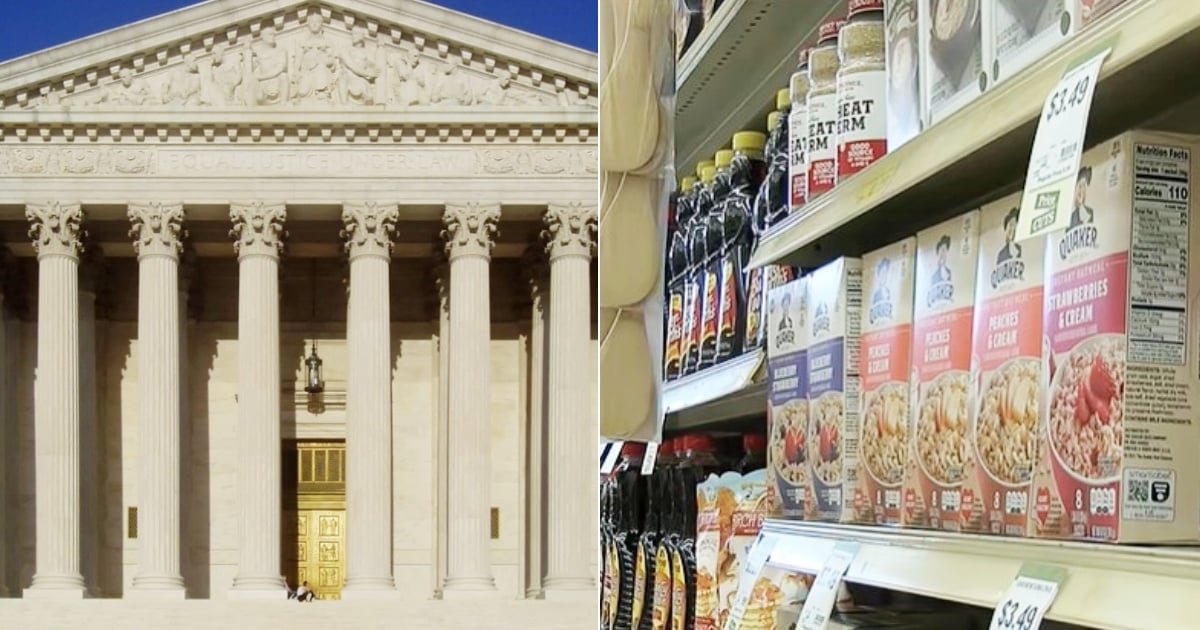
The Supreme Court decided to maintain the temporary suspension that prevents the federal government from being required to pay 100% of the benefits for the month of November, which represents at least a temporary backing of the Trump administration's position.
Judge Ketanji Brown Jackson had imposed an administrative stay on November 7, which has now been extended by the Supreme Court until 11:59 p.m. on November 13.
This means that, unless there is a last-minute legislative or judicial change, the beneficiaries will continue to receive only 65% of the food assistance they are entitled to.
“The administrative suspension […] extends until 11:59 p.m. (Eastern Time) on November 13, 2025”, reported the high court in its ruling.
The situation arises in the context of a partial federal government shutdown that has halted multiple social programs and has sparked an intense legal and political battle over how and with what resources SNAP should continue to be funded.
The Trump administration has defended its decision to cut food assistance, arguing that the funds might be needed "elsewhere" due to the lack of a budget authorized by Congress.
The measure has left millions in an uncertain position.
States like Hawaii and New Jersey managed to distribute the full benefits for November before the ruling, while others like Nebraska and West Virginia have not disbursed a single dollar.
In Texas and North Carolina, the payments have been partial. The result: a national mosaic of inequality.
"It is a geography of injustice", warned a judicial source cited by the agent AP.
The case of Jim Malliard, a 41-year-old resident of Franklin, Pennsylvania, illustrates the human impact of the crisis. Malliard cares for his wife, who is blind and has suffered multiple strokes, as well as his teenage daughter, who has medical complications following a complicated surgery. He has not received his monthly SNAP allocation of $350 for more than a week and a half.
A ruling that fuels the political battle
The Supreme Court's ruling does not resolve the underlying litigation, but it does allow the government to continue avoiding full payments for the program, while discussions continue in Congress and in lower courts.
This occurs amid increasing legislative pressures to end the government shutdown.
The Senate approved a bill this week to reopen the federal government and guarantee full funding for SNAP until the end of the fiscal year.
The Speaker of the House, Mike Johnson, called on his colleagues to return to Washington to consider the agreement.
Trump, however, has not confirmed whether he will sign the law, although he stated that "it seems we are close to the end of the shutdown."
From the administration, the Attorney General D. John Sauer made it clear in a document sent to the Court that, in his opinion, the courts should not intervene.
"The answer to this crisis is not for federal courts to reallocate resources without legal authority," he wrote.
"The only way to end this crisis, which the Executive is determined to resolve, is for Congress to reopen the government," he added.
A chain of contradictory failures
The current paralysis is the result of a cascade of contradictory judicial decisions.
At the end of October, two judges ordered the government to provide at least partial funding for SNAP, which led to the distribution of 65% of the benefits.
But a later ruling ordered full funding, even resorting to funds designated for emergencies.
On Monday, an appeals court upheld the ruling requiring 100% funding and warned that the federal government has acted with negligence.
"Without this program, tens of millions would face hunger—the first link in a chain of health and financial harms—especially on the brink of winter," wrote Judge Julie Rikelman.
Citizen initiatives in response to institutional abandonment
The situation has prompted responses from civil society. In Carthage, New York, teacher Ashley Oxenford set up a community pantry in her garden to assist vulnerable neighbors.
The gesture reflects a growing sense of frustration in the country.
The SNAP, established in the 1960s, has never faced a challenge of this magnitude.
Its mixed design - with federal and state participation - has generated confusion. Some states began to distribute full benefits after receiving initial approvals that were later revoked, while others are still waiting for clear guidelines.
Even if Congress approves a law to restore the funds and Trump signs it, the complete reinstatement of benefits could take days or weeks.
Meanwhile, millions remain in suspense, waiting for answers in a scenario where the Supreme Court has chosen to give the government leeway.
Filed under: