
Related videos:
The administration of President Donald Trump proclaimed that it achieved the largest reduction of the foreign population in the United States in over 50 years, resulting from an immigration offensive that combines mass deportations, self-deportations, and an extreme strengthening of border control.
The Department of Homeland Security (DHS) stated this Friday through its profile on X that the country is experiencing a “historic turn” after recording the first decline in the foreign-born population in over half a century.
According to the entity, the migration strategy of the Republican leader, supported by Homeland Security Secretary Kristi Noem, has dismantled what it calls "decades of failed policies."
In another tweet, the agency emphasized that “the time of mass illegal migration, open borders, and visa abuse is over.”
In its official statement, DHS attributed this change to a record increase in funding for immigration enforcement agencies, the streamlining of deportations, and a border security plan that, it claims, has led to hundreds of thousands of expulsions and the "self-deportation" of more than two million individuals who chose to leave the country in the face of impending operations.
The agency also noted that the United States Citizenship and Immigration Services (USCIS) has intensified its scrutiny of visas and immigration benefits through new screening policies, joint anti-fraud operations with the Federal Bureau of Investigation (FBI) and the Immigration and Customs Enforcement (ICE), as well as the elimination of automatic extensions of work permits, with the goal of "restoring integrity" to the system.
The government frames these results within an economic vision whereby the exit of immigrants—especially non-citizens and individuals without legal status—would have reorganized the labor market in favor of American workers, an argument supported by conservative sectors.
According to official data, in the first 200 days of Trump's second term, 1.6 million undocumented immigrants left the United States.
However, the economic landscape shows severe impacts. According to preliminary data from the Census analyzed by the Pew Research Center and cited by the Associated Press (AP), more than one million immigrants have vanished from the labor market so far in 2025.
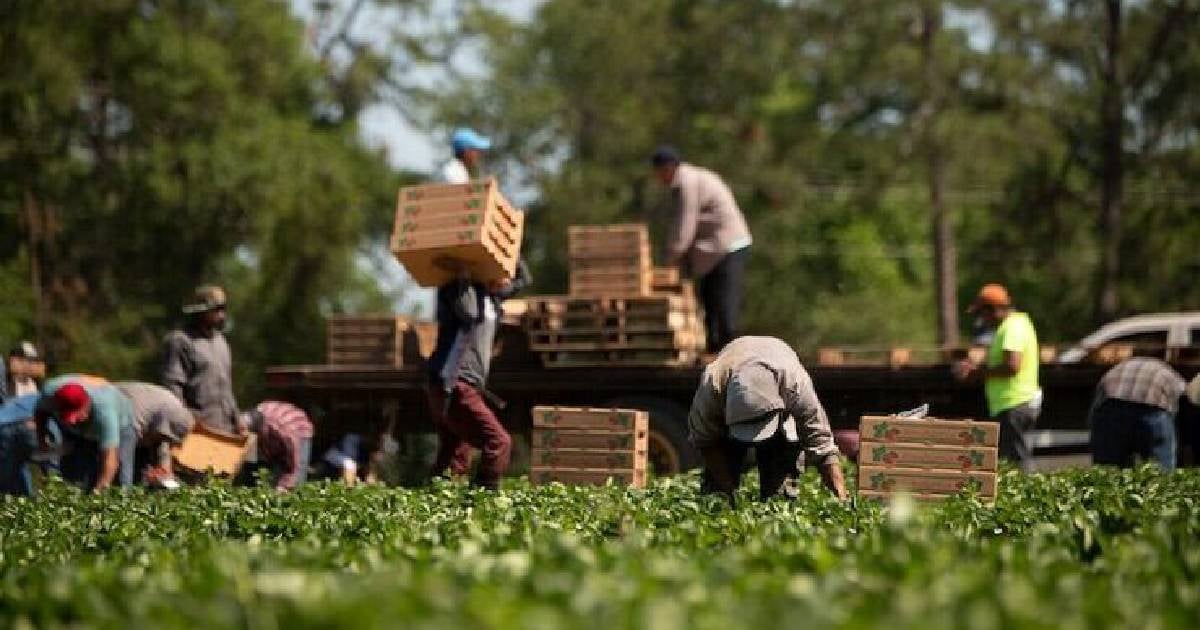
The effects are strongly felt in agriculture, where producers in California and Texas report unharvested crops and millions in losses.
Organizations like the National Farmworker Ministry warn that the lack of labor has left entire fields unharvested during critical seasons.
Construction is also experiencing a significant setback, with metropolitan areas like Los Angeles and Riverside losing thousands of jobs due to a lack of immigrant workers.
Labor analysts recall that immigration historically contributed about half of the employment growth in the country, so the decline threatens to hinder economic expansion.
Although the Trump administration insists that its measures focus on "dangerous criminals," reports cited by AP emphasize that the majority of those detained have no criminal record, which amplifies the debate over the human and labor impact of the immigration crackdown.
The government, however, claims that this is just the beginning of a new phase: the arrival of a wave of newly trained ICE agents will expand the capacity to implement large-scale measures in the coming months, consolidating what it presents as "the end of the era of open borders."
The historic drop in the foreign population, presented by the Trump administration as a political victory, reveals a central contradiction: while the White House celebrates the "restoration of order," the country faces an immediate deterioration in its workforce, million-dollar losses in essential sectors, and a real risk of economic slowdown.
The demographic decline drives a narrative of control, but it also reveals a structural dependence on immigrant workers that the current strategy overlooks.
The reduction of migratory flows may yield political benefits in the short term, but it leaves a gap that neither the market nor the government has shown the ability to fill.
Filed under: