
Related videos:
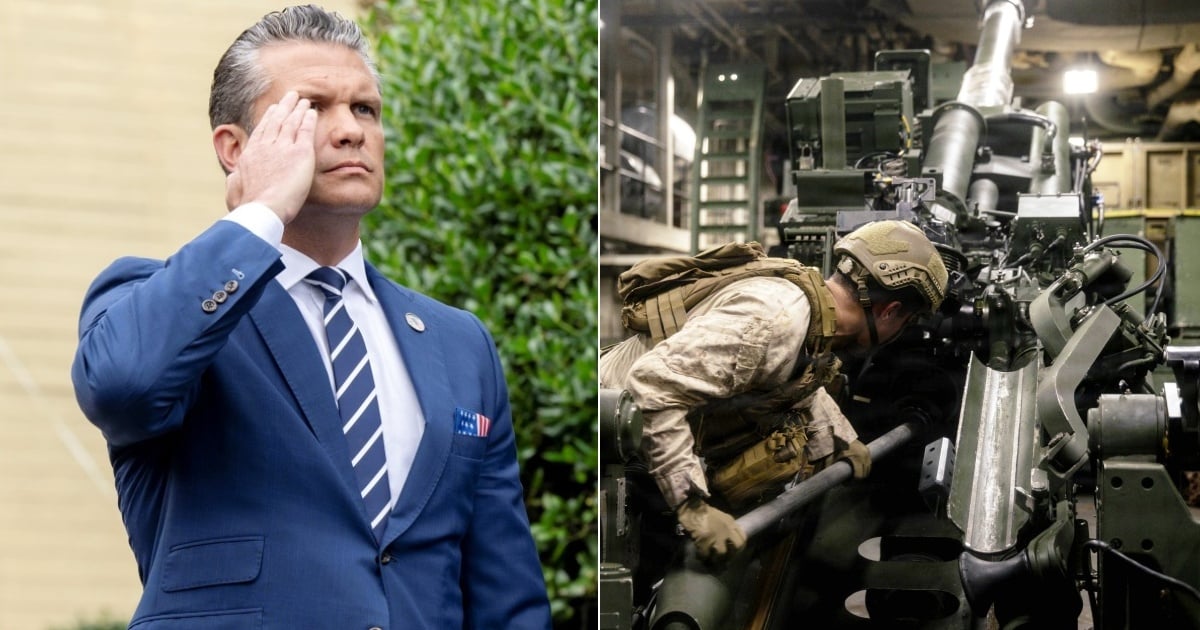
The administration of Donald Trump has announced a new large-scale military operation in Latin America under the name "Southern Spear" (Southern Spear).
The announcement, made by Secretary of Defense, Pete Hegseth, marks an intensification of the U.S. military presence in the region, in the context of the fight against drug trafficking, but also with a clear political backdrop: the sustained pressure on the government of Nicolás Maduro in Venezuela.
Secretary Hegseth announced the operation through a post on the social network X, where he stated that:
"President Trump has ordered action, and the Department of Defense is following through. Today, I announce Operation Southern Lance. Led by the Southern Lance Joint Task Force and @SOUTHCOM. This mission defends our homeland, drives narcoterrorists out of our hemisphere, and protects it from the drugs that are killing our people."
The message makes a direct reference to the so-called "narcoterrorists"—a term that encompasses Latin American drug trafficking networks—which Washington accuses of being responsible for the influx of fentanyl and other synthetic drugs into U.S. territory.
The operation would be led by the United States Southern Command (SOUTHCOM), whose jurisdiction covers 31 countries and territories in South America, Central America, and the Caribbean.
"The Western Hemisphere is the neighborhood of the United States, and we will protect it," emphasized Hegseth.
A new operation or a name change?
Despite the official statements, the mission has not been detailed in tactical or geographical terms.
This has led analysts and U.S. media to wonder if "Lanza del Sur" is simply a redefinition of the current ongoing military deployment or if it represents a new phase of military escalation.
The fact is that since summer, the Pentagon has increased its presence in the Caribbean, especially off the coast of Venezuela, with the arrival of warships, destroyers, amphibious forces, and, most recently, the USS Gerald R. Ford, the largest and most advanced aircraft carrier in the world.
According to Axios, senior officials at the Pentagon even recently presented Trump with “updated options” to attack Venezuela, although no definitive decision was made.
In that context, Operation Southern Lance could be designed as a tool of pressure and deterrence against the Maduro government, beyond its stated anti-drug objective.
Lethal operations and legal challenges
In parallel to the announcement, the U.S. government has intensified its direct military actions against vessels suspected of drug trafficking.
According to CNN, the United States has conducted at least twenty lethal attacks in the waters of the Caribbean and the Eastern Pacific, resulting in approximately 80 deaths, many of whom have not had legal justification or formal identification provided.
These actions, which have not been publicly supported with evidence, have been strongly criticized by European allies and regional actors.
In response, Secretary of State Marco Rubio was emphatic: “Europeans will not dictate how Washington decides to defend the national security of the United States.”
The reaction of Venezuela and the region
The response from Nicolás Maduro's government was swift. In a speech broadcast on state television, the Venezuelan president accused the United States of using "false narratives" to justify its growing regional militarization.
"Since they can't say that we have hidden biological or chemical weapons, they invent an absurd narrative," Maduro stated.
The Venezuelan Minister of Defense, Vladimir Padrino López, described the deployment as a “vulgar attack against the sovereignty and peace” not only of Venezuela but of Latin America as a whole.
Caracas responded with an internal military exercise that mobilized 200,000 soldiers, under the slogan of protecting the country from an "imperialist threat."
Combatting drug trafficking or geopolitical pressure?
Experts and analysts have questioned the true purpose of the operation.
Elizabeth Dickinson, from International Crisis Group, warned: “An aircraft carrier does not contribute anything useful to combat drug trafficking.”
According to Dickinson, this type of deployment has more symbolic and political value than strategic, and it would aim to increase pressure on the Maduro regime rather than effectively combat the drug trafficking routes.
With the announcement of Operation Southern Lance, the Trump administration consolidates the largest U.S. military deployment in Latin America in generations.
The initiative is framed within a narrative of protecting the "American neighborhood," but it overlaps with political objectives, legal challenges, and an unprecedented escalation in U.S. hemispheric policy.
In the absence of operational clarity and transparency regarding its consequences, "Lanza del Sur" raises concerns on multiple fronts: regional diplomatic relations, respect for the sovereignty of Latin American countries, and the legality of lethal attacks in international waters.
Filed under: