
Related videos:
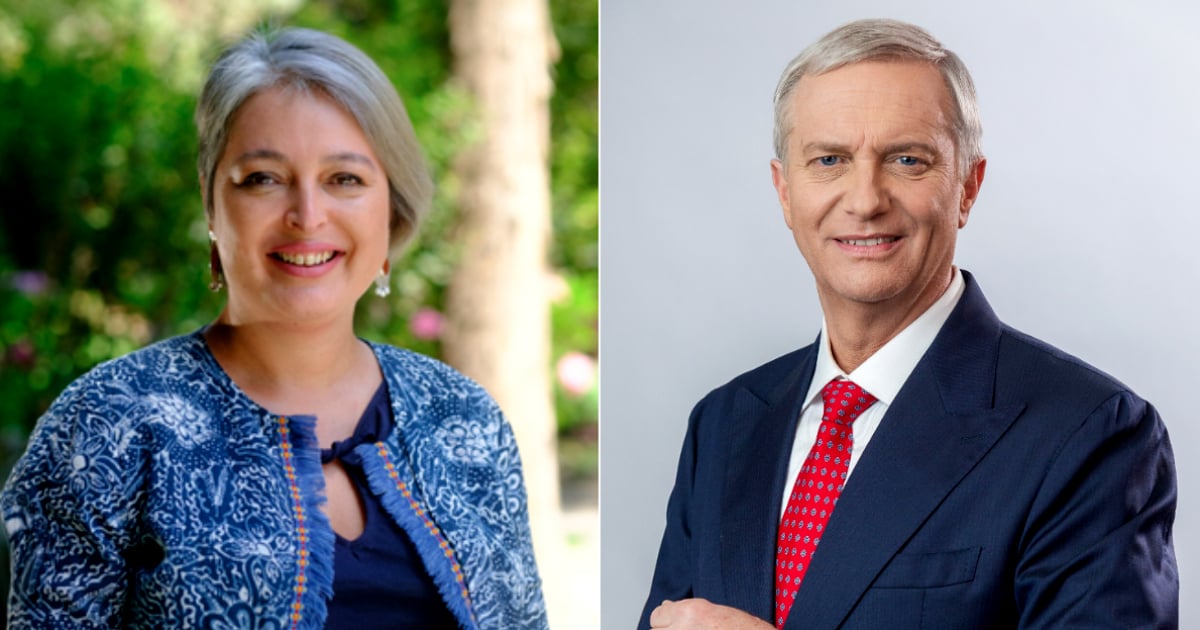
Chile voted this Sunday and confirmed what the polls had already anticipated: there will be a runoff presidential election on December 14 between the official candidate Jeannette Jara from the Communist Party and the far-right leader José Antonio Kast, founder of the Republican Party.
With 98.4% of the polls counted, Jara secured 26.8% of the votes, compared to Kast's 23.9%, a minimal difference that leaves one of the most polarized contests of recent years still open.
The former Minister of Labor for President Gabriel Boric prevailed in the central regions —Coquimbo, Valparaíso, and the Metropolitan region of Santiago— while Kast dominated in the southern part of the country, in areas such as La Araucanía, Los Lagos, and Biobío.
In the north, the populist economist Franco Parisi, from the Party of the People, surprised everyone by reaching 19.6%, becoming the key player in the runoff election.
Two competing models of the country
The results confirm that Chile must choose between two opposing projects: On one side, a communist candidate advocating for a strong state, increased social spending, and an “inclusive democracy”; on the other, an ultra-conservative politician promising “order, security, and a smaller state,” who has been compared to leaders like Donald Trump or Javier Milei.
“On December 14, there will be a plebiscite between two models of society,” declared Kast to his supporters, flanked by former candidates Evelyn Matthei (traditional right) and Johannes Kaiser (libertarian), who have already announced their support for the Republican. “We may have had differences, but what we need now is to prevent the continuation of a bad government,” he affirmed amidst applause.
Kast's alliance with the other right-wing candidates, who together surpassed 50% of the vote, provides the conservative bloc with a strong foundation to contest the runoff.
In contrast, the left arrives fragmented, with Jara trying to attract centrist voters and disillusioned youth from Boric's government.
Jara is grateful, but acknowledges the challenge
From his command in Santiago, Jara celebrated the advancement to the second round with a sober tone.
"Democracy must be protected and valued. It took us a lot to regain it, for it to be put at risk today," he warned, referring to the rise of the far right.
Although her supporters celebrated the victory, the result fell short of expectations: the polls had given her over 30%, but the candidate came up short, with the support ceiling very close to her electoral floor.
The right, united and with the wind at their back
Kast, 59 years old, is experiencing his third chance to reach La Moneda after losing to Boric in 2021. This time, however, the situation seems different.
The main concerns of the electorate—crime, migration, and the economy—work in their favor.
During the campaign, he avoided referring to his more radical positions —such as his defense of the dictator Augusto Pinochet or his opposition to abortion and same-sex marriage— focusing instead on public order issues.
“Chile has truly awakened,” he proclaimed last night, referencing the slogan of the social uprising in 2019. “Millions of Chileans have chosen to embrace a project of hope in the face of this government's chaos and mediocrity.”
Analysts warn that if Kast wins, it would be the first time since the return to democracy that a supporter of Pinochetism governs Chile.
Path to December 14th
In the final stretch, Jara will seek alliances with the center-left and the voters of Franco Parisi, whose young and digital base could tip the balance.
The populist, who repeated his third-place finish from 2021, refrained from making a statement: "We will talk at the right moment and on our own terms," he said, keeping the negotiation open.
President Gabriel Boric congratulated both candidates and requested "a debate with a higher perspective," highlighting the country's democratic strength.
But the picture is clear: Chile faces a defining election between the continuity of the progressive project and the rise of the far-right, the most hardline in Latin America.
On December 14, Chileans will vote not only for a president but also for the political and historical direction of the country.
Filed under: