
Related videos:
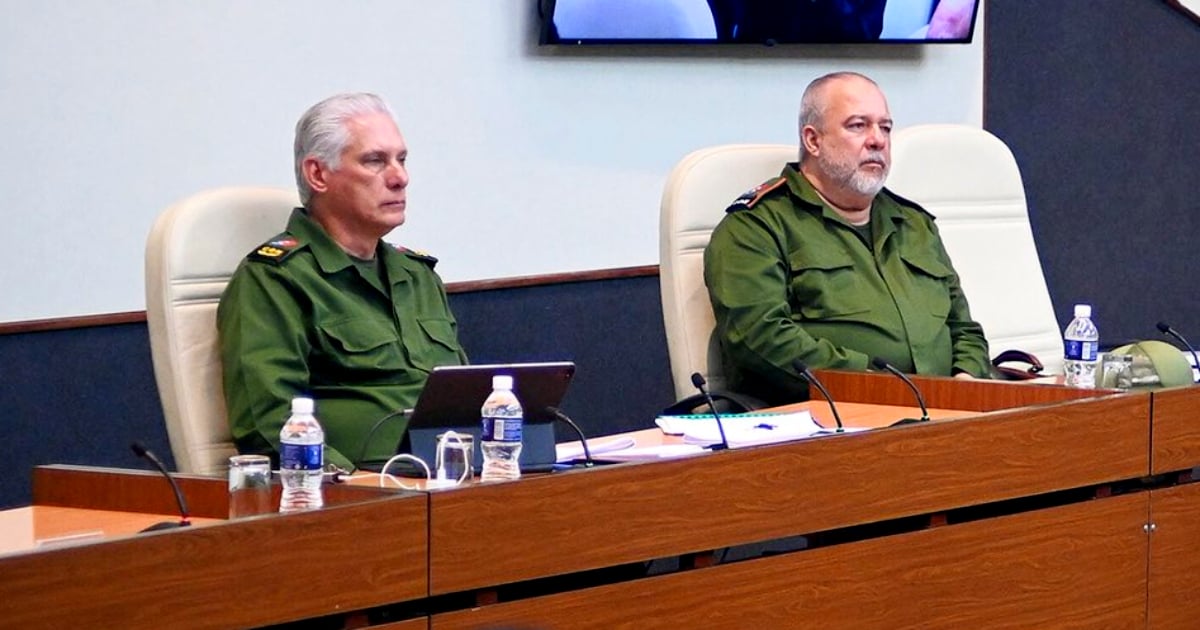
Miguel Díaz-Canel convened an "experts meeting" again this Thursday to address the epidemiological crisis affecting the country, but the gathering —broadcast by the Presidency of Cuba as an example of management and leadership— resulted in no concrete measures, new public policies, or verifiable commitments.
In a scenario of health system collapse, with hospitals overwhelmed and more than 47,000 people admitted due to arboviral diseases according to official figures, the leader chose to stick to the usual script: gathering scientists and talking about "protocols" and "follow-up actions," without providing real solutions to a population exhausted by illness, misinformation, and government neglect.
The official report, signed by journalist Yaima Puig Meneses, described a meeting filled with empty phrases — "strengthen prevention," "improve protocols," "continue progressing" — but no operational announcements.
There was no discussion about budgets, allocated resources, or urgent measures to ensure the availability of medications, insecticides, or medical transportation. There were also no updates provided on infection or death statistics.
One of the most notable presentations was by Dr. Lorena Vázquez Bello from the Pedro Kourí Institute, who presented a study on 32 patients with chikungunya. However, the work—according to the text itself—remains preliminary, with clinical data already known and no immediate practical implications.
The same happened with the mention of the Cuban drug Jusvinza, which still lacks published evidence of its antiviral efficacy, and with the promise of "ongoing trials" that are announced each year but never made transparent.
The result is a narrative crafted to simulate scientific control and presidential management, while the country sinks into the worst epidemiological crisis in decades. The words "study," "innovation," or "science" are repeated like a political mantra, without any accompanying transparency, accountability, or verifiable data.
The note also did not mention the responsibility of the Ministry of Public Health (MINSAP) itself nor the inefficiency in controlling the mosquito Aedes aegypti. Instead, it highlighted the "presence of Prime Minister Manuel Marrero Cruz", as if a photo of a cabinet meeting were a guarantee of public health.
The true message of the meeting was not scientific, but rather propagandistic: to display activity without resolving anything. Once again, Díaz-Canel appears, listens, and gives direction, but does not govern.
Meanwhile, Cubans continue to face fevers, queues at polyclinics, and hospitals without medications, while the regime clings to its oldest strategy: replacing action with propaganda.
Filed under: