
Related videos:
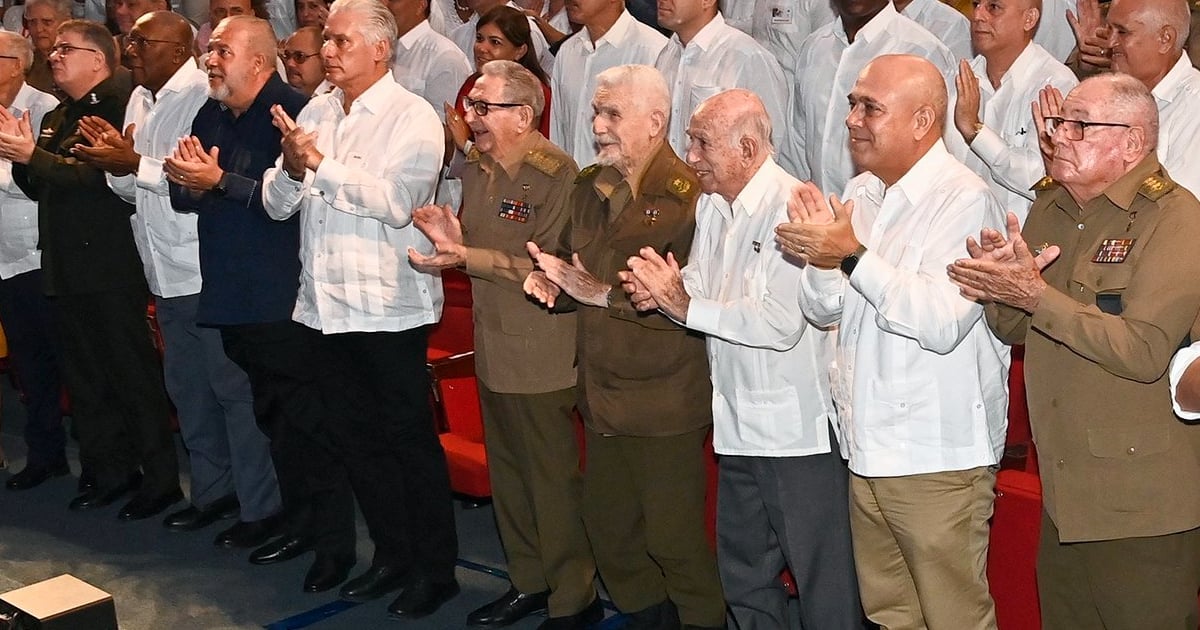
The Cuban regime, specialist in meetings that accomplish nothing, announced this Monday the call for the XI Plenary of the Central Committee of the Communist Party (PCC), which will be held on December 12 and 13.
According to the PCC itself, as reported on the social media platform X, the meeting will discuss “important issues regarding the socioeconomic and political life of the nation,” a promise that contrasts sharply with the reality of an island grappling with arbovirosis, blackouts, and the devastation left by Hurricane Melissa.
In a context of national health alert—with thousands of cases of dengue and chikungunya, overwhelmed hospitals, and failures in fumigation—and while Santiago de Cuba and several eastern provinces are just beginning to recover from the impact of the cyclone, the regime has decided to initiate a new round of internal meetings, ideological debates, and controlled self-criticism exercises that, based on the experience of recent years, do not provide real solutions.
A new cycle of meetings... with the same old script
Since November 15, the PCC and its affiliated organizations (UJC, CTC, ANAP, FMC, CDR, FEU) initiated a national "debate" regarding the so-called Government Program to correct distortions and reinvigorate the economy.
The process includes: meetings in Party cells, municipal assemblies of the People's Power, gatherings in workplaces, videoconferences with areas unaffected by the hurricane, and seminars for cadres and officials.
All of this while thousands of Cubans continue to live among rubble, mosquitoes, 12-hour blackouts, and total shortages of medicines.
The contradiction is evident: the regime dedicates time, resources, and propaganda to its internal debates, while the country faces a survival crisis, not one of slogans.
“Correcting distortions”: a repeatedly made promise, with no results
The plan now being submitted for "popular discussion" —which Granma presents as a roadmap to overcome the crisis— is, in fact, yet another recycled version of the programs announced since the collapse of the Monetary Ordering.
That reorganization, far from stabilizing the economy, destroyed purchasing power, multiplied inflation, and accelerated the mass exodus.
Now, Prime Minister Manuel Marrero asserts that "39 specific objectives have been updated," but the government avoids providing any data that demonstrates real improvements: inflation remains skyrocketed, the peso continues to lose value, agricultural production is at historical lows, electricity generation remains in crisis, and essential imports are stalled due to a lack of liquidity.
The official narrative once again focuses on "unity," "trust," and "popular participation," but without transparency, without verifiable figures, and without acknowledging the structural flaws of the model.
The reality: a weary country that no longer believes in plenaries or documents
For the population, weary of broken promises, the call for the XI Plenary of the PCC is seen as another exercise in propaganda.
While the authorities discuss in air-conditioned rooms, Santiago de Cuba has barely recovered 34% of its electrical service after Hurricane Melissa; meanwhile, garbage and informal dumping sites are increasing in Havana and other provinces.
Furthermore, the epidemiological crisis is worsening with tens of thousands of chikungunya cases, according to MINSAP itself. Pharmacies remain empty and blackouts reach peaks of over 1,500 MW of deficit.
All of this occurs while the Party insists on "rectifying distortions" without addressing the main cause of the national collapse: the centralized economic model and the lack of productive freedoms.
A country in crisis... and a government disconnected from reality
The XI Plenary of the PCC, like the ones before it, promises analysis, diagnoses, quiet self-criticism, and new slogans. However, nothing suggests that there will be structural changes, deep reforms, or accountability.
The country, meanwhile, is facing a triple crisis: an overwhelmed health crisis; a natural disaster with thousands affected, and a chronic economic collapse with no signs of improvement.
In that context, the question is inevitable: Is there anyone in the Palace of the Revolution willing to talk about real solutions… or will everything just continue to come down to more meetings, more speeches, and more slogans?
Filed under: