
Related videos:
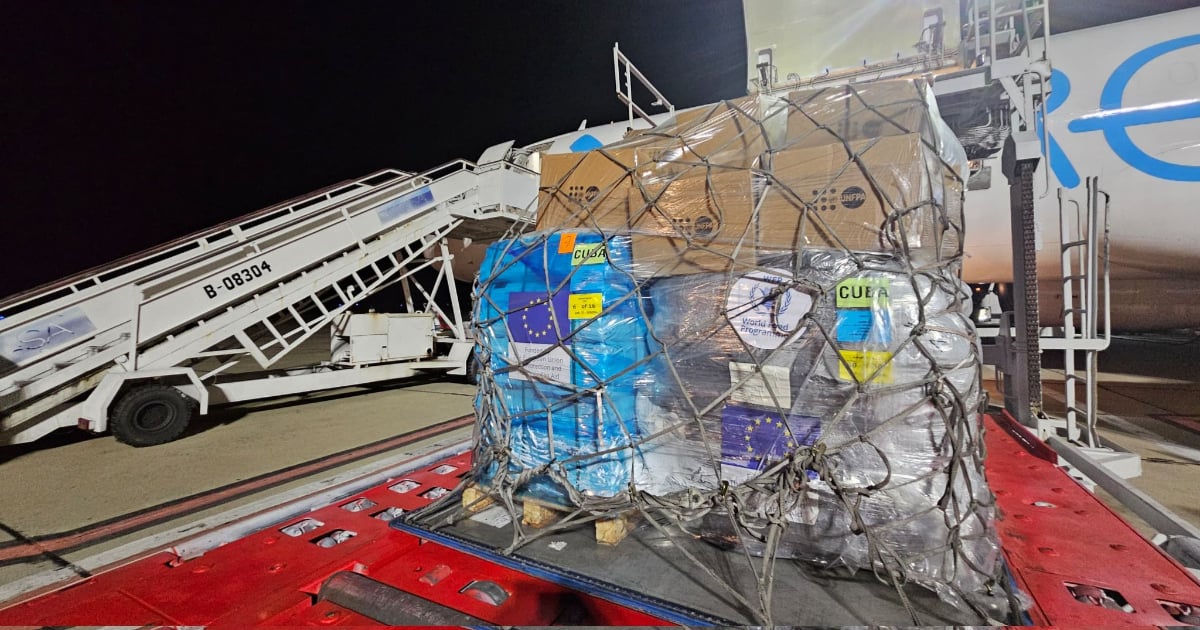
The Government of Japan announced new humanitarian aid to Cuba, aimed at those affected by the passage of the hurricane Melissa, which destroyed thousands of homes and caused material losses that those affected cannot replace.
The Japanese embassy in Havana announced on Facebook that the support amounts to a total of one million dollars in food, donated through the World Food Programme (WFP), as part of an emergency response to the damage caused by the cyclone.
The diplomatic mission highlighted that the donation is a "demonstration of solidarity" between the two nations and reiterated its support for the thousands of Cubans facing the consequences of the weather phenomenon.
The official message expressed the wish for a swift recovery and emphasized that Japan and Cuba maintain ties of friendship in the face of the natural disasters affecting the Caribbean nation.
The new shipment adds to another donation sent recently, valued at 182 thousand dollars, consisting of water purifiers, blankets, tents, and mattresses.
That shipment was received by the Cuban Deputy Minister Débora Rivas Saavedra from the hands of the Japanese ambassador Nakamura Kazuhito and the JICA representative, Ashida Tatsuya.
Then, the Japanese authorities reiterated the need to support the communities affected by the hurricane, emphasizing that cooperation "goes beyond the technical and financial aspects."
However, the dramatic reality faced by thousands of Cuban families after the passage of Melissa is not resolved quickly.
The floods destroyed homes, rendered roads impassable, and cut off access to essential services such as drinking water.
Many people, although they managed to survive the cyclone, now find themselves without homes, without enough food, and without resources to recover what they have lost.
In a country where salaries do not allow for the replenishment of essential goods, international aid becomes a lifeline that reaches places where local institutions have failed to provide concrete solutions.
While diplomacy expresses gratitude and reiterates promises of official support, the truth is that the reconstruction is progressing slowly.
The population continues to await urgent solutions that are expressed in words but not in actions, and immediate relief often comes from solidarity among neighbors and private initiatives.
Faced with state inefficiency and a lack of resources, it is the affected communities themselves that seek ways to help those who have lost everything.
The Japanese donation also adds to the solidarity sent by other countries, such as the Dominican Republic, Venezuela, and Colombia. However, the magnitude of the crisis exceeds the willingness of those offering help from abroad.
In a country where the infrastructure is collapsed and the State shows an inability to care for the most vulnerable, the arrival of food from Tokyo highlights both the urgent need that Cuba is experiencing and the growing dependence of the population on international aid.
Japan extends its hand at a critical moment. It remains to be seen when the Cuban government will extend its own beyond mere speeches.
Filed under: