
Related videos:
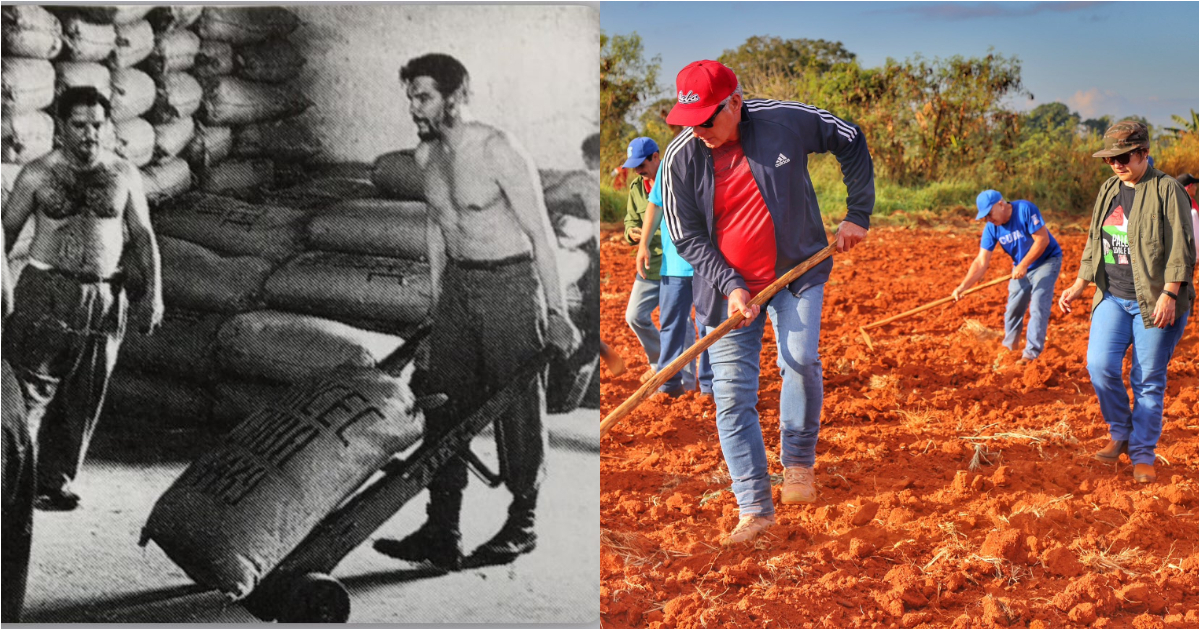
Images of President Miguel Díaz-Canel participating this Sunday in a voluntary work day in the province of Artemisa, in tribute to Commander Ernesto Che Guevara, sparked an immediate reaction of mockery and outrage among Cuban users who questioned the authenticity of the scene and the intent behind the official propaganda.
The Presidency of Cuba published on its X account images of the leader during the National Day of Volunteer Work, called for the 66th anniversary of the first productive work led by Che.
According to the official narrative, the president worked on planting at the Agroindustrial Los Tamarindos company in Artemisa, accompanied by members of the Central Committee of the Communist Party.
In the images, Lis Cuesta, the non-first lady, is also visible.
After the proceedings, the president of the Organizing Committee of the 22nd Congress of the Central Workers' Union (CTC), Osnay Miguel Colina Rodríguez, stated that Che conceived productive work as a source of wealth and the foundation of the "solidarity spirit" of the Cuban people.
He recalled that for decades, according to his account, these efforts allowed for the construction of hospitals and schools, and mobilized a workforce to areas in need.
He also emphasized the need to “work hard,” referring to the recovery of the eastern part of the country and the sanitation of neighborhoods amid the epidemiological crisis.
However, the official message was quickly overshadowed by the public's reaction. In the comments of the post itself and on social media, an unstoppable wave of criticism, mockery, and open rejection began.
Many users mocked the set design, pointing out the use of Adidas sportswear, high-end sneakers, and poses that seemed staged for the camera.
Others questioned the actual usefulness of the gesture, pointing out that it is empty propaganda in a country faced with hunger, scarcity, and a collapsed agricultural system.
Several people insisted that the president has no experience in agricultural work and that even the basic elements, such as how to hold the tool, seem implausible.
Comments also emerged criticizing the contrast between the traditional Guevarist discourse and the use of imported consumer symbols, something that would have previously been considered "ideological diversionism."
Others highlighted the political weariness of the propaganda tactic: forced poses, clothing that doesn’t match the real work, and a repeated script that does not change the conditions in the fields or the crisis affecting millions of Cubans.
The result was an avalanche of reactions that once again highlighted the gap between the official narrative and the corrosive humor, the fatigue, and the disbelief of a citizenry that no longer lends credence to these staged performances.
Filed under: