
Related videos:
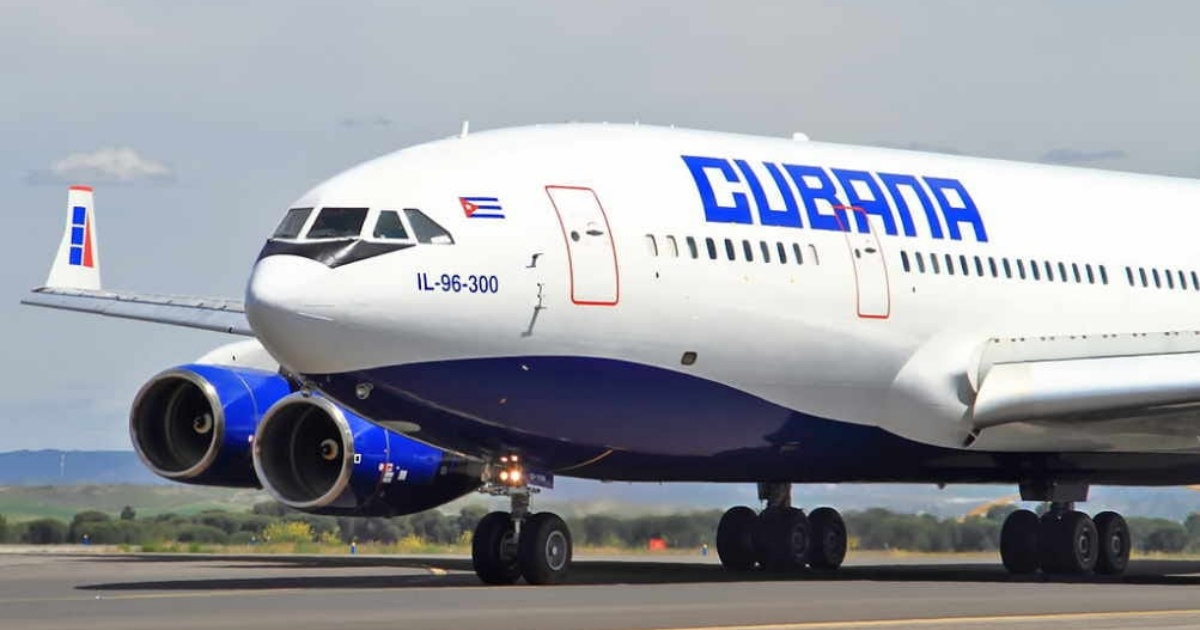
Cubana de Aviación has once again altered its national route network, forcing travelers to reschedule their flights or request refunds, a move that has sparked a strong wave of criticism against the company.
The announcement was made on the airline's Facebook page, where it was stated that due to the increase in frequencies on certain routes, the entire schedule was reorganized.
But rather than improving connectivity, the new changes eliminate some options that were previously available and leave more provinces without service.
According to the new plan, only six weekly flights from Havana will be maintained: two to Holguín and four to Santiago de Cuba, with the same number of return flights.
Routes like Camagüey or Nueva Gerona are disappearing from the national air map, while others such as Las Tunas, Moa, Guantánamo, Manzanillo, or Baracoa remain forgotten, despite users' complaints.
"And Camagüey? And Baracoa? And the Island?": a list of overlooked provinces
The discontent of Cubans soon became evident in the comments on the airline’s own post.
"Is there definitely no flight from Havana to Camagüey?" "How is it possible that there isn't a single flight to Camagüey all week?" questioned two users.
"And what about Baracoa, when will that be?", asked a resident of Baracoa living in Havana.
A user went further: "Las Tunas, Moa, Baracoa, Guantánamo, Manzanillo, none of those routes exist anymore. And soon they'll deactivate Nueva Gerona as well."
For the people of the Isle of Youth, the desperation is even greater: "We are trapped on this island. Please...!" pleaded an elderly woman who has no land alternative and depends on a ferry that, she emphasized, often does not depart, either due to a lack of fuel or bad weather.
One of the aspects that continues to generate complaints is the decision to maintain flights during night hours, despite the inconveniences this causes.
Travelers report that, with the transportation crisis, getting to or leaving an airport at those hours is practically impossible.
"Those from outside Havana have to stay overnight at the terminal at that hour. There's no way to get around at that time, and a private car will charge you a fortune," said one.
Refunds and rescheduling: the only solution offered by the State
The airline asked all affected passengers to go to Cubana's offices—many of which had long lines—to request a refund or rescheduling "subject to availability."
This means that those who had organized trips weeks or months in advance must now start the process all over again, with no guarantees of getting a seat.
The government insists that tickets should only be purchased through the official site or at Cubana's offices, despite numerous users reporting that the portal is not working.
"How can one buy a ticket for a domestic flight to work from the website? It only offers the option to purchase tickets for international airports," questioned a young woman.
Airline that regresses instead of evolving
In October, Cubana announced another adjustment to its domestic flight schedule, also amid strong public discontent. At that time, at least the routes to Camagüey and Nueva Gerona were still available, which are now discontinued.
In other words, the government has not only failed to restore the domestic flight network but has continued to reduce it, leaving the population more disconnected than ever.
A collapsed system
The root of the problem lies in the structural precariousness of Cuban air transport.
At the beginning of the year, Joel Archer Santos, president of the Aviation Corporation of Cuba (Cacsa), confirmed that Cubana de Aviación only has two operational aircraft for the entire Island.
The government attributes the crisis to the U.S. embargo, claiming that replacement parts must be imported from third countries and take a long time to arrive.
But citizens point out that the lack of planning, poor state management, and the absence of real investment in infrastructure are decisive factors.
Another recurring issue is the lack of alternatives when a flight is canceled. Cubana refunds the money, but does not provide substitute transportation options, which, according to users, violates minimum international standards.
The Decline of Public Transport: Data That Confirms the Deterioration
Official figures show a significant collapse of public transportation in Cuba
In 2024, it fell by more than 12%.
In the first quarter of 2025, the decline was 23%.
13.7 million fewer people were mobilized compared to the previous year.
This already bleak situation explains why decisions made by Cubana de Aviación provoke immediate anger: for many Cubans, air travel is the only fast alternative for getting around the country.
The central criticism is repeated: the State -the sole operator of national aviation- makes decisions without considering the actual needs of the population.
The result is an increasingly disconnected country, with fewer routes, less frequency, fewer planes, and no real alternatives for millions of travelers.
Meanwhile, the airline offers apologies and refunds, but no solutions.
Filed under: