
Related videos:
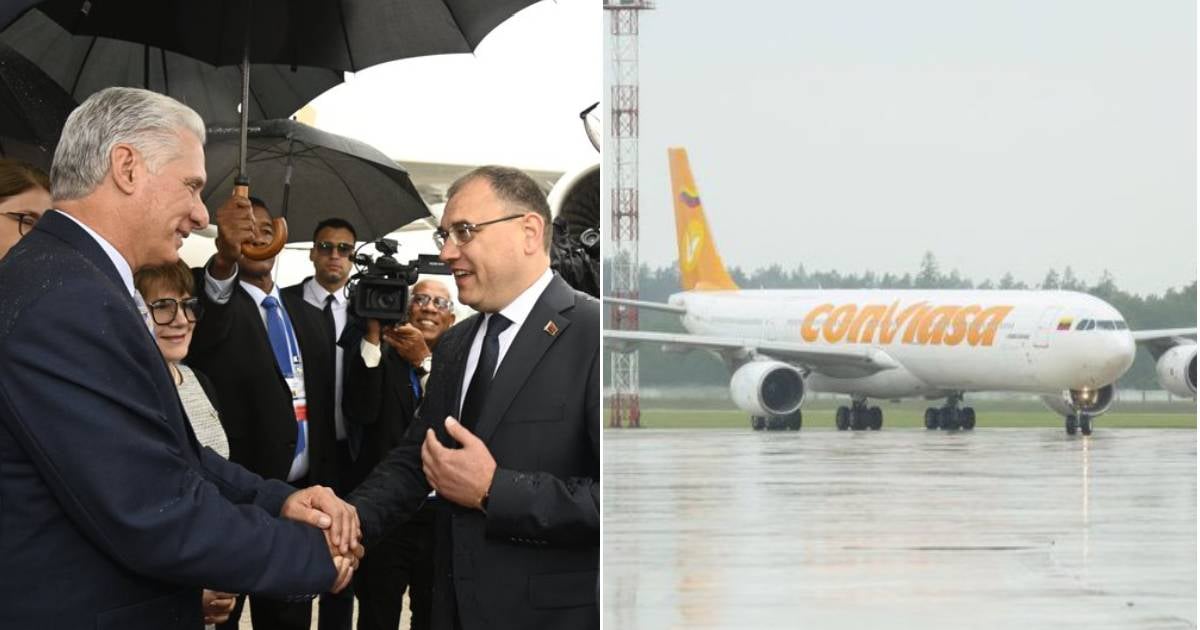
Cuban leader Miguel Díaz-Canel and his wife Lis Cuesta arrived in Belarus on Tuesday aboard a plane from the Venezuelan state airline Conviasa, amid the worst energy crisis Cuba has faced in recent years, characterized by blackouts of up to 24 hours and growing social discontent.
“Dear people: We are heading to Belarus for an official visit and to participate in the meeting of the Eurasian Economic Supreme Council,” Díaz-Canel announced on social media platform X (formerly Twitter), before departing on the Venezuelan aircraft, which is regularly used when the sole IL-96-300 of Cubana de Aviación is unavailable for the government's long trips.
According to the Belarusian state channel Belarus 24, the Cuban leader is already in Minsk, and his first item on the agenda will be a meeting with President Alexander Lukashenko, one of his key international allies.
This is Díaz-Canel's second official visit to Belarus, following his trip in 2019. Both governments have maintained diplomatic relations since 1992, deemed to be of "excellent level" by Havana, with agreements in sectors such as biotechnology, agriculture, health, machinery, and sanatorium tourism.
The Cuban ambassador in Minsk, Santiago Pérez Benítez, stated that more than 40 university agreements have been signed and over 50 Belarusian medications have been certified, as well as plans for modernizing agricultural equipment and establishing assembly centers on the Island.
However, while the leader participates in summits and bilateral meetings, the Cuban population is facing a serious energy crisis. On Monday, the Electric Union (UNE) reported disruptions in service throughout the day, with a peak deficit of 1,770 MW during the night, which accounts for nearly half of the national demand.
This is compounded by the inadequacy of the electrical system, affected by the collapse of several thermoelectric plants, a lack of fuel, and technological obsolescence. The recent 16 solar parks installed in the country contribute only peak outputs of 402 MW, a figure insufficient to address the crisis.
Moreover, the last few weeks have been marked by protests from university students against the sudden increase in mobile internet fees, imposed in dollars by the state-run ETECSA, and the removal of top-ups in Cuban pesos, which has deepened the inequality in digital access.
Meanwhile, the government continues to strengthen its alliances with authoritarian regimes like Russia and Belarus, which has generated skepticism among the population regarding whether these international visits will result in tangible benefits for ordinary Cubans.
The rental of aircraft from Conviasa for these trips reflects, according to analysts, both the close relationship between the governments of Havana and Caracas and the limitations of Cuba's own air fleet, which is restricted in international operations due to sanctions and a lack of resources.
Díaz-Canel's trip coincides with a wave of criticism on social media, where users lament that the president and his entourage are traveling abroad while the majority on the Island are struggling without electricity, enduring sweltering heat, food shortages, and the deterioration of basic services.
Frequently Asked Questions about Díaz-Canel's Visit to Belarus Amid the Cuban Crisis
Why did Díaz-Canel travel to Belarus amid the energy crisis in Cuba?
Díaz-Canel traveled to Belarus to participate in an official visit and in the meeting of the Eurasian Economic Supreme Council. Despite the severe energy crisis facing Cuba, the leader decided to make this trip, citing the importance of strengthening bilateral relations and exploring cooperation opportunities in sectors such as biotechnology, health, and agricultural machinery. However, this decision has been criticized by the Cuban population, who are suffering from prolonged blackouts and shortages of basic resources.
What is the current state of the energy crisis in Cuba?
Cuba is facing a severe energy crisis characterized by power outages of up to 24 hours. This situation is due to the collapse of several thermoelectric plants, a lack of fuel, and technological obsolescence. The electricity generation capacity is insufficient to meet national demand, exacerbating the crisis on the island and increasing social discontent.
How does the energy crisis affect the Cuban population?
The energy crisis in Cuba severely impacts the daily lives of the population, which faces prolonged blackouts. These blackouts hinder food preservation, access to basic services, and create an atmosphere of hopelessness and frustration. Furthermore, the lack of electricity affects the operation of hospitals, schools, and other essential services, exacerbating the precarious situation on the island.
What agreements exist between Cuba and Belarus?
Cuba and Belarus maintain agreements in sectors such as biotechnology, agriculture, health, and machinery. More than 40 university agreements have been signed, over 50 Belarusian medications have been certified, and there are plans for the modernization of agricultural equipment on the island. These relations are regarded as being of "excellent level" by both nations, which seek to strengthen their bilateral cooperation.
Filed under: