
Related videos:
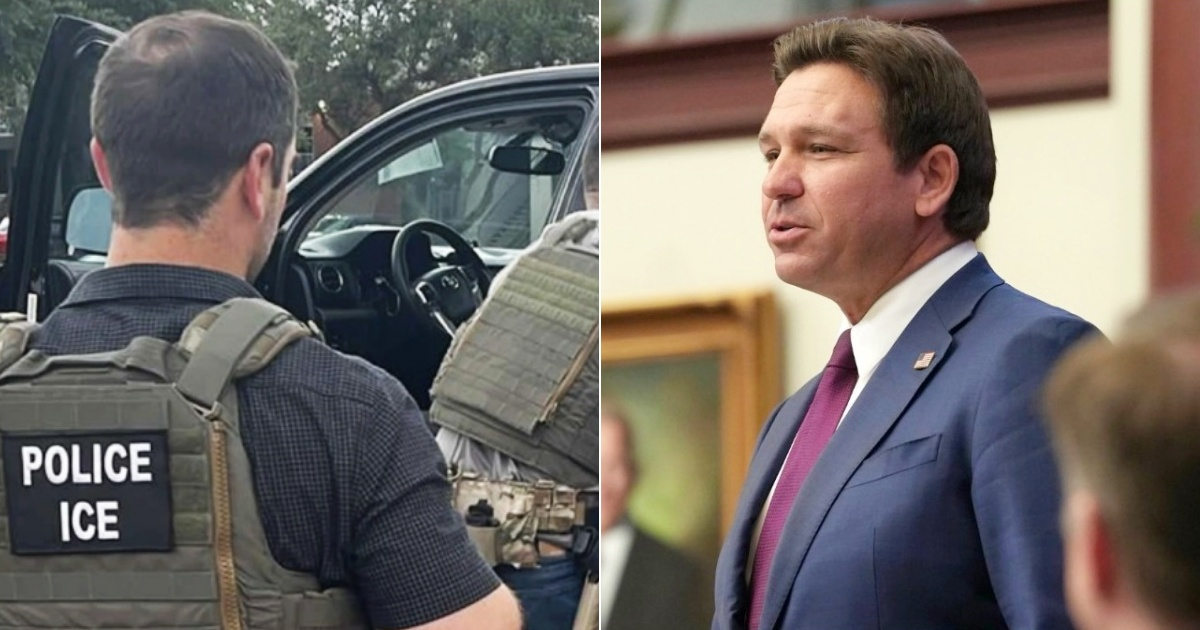
Florida Governor Ron DeSantis recently signed the renewal of the immigration state of emergency for another 60 days, originally enacted on January 6, 2023. The executive order—known as Order 23-03—has been extended consecutively for almost two years now, marking the eighteenth extension. According to the text, the justification remains the same: a "massive" flow of irregular immigration into the state, which "continues to impact local resources" and requires "ongoing efforts" to respond to the crisis.
This extension keeps intact the extraordinary powers granted to the state executive, allowing for the mobilization of resources, the suspension of administrative processes, and actions to be taken without the need for immediate legislative approval.
In the words of DeSantis's spokesperson, Alex Lanfranconi:
"It will continue to be an emergency until all illegal immigrants are returned."
What does the state of emergency imply?
The Florida Emergency Management Law allows the governor, under a state of emergency declaration, to:
-Streamline administrative procedures.
-Suspend regulations that hinder operational response.
-Reassign state funds.
-Avoid public tenders in contracting.
-Active personal or create temporary facilities.
In the context of migration, these powers have been used to organize operations in coastal areas, reinforce surveillance, support deportations, and establish detention centers for immigrants, such as the controversial “Alligator Alcatraz” and “Deportation Depot.”
Critiques: Power without control?
The sustained and extensive use of this figure has generated a strong reaction from the Democratic opposition, which believes that DeSantis is abusing his authority for political purposes. The minority leader in the House of Representatives, Fentrice Driskell (D-Tampa), was emphatic:
"He is willing to use all means to politicize things."
Senator Lori Berman (D-Boynton Beach) accused the governor of having "vulgarized emergency powers" by extending the order without accountability, while Senator Carlos Guillermo Smith (D-Orlando) warned:
"This executive order should not be renewed. It has been extended nearly 20 times without oversight, without real questions about where this money is going, who is benefiting from it, how many detainees we even have in the Everglades detention camp; we do not know."
Democratic concerns are not limited to the symbolic: lawmakers have put forward three concrete proposals to curb or limit the use of the migratory state of emergency
-SCR 704 (Tina Polsky): would put an end to the current emergency.
-SB 700 (Carlos Guillermo Smith): would require legislative approval to extend any state of emergency beyond one year.
-SB 708 (Lori Berman): would create a state database for immigration control to monitor detentions and deportations carried out with state funds.
Why is it still relevant?
For DeSantis's government, the threat remains ever-present.
The executive order states that the presence of illegal immigrants in Florida persists due to the “lack of enforcement of federal immigration laws.”
Although new data on the current magnitude of the migratory phenomenon and its real impact on state services has not been published, the Executive insists that the conditions that led to the emergency in 2023 persist.
"We can stand by with our arms crossed and watch as problems remain unsolved, or we can be part of the solution and help lead the way," DeSantis said at a press conference in Orlando.
And now what?
The extension of the emergency reinforces Florida's hardline stance on immigration and consolidates the model of direct executive management promoted by DeSantis.
At the same time, the internal political conflict is escalating, especially with an opposition that questions the lack of transparency in the use of public funds and the absence of measurable results.
Meanwhile, the issue returns to the center of legislative debate in Tallahassee, where the battle between those seeking to limit the powers of the governor and those wanting to intensify the enforcement of anti-immigrant policies could set the tone for the new legislative session.
What is at stake is not only Florida's immigration approach but also the balance of power between the state Executive and the Legislature, as well as the crisis management model that could extend to other areas.
The migration emergency, rather than being a temporary situation, is shaping up to be a permanent policy.
Filed under: